An affordable dinnerware, this plate became part of Filipino material culture.
You’ve seen this plate somewhere.
At your grandmother’s house. At a neighbor’s birthday party. Inside an auntie’s platera. Perhaps underneath a serving of pancit, spaghetti or menudo during a fiesta.
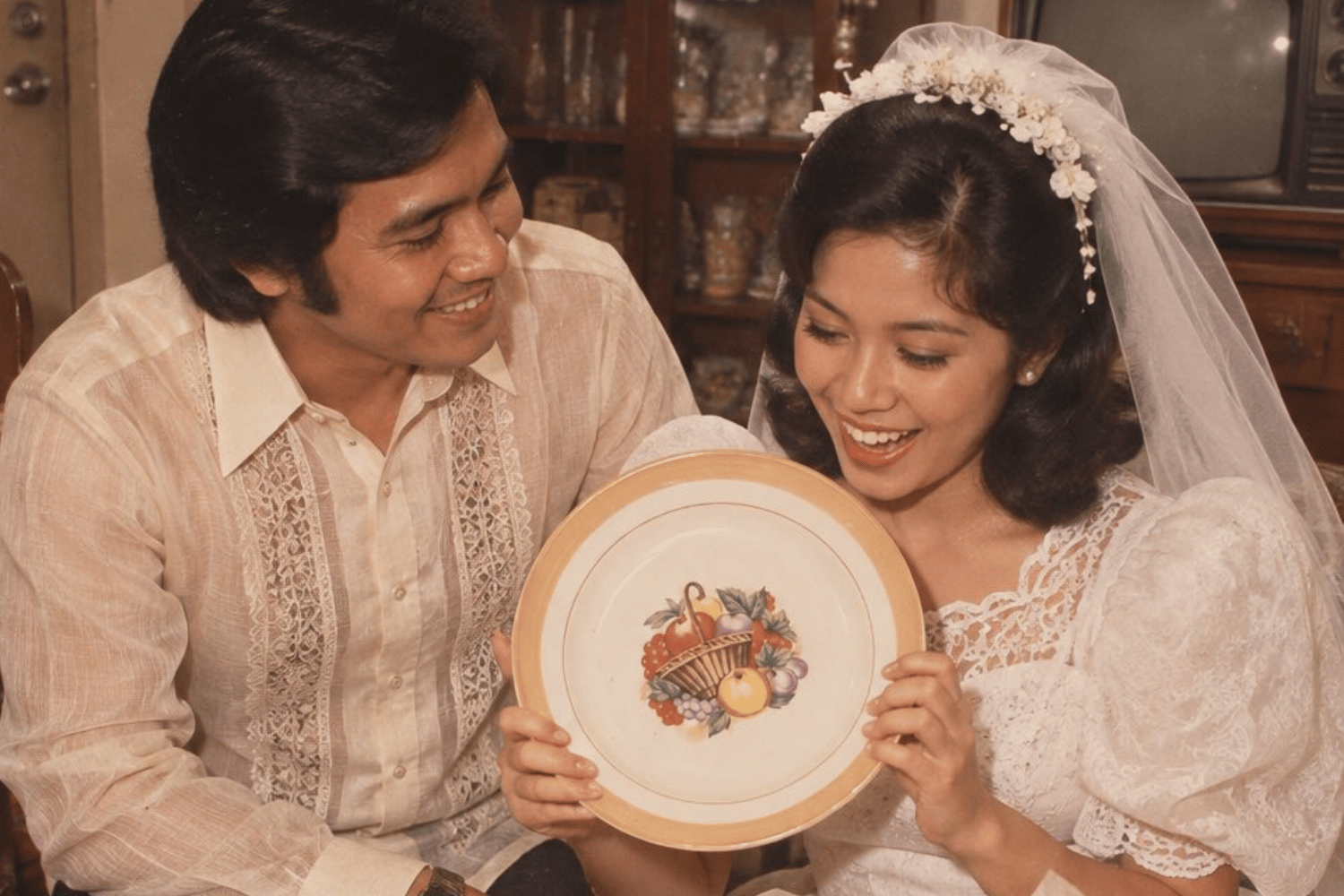
Cream-colored ceramic. Peach or orange rim. And in the middle, that unmistakable basket overflowing with colorful fruits.
It seemed to be everywhere—but where did it actually come from?
The answer isn’t as simple as one famous brand.
There appears to be no single documented manufacturer responsible for every version of the fruit-basket plate Filipinos remember. Similar fruit motifs were produced by different dinnerware makers and appeared on both locally manufactured and imported ceramics, explaining why surviving pieces can look almost identical yet carry different markings underneath.
The Philippines itself once had a substantial dinnerware industry. Companies such as Lucky Tableware, Porcelana Mariwasa and Royal Porcelaine were among manufacturers producing ceramic tableware locally during the latter decades of the 20th century.
At the same time, affordable imported dinnerware also entered Filipino households, adding countless variations to the familiar designs.
By the 1970s through the 1990s, dinnerware had become one of the most practical presents for couples setting up a home.
And so boxes of plates became a familiar wedding gift.
A complete dinner set was useful, presentable and could last for years. Some newlyweds even received several sets from different guests.
But Filipinos transformed these mass-produced objects into something more.
The nicest plates often went straight into the platera, the glass-fronted cabinet once common in Filipino homes. They became pang-bisita—reserved for birthdays, fiestas, Christmas, New Year and occasions when the family decided ordinary plates simply wouldn’t do.
Children learned an important household rule: don’t break the good plates.
That may partly explain their astonishing survival.
The newlyweds who received them became parents and grandparents. Homes were renovated. Furniture was replaced. Yet many of these fruit-basket plates remained intact inside cupboards.
Today, social media has turned them into an unlikely cultural icon.
Post a photo and Filipinos immediately recognize it. Comments become reunions of childhood memories. Jokes describe the plates as more durable than relationships. Others tease that anyone old enough to remember them is already old enough to marry.
Similar pieces have even resurfaced in surplus shops and online marketplaces as “vintage” dinnerware.
Yet the fruit-basket plate was never important because it was rare.
It became important because it wasn’t.
It appeared in homes across social classes and generations, serving everything from everyday rice and fried fish to pancit at birthdays and elaborate dishes during Christmas.
What began as affordable dinnerware—and for many couples, a practical wedding present—quietly became part of Filipino material culture.
Nobody planned for it to become nostalgic.
Filipinos simply ate from it for decades until an ordinary plate became a memory of home.