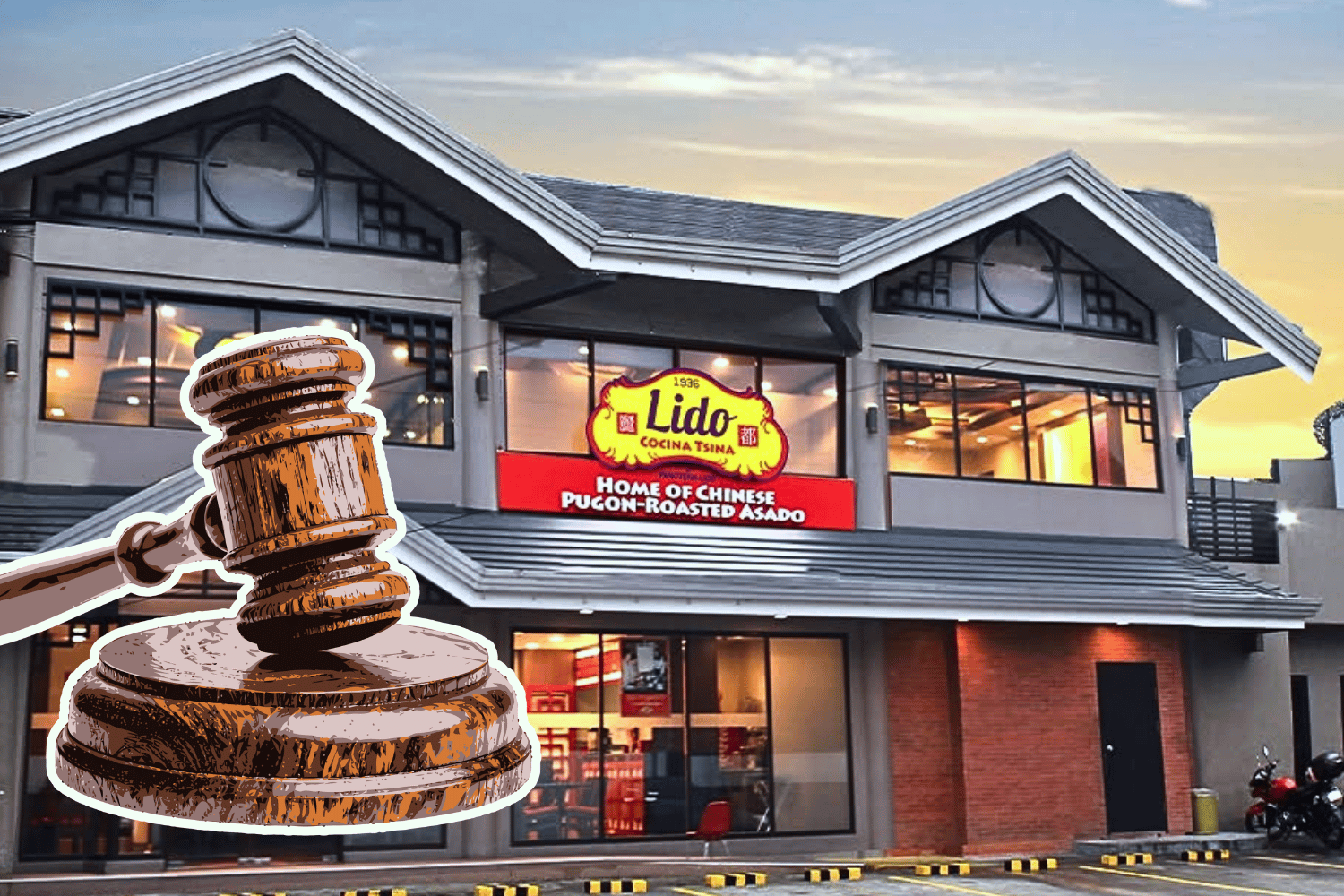
Supreme Court rules restaurant chain’s “Lido” trademarks were registered in bad faith amid decades-long ownership dispute.
Chinese restaurant chain Lido Cocina Tsina may have to change its name soon, after the Supreme Court ordered the cancellation of the chain’s trademarks amid a decades-long dispute between the original restaurant’s owners.
In a decision promulgated on August 12, but published on September 3, the Court ruled that Lido Cocina Tsina’s parent company, Panciteria Lido Chinese Cuisine Co., had no right to use the name “Lido” as a trademark since it belonged to Eng Son Co., which used to manage Panciteria Lido.
PLCCC owner Annie Alipio was a co-owner of Eng Son Co. with King Si Biak, whose sons Albert King and Arthur King filed a case before the Supreme Court against Alipio’s company.
“The Intellectual Property Code does not protect the registration of a mark that knowingly appropriates another’s established business identity,” wrote Associate Justice Ramon Paul Hernando, who penned the decision.
While the original Panciteria Lido restaurant was supposedly established in 1936, it was managed by Eng Son Co. beginning in 1997. Alipio and the elder King’s business relationship eventually deteriorated, and Alipio filed her own trademark application for “Panciteria Lido” in 2008. King Si Biak contested the filing, and the Intellectual Property Office’s Bureau of Legal Affairs ruled in his favor in 2010.
“The [IPO BLA] ruled that the right to register the trademark ‘Panciteria Lido’ belonged to Eng Son Co., considering Alipio’s own admission that the partnership owned the business. Accordingly, Alipio could not register it in her own name,” the SC decision read.
Alipio, now through PLCCC, then filed two new trademarks in 2012 for the name “Lido Cocina Tsina” and its counterpart in Chinese characters. The ASEAN Intellectual Property Portal lists the trademarks as active and registered since September 2013, indicating that the applications were granted.
Because the elder King passed away in 2010, his sons filed petitions for cancellation against the new trademarks. The IPO BLA granted the petitions in December 2020, reiterating its earlier reasoning for rejecting Alipio’s 2008 application.
The BLA director affirmed the decision in December 2022, additionally finding the trademarks to have been registered “in bad faith.”
“[The IPO BLA director] found that PLCCC registered the subject marks in bad faith, having prior knowledge that the Lido mark belonged to Eng Son Co. The Director further held that, absent any showing that the partnership had been liquidated and its assets lawfully distributed, ownership of the Lido mark remained with Eng Son Co.,” the SC decision read.
However, in December 2023, the IPO director general reversed the BLA decision and dismissed the petitions for cancellation, ruling that PLCCC did not violate guidelines since neither King Si Biak nor Eng Son Co. had an existing trademark containing the contested name or marks.
The King brothers then filed a Motion for Extension of Time to File Petition for Review and a Petition for Review before the Court of Appeals, which were denied due to procedural defects and because they were filed after the designated 15-day period.
The SC ruling reversed the IPO and CA decisions, reinstated the original BLA decision, and ordered the cancellation of the PLCCC trademarks.
Aside from reiterating the BLA’s earlier decision, the Court noted that the CA should have relaxed procedural rules, as it has for previous cases, “due to strong considerations of fairness and justice and in extraordinary situations that merit liberal application of the rules.”
The Court also noted a legal precedent, Zulueta v. Cyma Greek Taverna Co., which involved former business partners disputing trademark ownership.
“A partner who applies for the registration of a mark despite knowledge that the mark belongs to the partnership acts in bad faith, such that the application is unregistrable and does not confer valid trademark rights under the Intellectual Property Code,” Hernando wrote.
READ:

QC orders temporary closure of Katipunan bar over multiple violations
radar Business
September 6, 2026

EXCLUSIVE: RestoPH warns stacking senior and PWD discounts could hurt restaurants
Kenneth M. del Rosario
September 7, 2026

Why Rosario is the Filipino restaurant you shouldn’t skip at Gateway Mall 2
Top Dagohoy
July 14, 2026
Tags: Albert KingAnnie AlipioArthur KingASEAN Intellectual Property PortalBureau of Legal AffairsCourt of AppealsEng Son Co.Intellectual Property CodeIntellectual Property Office of the PhilippinesKing Si BiakLido Cocina TsinaPanciteria LidoPanciteria Lido Chinese Cuisine Co.Ramon Paul HernandoSupreme Court of the Philippinestrademark