

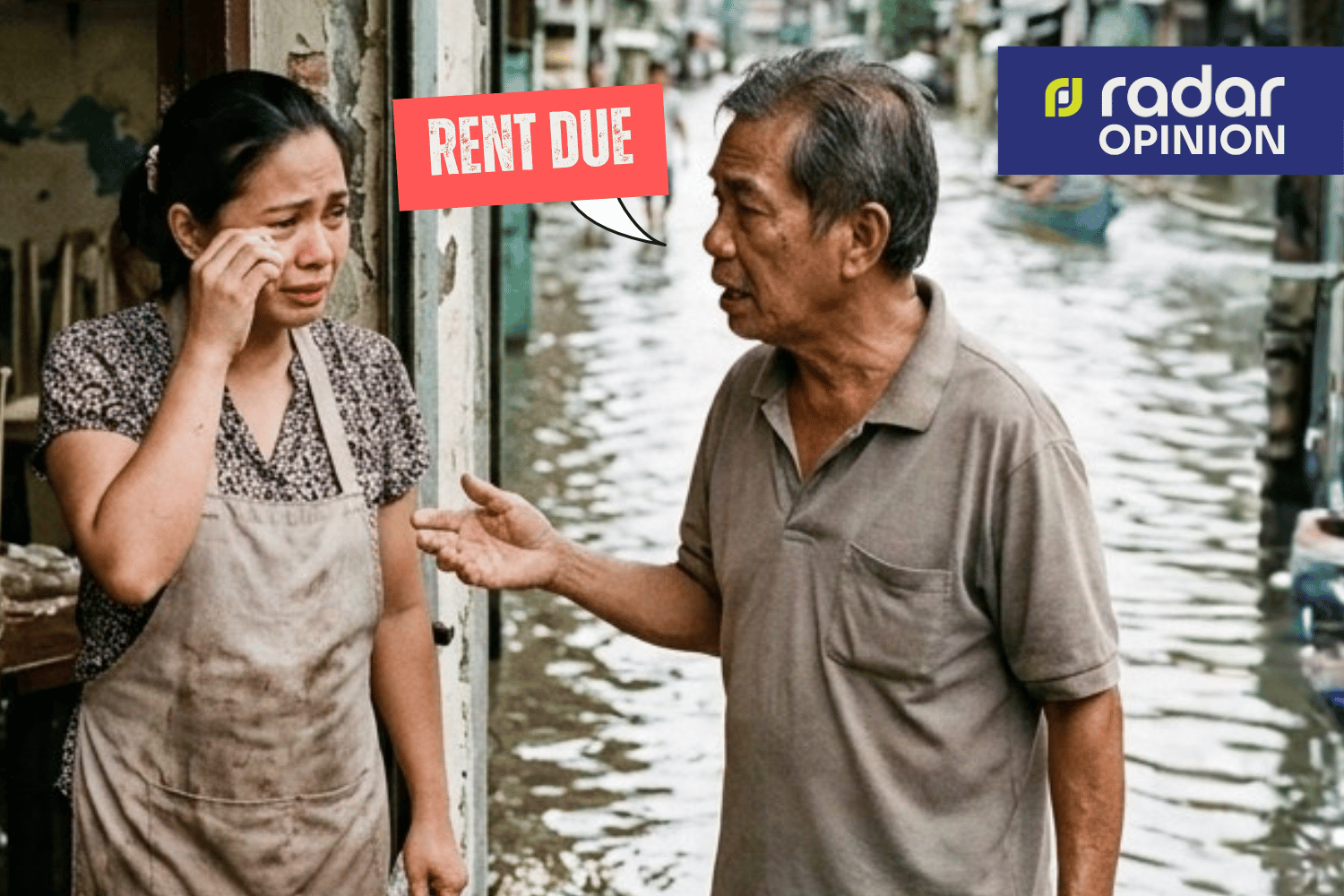

A standing rent-relief policy could give disaster-hit businesses time to recover.
When flooding keeps businesses from operating for weeks, the financial damage does not end with lost sales. Rent can still fall due even when customers cannot reach a shop, while suppliers may still be waiting for payment, and employees still need to be considered.
The problem can affect all kinds of small businesses, from coffee shops and restaurants to retailers and other establishments that depend on customers being able to physically reach them. It is particularly difficult in parts of Northern and Central Luzon, including Pangasinan, La Union, Pampanga and Bulacan, where prolonged rains and flooding have disrupted communities and commercial activity in recent weeks.
For a small business, the dire situation builds with every day that sales remain weak or operations are disrupted. A shop, for instance, may have little or no income coming in while rent continues to accrue, inventory still has to be managed and other payments remain due. The longer the disruption lasts, the harder it becomes for an owner to keep the business running on whatever cash is left.
That leaves policymakers and business groups with something worth considering. When a calamity effectively prevents a business from operating, should there be a mechanism that temporarily eases some of its financial obligations?
A lesson from the past
The Philippines has already provided a form of relief during the COVID-19 pandemic. The Bayanihan to Recover as One Act provided a minimum 30-day grace period for certain commercial rents, including those involving qualified MSMEs that had been ordered to stop operations during community quarantine. The deferred rent could then be paid in installments without interest, penalties or other charges.
However, that was an emergency measure created for a specific crisis. There is no comparable standing mechanism that automatically provides businesses with rent relief whenever a typhoon, flood, or other calamity disrupts commercial activity.
There is, however, a provision in the Philippine Civil Code that points in a similar direction. If leased property is totally destroyed by a fortuitous event, the lease is extinguished. If the destruction is partial, the lessee may choose between a proportional reduction in rent and ending the lease.
The problem is that a business can be effectively shut down by a calamity in several ways. Floodwaters may enter the premises and make the establishment unusable, while flooding in the surrounding area can keep customers and employees away or prevent deliveries from getting through. Even when a shop escapes direct damage, prolonged flooding in the wider commercial district can still leave it with little or no business.
Farther away in New South Wales in Australia offers a useful example of how policy could address that situation. Under its retail leasing rules, a tenant is not liable for rent and certain outgoings during a period when a shop cannot be used or is inaccessible because of damage. If the shop remains usable but its usability has been diminished, rent and outgoings can be reduced proportionally.
Businesses need temporary relief
A Philippine version does not necessarily have to erase rent or other debts. It could instead establish a temporary relief period when a declared calamity prevents businesses from operating normally, with the extent of relief tied to the actual disruption.
Rent could be deferred or reduced, while affected businesses could be given additional time to settle obligations once operations resume. Similar arrangements could eventually be explored for other essential business expenses, although any policy involving suppliers would have to consider the financial impact on suppliers themselves.
That last part is important because the burden cannot simply be passed from one small business to another. A café that cannot pay its food supplier may be struggling, but the supplier may also be a small enterprise dealing with its own employees, inventory, and operating costs.
The goal, then, would not necessarily be to erase every obligation whenever a calamity strikes. It could be to give otherwise viable businesses enough room to survive the disruption and reopen.
After all, a business may be able to recover from a difficult month if it has enough time and cash to get back on its feet. But it becomes much harder when the disaster ends, but accumulated bills arrive before the customers do.
Disaster preparedness usually focuses on protecting people, homes and essential infrastructure. Businesses also need a way to survive the period when a calamity keeps them from earning. A policy that gives them that breathing room would not make the losses disappear, but it could prevent a temporary disruption from becoming a permanent closure.
That’s the point.
READ:

OPINION: Transparent bags won’t stop school shootings
Top Dagohoy
August 27, 2026

OPINION: I’ve spent years playing video games. I didn’t become a gorehound or killer
Nikko Miguel Garcia
June 28, 2026

OPINION: Why do we have to beg for a right that’s already painted on the road?
Kenneth M. del Rosario
June 21, 2026


