Earthquake safety measures and resources must start from the barangay.
When “The Big One” strikes, national rescue assets become logistically paralyzed immediately. Your local Barangay Disaster Risk Reduction Committee (BDRRMC) is your real first responder for the first critical 72 hours of total urban isolation.
Republic Act 10121 requires all barangays to allocate 5% of their revenue to their disaster fund. This tax money is a forced local safety net. As a citizen, you have the right and the duty to audit how it is spent.
The bare minimum: What your barangay must deliver
A well-prepared barangay assumes zero external aid, power, or water for three days. It must use its 5% mandate to pre-stock weatherproof containers at local hubs with water purification tablets, solar chargers, satellite communications, and shelf-stable rations.
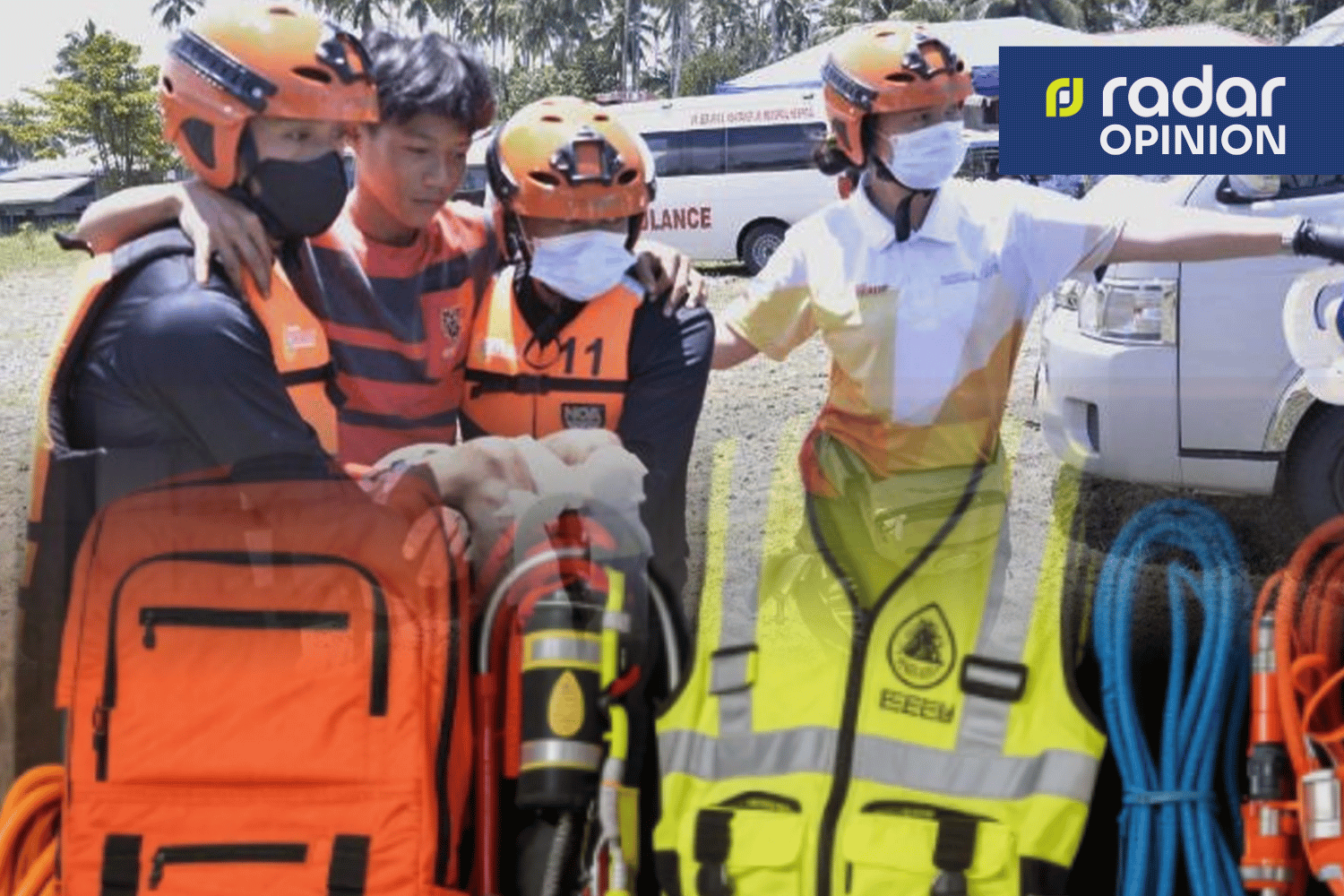
Tax money must also fund specialized Barangay Emergency Response Team (BERT) trailers stocked with concrete cutters, chainsaws, and hydraulic jacks. Because the first 60 minutes—the golden hour—determines a trapped resident’s survival, dispersing these heavy breaching tools across localized barangay outposts rather than locking them in a distant city hall is what actually saves lives.
Pre-mapping and fighting secondary disasters
Preparation is done in advance. Competent barangays map out structural vulnerabilities using data from PHIVOLCS and the REDAS database and maintain active ledgers of bedridden seniors, pregnant women, and PWDs. Instead of blindly searching for people after a disaster, they can go straight to the most vulnerable residents on the priority extraction maps.
At the same time, barangays are defending against secondary disasters. An intensity 8 earthquake tips household LPG tanks and leaks fuel under high pressure. Trained units trip neighborhood circuit breakers manually to isolate the power grid, cutting off fires. Broken mains reduce hydrant pressure to zero, so the well-prepared barangays have static water bladders or manual deep wells (poso) that supply local bucket brigades to put out fires before they become unstoppable neighborhood conflagrations.
How to audit your barangay
Instead of passively waiting for “The Big One” with a sense of helplessness, ordinary citizens must hold local officials accountable during mandatory public assemblies. To enforce radical transparency, take three non-negotiable demands to your next local meeting.
First, exercise your legal right to demand a copy of the current fiscal year’s Barangay Disaster Risk Reduction and Management Plan from your barangay captain.
Second, demand to physically inspect the neighborhood stockpile to verify the existence of emergency water purification assets, static water bladders, and concrete-breaching rescue tools.
Finally, proactively protect your household by visiting the barangay health office to ensure any elderly relatives, infants, or PWDs are formally registered on the sector’s emergency evacuation priority map before disaster strikes.
True resilience is forcing your local government to do its legal job. Share this guide with your neighbors, homeowners’ associations, and condo boards.
READ: