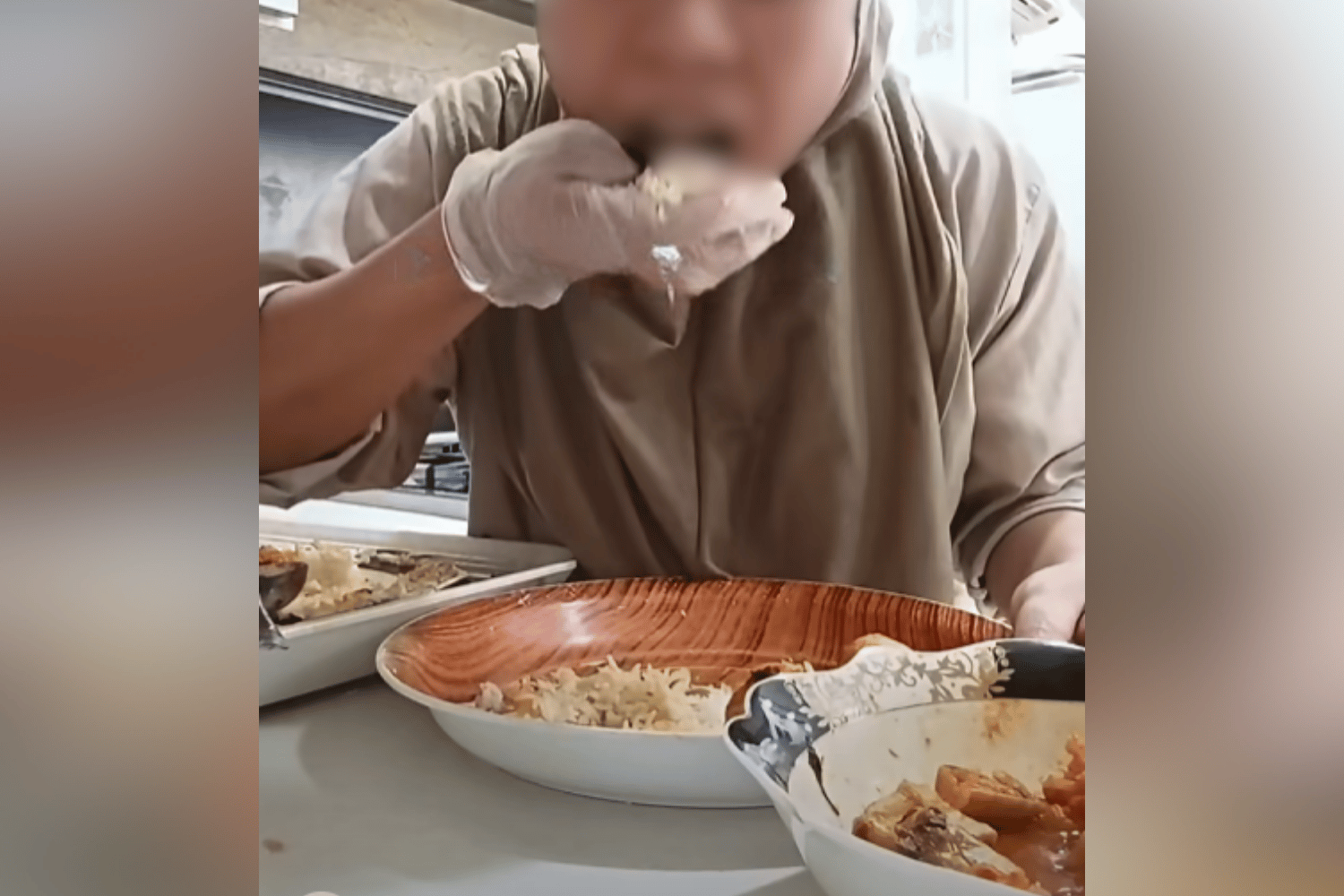
“Ang mga tira-tirang pagkain ay isa sa mga pinakamalaking blessing [para sa akin]. Lalo na kapag masarap yung ulam, lagi kong pinagdarasal na marami pang matira dahil kakainin ko,” overseas domestic helper Jingjing Banugan said in her video.
Banugan, who lists Davao Oriental as her hometown and has around 345,000 Facebook followers, said in her defense that she reheats the leftovers before eating them. But she also said she has to hide the container in an oven after reheating it because she could be reprimanded if her employers see it.
“Paldo na naman ako sa tira-tirang pagkain for today’s video,” Banugan said in the comment section of one of her videos.
Her process of preparing the leftovers includes mashing and mixing the food with her hands before eating. She shared that she does it because she previously choked on her employer’s food after failing to notice a leftover fish bone.
She also said she is embarrassed to use the household’s “golden utensils” because her teeth might scratch against them.
Commenters hinted that Banugan’s employers strictly count the household’s food, while the video suggested that she does not receive a separate food allocation and instead relies on leftovers.
Some viewers expressed concern and asked why her employers could not simply set aside food for her. Meanwhile, others praised her for surviving the situation, with one commenter saying they knew a housekeeper in Saudi Arabia facing something similar.
Many say hardships faced by domestic workers should not become something Filipinos learn to accept as part of working abroad.
The Philippine Statistics Authority counted 2.19 million OFWs in 2024, with Saudi Arabia the leading destination at 21.9%. Most OFWs were women, and the largest occupational group was elementary occupations.
The Department of Migrant Workers has also adopted an enhanced reform program specifically promoting the rights, dignity, and welfare of Filipino domestic workers.
Banugan’s video does not establish the complete conditions of her employment. But having to secretly eat reheated leftovers, hide them from an employer, and carefully pick through food to avoid choking is not something that should be romanticized as simply part of an OFW’s “survival.”
READ: