The unresolved history remains relevant to today’s controversy, says art historian Geronimo Cristobal.
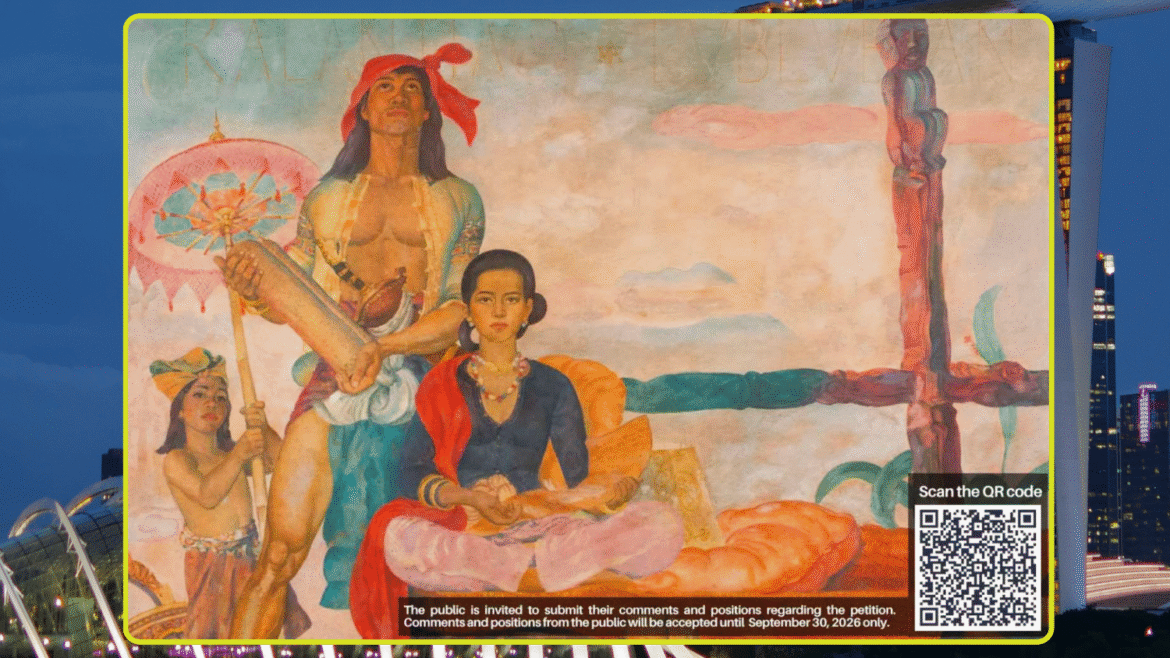
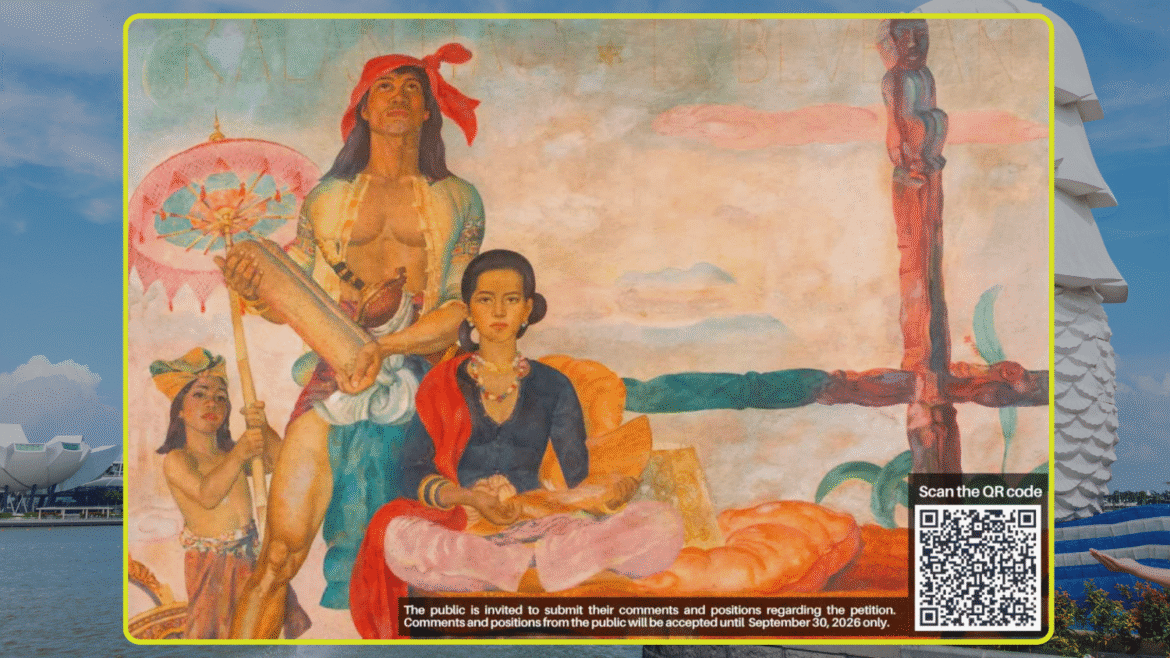
National Artist Carlos “Botong” Francisco’s “Kalantiao at Lubluban” is at risk of being transferred permanently to Singapore amid a petition to lift its presumed Important Cultural Property status.
The petition was filed by Jaime Alfonso Larena Ponce de Leon, owner and director of León Gallery, which has been handling the painting. In Notice to the Public NCCA-09-2026-07, the National Commission for Culture and the Arts cited assessments questioning the work’s national significance, including statements attributed to art critic Cid Reyes, art conservator June Dalisay, and León Gallery curator and National Historical Commission of the Philippines commissioner Lisa Guerrero Nakpil.
The notice argues that because “Kalantiao at Lubluban” has never been officially declared an ICP under Republic Act No. 11961, it should not be considered an exceptional or indispensable part of the country’s cultural patrimony.
The agency has invited the public to submit positions on the matter until Sept. 30.
This isn’t the first time a Francisco artwork has found itself at the center of a controversy. In 2019, his final painting, “Camote Diggers,” became the subject of a provenance dispute—one that remains unresolved to this day.
Unfinished painting
“Camote Diggers,” started in 1969, was left unfinished after Francisco died of a heart attack.
In 1973, his widow, Rosalina, delivered the painting to Malacañang “as a way of thanking the government through the Marcoses for all the support given to their family,” following Francisco’s posthumous recognition as a National Artist.
In 2019, the painting appeared at León Gallery’s mid-year auction, prompting Francisco’s heirs to question how it had left Malacañang and entered the auction. Their legal counsel, Arnel Victor Valeña, wrote to then senator-elect Imee Marcos asking how it “came to be removed” from Malacañang.
“We are hoping you could clarify how the painting came to be removed from Malacañang, how it came to be housed in [Bangko Sentral ng Pilipinas] and Yuchengco Museum, and why it is now being auctioned by Leon Gallery,” Valeña’s letter reads, as cited by GMA News.
Marcos confirmed that the painting had been given to her parents and displayed at Malacañang. “Kung paano nawala, wala na akong alam,” she said.
At León Gallery, bidding opened at ₱16 million, with the work reported to have reached ₱23.4 million, including the buyer’s premium.
Acquired in 2004?
León Gallery later said an anonymous consignor had acquired “Camote Diggers” in 2004 from the son of a government official and kept it in his collection for years.
But the publicly described acquisition left a gap in the painting’s provenance. “The sequence of ownership has to be established all the way back to Francisco,” historian Ambeth Ocampo wrote in Lifestyle.INQ. “There is a gap between the Marcoses receiving the painting at Malacañang in 1973 and the acquisition of the present owner in 2004.”
After the auction, León Gallery announced that “Camote Diggers” would be donated to a national institution. Ocampo disputed that framing, writing that the consignor had actually withdrawn the painting, took the loss, and offered to donate it.
‘Politicization’?
Nakpil, who’s also a The Philippine STAR columnist, described the post-auction transaction differently.
She wrote that the consignor “opted to resolve any issues and avoid the politicization of the masterpiece by donating it to an institution,” with León Gallery nominated to facilitate the donation through Ponce de Leon.
She added that “the buyer, who acquired the work successfully,” had also agreed to the arrangement, and that an announcement on the museum would “be made shortly.”
Ponce de Leon also said the work had been on loan to the Yuchengco Museum since 2015, with “no comment nor questions from any interested parties as to ownership whatsoever.”
At the time, the NCCA also announced an investigation into the painting’s provenance.
Seven years later, no publicly released investigation report or museum announcement has surfaced.
Unresolved history
That unresolved history remains relevant to today’s controversy surrounding “Kalantiao at Lubluban,” according to Geronimo Cristobal, a PhD candidate in History of Art and Archaeology at Cornell University and a former art history teacher at Ateneo de Manila University.
“The existing evidence does not establish that [‘Camote Diggers’] was stolen,” Cristobal told radar. “[But it] also does not provide a complete chain of ownership from Malacañang to the 2019 auction.”
As of September 2026, Cristobal said he has found no publicly released investigation report or authoritative confirmation identifying the institution that eventually received the painting.
Two paintings’ connection
Cristobal pointed to a connection between the two cases: Nakpil, whose assessment is cited in the current “Kalantiao at Lubluban” proceedings, was identified as León Gallery’s curator in its 2019 catalogue for “Camote Diggers.”
While acknowledging Nakpil’s 2019 STAR report on the “Camote Diggers,” he said it “should not be treated as independent verification.”
In a Sept. 15 Facebook post, Cristobal questioned whether Reyes and Dalisay made the statements attributed to them. He also questioned the NCCA’s reliance on Nakpil’s assessment that “Kalantiao at Lubluban” has “notable beauty” but lacks national significance, noting her “simultaneous roles… raise a serious and legitimate question of conflict of interest.”
Cristobal also argued that the painting’s lack of a formal ICP declaration doesn’t erase its scholarly value, particularly as a record of how Filipinos imagined precolonial sovereignty and the later debunking of the supposed Code of Kalantiaw.
Tourism department speaks up
The NCCA review has also drawn a response from the Department of Tourism.
The agency said it recognizes “ownership rights and the legitimate interests” surrounding significant works of art, but stressed its duty to safeguard them as part of the “living heritage of the Filipino people.”
While acknowledging the National Gallery Singapore’s interest and saying international recognition “should be encouraged,” the DOT urged the NCCA to consider arrangements that would keep the painting in the Philippines while allowing international exhibitions and scholarly exchanges.
The two cases are different: “Camote Diggers” centers on provenance, while “Kalantiao at Lubluban” centers on cultural significance.
But they both raise an intriguing question: What happens when the fate of a Filipino master’s work rests between private ownership and public heritage?
READ:

DOT urges NCCA to keep Botong painting in PH amid Singapore interest
radar Lifestyle
September 16, 2026
Art historian opposes transfer of Botong Francisco painting to Singapore
Top Dagohoy
September 15, 2026
Botong Francisco painting eyed for transfer to Singapore
radar Lifestyle
September 14, 2026
Tags: Ambeth OcampoArnel Victor ValenaAteneo de Manila UniversityCamote DiggersCarlos "Botong" FranciscoCentral Bank of the PhilippinesCid ReyesCornell Universitydepartment of tourismGeronimo CristobalImee MarcosJaime Alfonso Larena Ponce de LeonJune DalisayKalantiao at LublubanLeon GalleryLisa Guerrero NakpilMalacañangNational Commission for Culture and the ArtsNational Gallery SingaporeNational Historical Commission of the PhilippinesRosalina FranciscoSingaporeYuchengco Museum