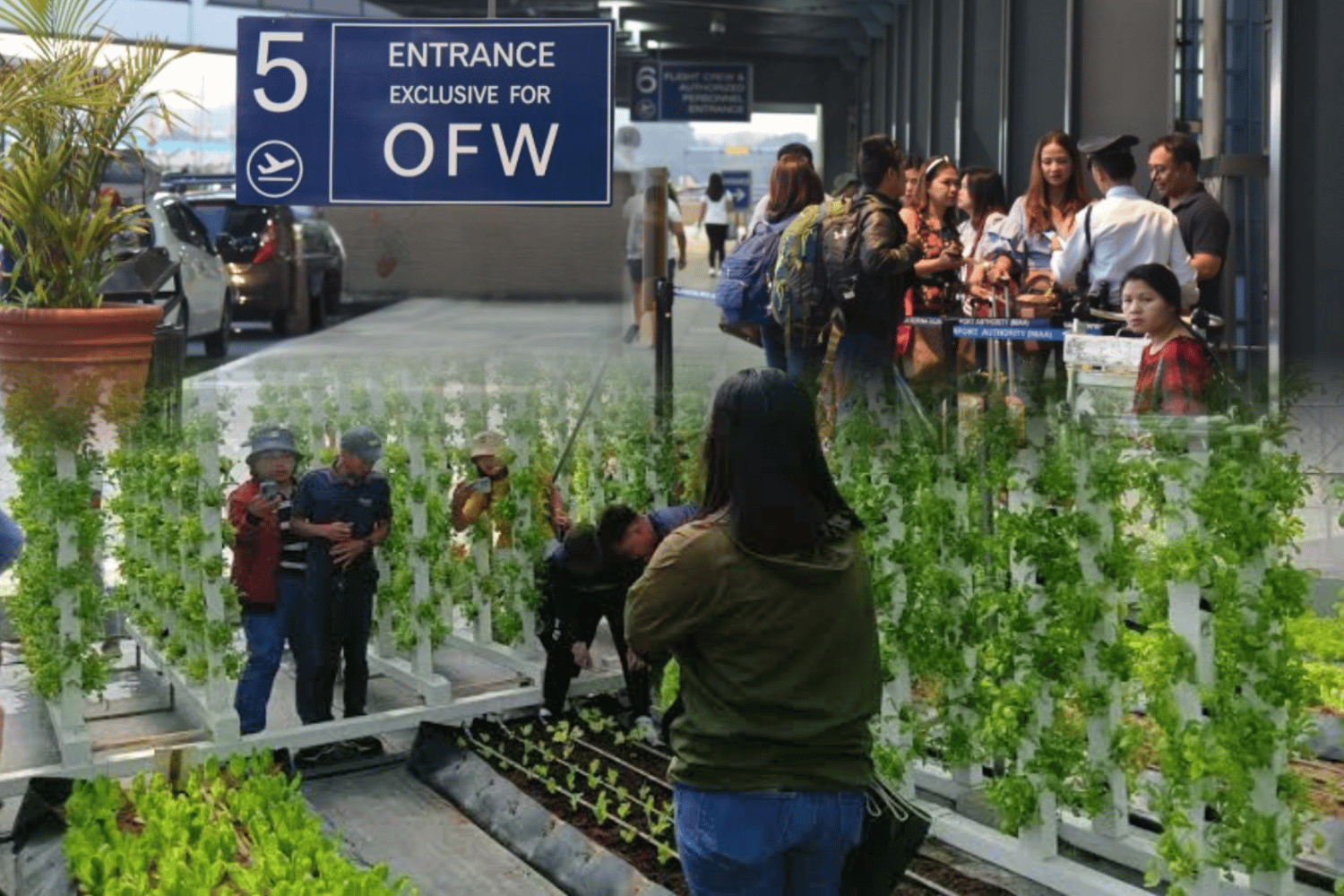
DA wants to help overseas workers turn their savings, skills, and experience into farm businesses.
Overseas Filipino workers coming home do not have to simply live off their savings. For some, the money, skills, and experience they bring home could become the starting capital for a farm or food business.
The Department of Agriculture is presenting this option as a potential second career, with government programs offering financing, training, and market-linkage support to aspiring “agripreneurs.”
The DA has been taking the pitch directly to OFWs through its Usapang Agribiz forums, where participants are introduced to investment opportunities, training programs and financing options. The forums have been held in countries including South Korea, Hong Kong, Macau and Singapore.
Modern agricultural businesses can involve food production, processing, distribution, and other services across the supply chain, while technology can help make production more efficient.
A strawberry farm in Wanju County, South Korea, gives one example of the technology Filipino workers are already encountering abroad. The farm employs eight seasonal workers from Mina, Iloilo, and uses environmental controls, fertigation, automated pest control, and air-circulation systems.
Those technologies could potentially be adapted to local agricultural enterprises, particularly as returning workers bring home experience from more advanced agricultural systems.
For OFWs already back in the Philippines, one possible starting point is the OWWA Enterprise Development and Loan Program, which provides business training and access to financing in partnership with LandBank. Applicants go through OWWA’s Regional Welfare Office Reintegration Unit, complete the required enterprise development training, and submit a business plan.
The program offers loans ranging from ₱100,000 to ₱2 million for individual borrowers and up to ₱5 million for groups, subject to eligibility requirements. The loan may be availed of within three years from the OFW’s arrival in the Philippines, with some exceptions.
For those looking for agricultural-specific guidance, the DA’s Agribusiness Development Center serves as a one-stop shop for agribusiness entrepreneurs and investors. It provides training, market and price information, business opportunities, and links to buyers, institutions and private-sector partners.
The DA and OWWA are also strengthening agricultural programs and services for OFWs, while the government is exploring technology-exposure opportunities for young Filipino farmers. In Seoul, the two agencies recently signed a memorandum of agreement to strengthen these services.
The approach gives migrant workers another possible use for the capital they accumulated overseas. Instead of putting those savings solely into consumption or traditional investments, some could use them to build businesses connected to farming and food production.
READ: