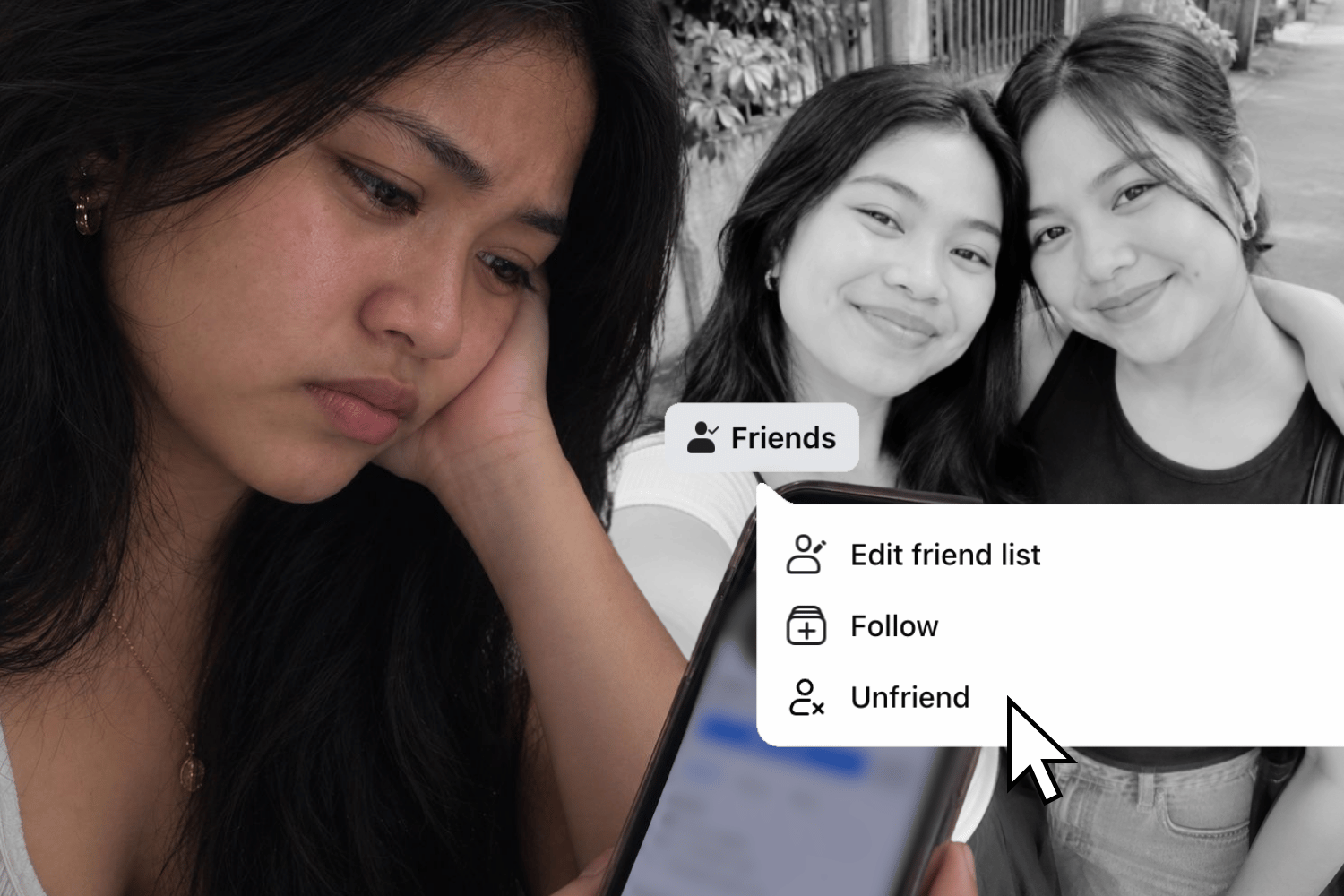
Staying connected to a deceased friend’s profile isn’t a sign that you haven’t moved on.
Death used to mean saying goodbye at a wake, attending a funeral and slowly learning to live without seeing someone again.
Social media has changed that. Someone may be gone, but their Facebook profile remains. Their photos are still there. Old Messenger conversations can still be opened. Their birthday may still appear on your notifications. Years later, Facebook Memories can suddenly bring their face back to your screen.
It raises an uncomfortable but increasingly common question: Should you unfriend someone after they die?
Threads user @yogibenj recently asked exactly that: “Ina-unfriend niyo ba FB friends niyo pag pumanaw na sila? Nire-remove niyo rin ba sila sa GC?”
The post drew more than 20,000 views prompted different answers. Some said they keep deceased friends because they want access to old photos, posts and conversations. Others remove them, particularly when relatives begin using the account. Some draw the line differently: remove the person from group chats, perhaps, but never from the friends list.
The responses point to a new reality of grieving: there is no universally accepted etiquette for what to do with the social media accounts of people who die.
When a Facebook profile becomes a memorial
For many people, keeping a deceased friend online is not about pretending the person is still alive. Their profile effectively becomes an archive.
Photos can be revisited. Old conversations can be reread. Friends may return to the timeline on birthdays and death anniversaries. A forgotten comment or photograph can preserve a memory that might otherwise have faded.
There can also be comfort in simply seeing the person’s name remain on a friends list. Social media created connections during life, and some people see no reason those connections must be digitally erased after death.
Facebook also allows accounts to be memorialized, providing a more formal way of preserving someone’s profile after they have died. Depending on the account’s settings, friends may still be able to share memories while the profile itself remains preserved.
But sometimes the algorithm hurts
What comforts one grieving person can be painful for another.
Social media platforms were largely designed around active users, which means automated features can produce unsettling encounters with death.
A birthday notification can suddenly remind someone to greet a friend who died years ago. Facebook Memories can surface photographs without warning. Old conversations remain only a few taps away.
More jarring is when another person gains access to the deceased user’s account and begins posting from it. As several respondents in the Threads discussion pointed out, seeing a dead friend’s account suddenly active—or appearing online—can feel disturbing.
For someone trying to cope with loss, unfriending or unfollowing can therefore be less about erasing a person and more about controlling when and how memories return.
You don’t have to choose between keeping and deleting
There is also a middle ground.
Someone who wants to preserve the digital connection without constantly encountering reminders can unfollow or mute an account. Facebook’s Memories settings can also be adjusted to hide specific people or dates, reducing unexpected reminders while keeping the friendship intact.
The important distinction is that a social-media connection and a human relationship are not the same thing.
Pressing “unfriend” does not delete photographs stored elsewhere, erase shared experiences or determine how much somebody mattered. In the same way, keeping a dead person’s account on a friends list does not necessarily mean someone has failed to move forward.
READ:

Diesel prices jump ₱8.82/L on September 22
Kenneth M. del Rosario
September 21, 2026

Indie singer’s likeness, AI used to create fake romance with stranger
Annah Bautista
August 20, 2026

Looking down on Filipino movies won’t make your taste superior
Matahari
August 15, 2026