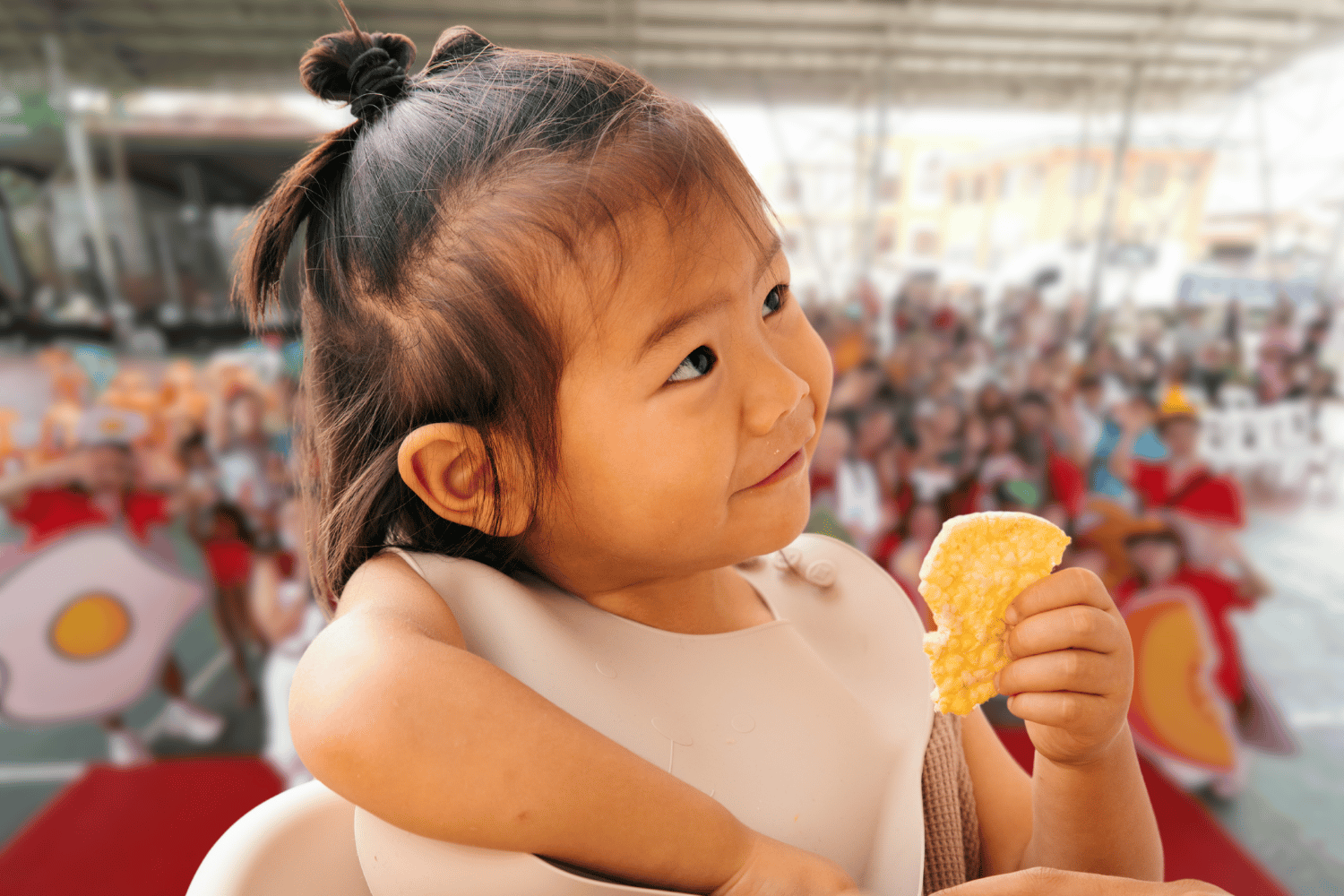
Community gatherings provide an accessible space for families to learn about proper child nutrition and balanced meals.
When there’s a baby in the family, questions about food can surface almost anywhere.
It takes a village to raise a child, the saying goes. And when it comes to nutrition, that village can include more than parents and pediatricians. A lola may have tips rooted in years of experience. A tita may send a message via PM or the GC. A kapitbahay may share something during a casual chikahan. And then there’s television, YouTube, magazines, and web articles, each offering another piece of information.
Of course, medical advice from a healthcare professional remains necessary, especially when it comes to a child’s health. But all these sources reflect something familiar about how information moves: it doesn’t always wait for an appointment.
It can come anytime, anywhere: while preparing breakfast, doing the grocery run, or riding the bus home. It can also be more targeted, like during a meeting with parents and teachers or a homeowners’ association gathering.
Sometimes, the conversation moves from the household into the barangay, where nutrition becomes part of an activity that brings people together. The setting may change, but nutrition remains part of everyday life: something people encounter, discuss, pass along, and eventually bring back home.
And that means nutrition education doesn’t necessarily have to happen in traditional places of learning. It can take shape wherever people gather, whether through a conversation, a question, or even a game.
A recent barangay initiative by Nestlé’s Cerelac offers one example of this.
Through its “Tambalang BIG Sustansya sa Barangay” caravan from August to early September, the cereal brand visited four barangays in Quezon City, Malabon, Cavite, and Cagayan de Oro. About 500 families participated in activities that included games, conversations, and a specialized bingo where marking a square leads to a fun discussion on nutrition.
It is a small example of how nutrition education can take on a different character when it becomes part of a community gathering. Instead of simply receiving information, people have a chance to encounter it in a space they already know and share with others.
Dr. Katrina Florcruz-Dacanay, a pediatrician at the Diliman Doctors Hospital and The Medical City, also discussed with parents can make home-cooked meals can be made creative and delicious—without skimping on nutritional value.
Those meals can also be paired with Cerelac, which is marketed as an infant cereal fortified with 20 vitamins and minerals and high in iron. Some variants also contain DHA and B. lactis probiotic.
Florcruz-Dacanay pointed out that fortified infant cereals can help provide energy and nutrients suited to babies’ needs, while homemade food remains an important part of a baby’s diet.
And the subject itself is becoming framed in a wider way.
For years, conversations around early childhood nutrition have often centered on the first 1,000 days, from pregnancy through a child’s second birthday.
The numbers offer a clearer picture of what is at stake. According to the 2019 Expanded National Nutrition Survey of the Department of Science and Technology’s Food and Nutrition Research Institute, about 9% of Filipino infants and young children aged 6 to 23 months met the minimum acceptable diet. Put another way, about nine in 10 children in that age group were not getting the recommended amount, frequency, and variety of food for healthy growth.
More recent figures continue to underscore the concern. In its 2025 Updating Survey, the DOST-FNRI recorded stunting among children aged 0 to 5 at 25.3%, compared with 23.6% in 2023. The prevalence of underweight also climbed, from 15.1% to 16.2%.
That is why the conversation is beginning to move beyond the first 1,000 days, looking instead at the first 2,000—from pregnancy through a child’s fifth birthday.
That longer view also broadens how we think about nutrition. It isn’t only about a baby’s first meals or the earliest months of life, but also the years when children grow, develop, start school, and become more independent.
And whatever the setting—at the dinner table, in the family GC, in the backyard, at school, or in the barangay—the discussion just finds its way back to what is on a child’s plate.
READ:
Jodi fears having an activist child but understands their greater purpose
Rafael Asonza
September 22, 2026
Meta, Roblox, Reddit, Discord may be violating children’s privacy
Kiara Gorrospe
September 22, 2026

NUTRITION MONTH: Oat milk isn’t always the healthier choice, nutrition expert says
Kiara Gorrospe
July 18, 2026
Tags: Cagayan de OroCaviteCerelacchild nutritionDepartment of Science and TechnologyDOST-FNRIExpanded National Nutrition Surveyfirst 1000 daysFNRIFood and Nutrition Research Instituteinfant nutritionKatrina Florcruz-DacanayMalabonNestlénutrition educationparentingQuezon CitystuntingTags/Keywords barangayunderweight