There were also accusations that the brand “appropriated” the Filipino delicacy.
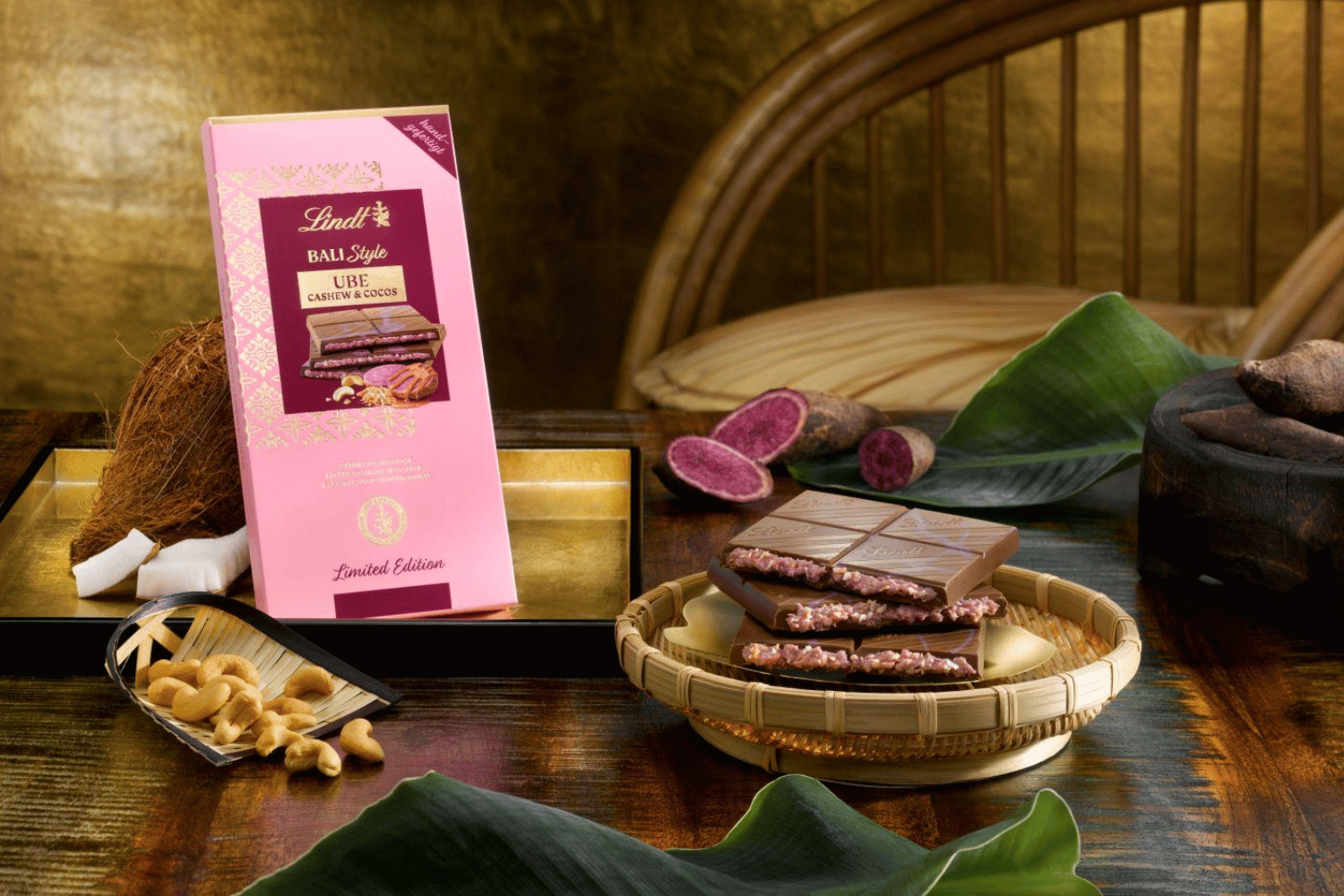
Swiss chocolatier Lindt is set to unveil a “Bali-Style Ube” chocolate, but Filipinos and Indonesians have raised concerns over what they call the product’s misleading name—and how a crop popularized by the Philippines has instead become associated with the Indonesian island paradise.
Industry publication Global Travel Retail Magazine first reported on Sept. 24 that the brand would reveal a new product at the Tax Free World Association 2025 Sensation Zeduction masterclass—a key retail industry event—in Cannes, France, later this month.
GTRM later identified the product as “Bali-Style Ube” chocolate with cashew and coconut filling, caramel pieces, and vanilla. The treat will fall under Lindt’s “Flavours of the World” series, which previously featured “Dubai-Style” and “Tokyo-Style” chocolates.
The publication said the ube used in the product is sourced from Indonesia. It did not specify whether it is from Bali itself.
It also made it a point to mention the Philippines. “Ube, the purple yam root pronounced “oo-beh,” originally comes from the Philippines. In Bali, it is traditionally used to enhance desserts,” GTRM wrote.
The description has since drawn criticism over its use of the term “ube.”
In the Philippines, purple yams are called ube, which is widely used in Filipino desserts and other sweet preparations. The ingredient has also become increasingly popular globally as Filipino food has gained international attention.
In Indonesia, root crops are commonly referred to as ubi, with different varieties and preparations. These include ubi ungu, or purple sweet potato; ubi kayu, or cassava; and ubi jalar, or sweet potato.
The combination of the Filipino term and the Bali branding prompted netizens to question the marketing decision.
A Threads user claiming to be Indonesian said they go Bali “almost every year. And I never heard or see any ube-based food.”
Another user pointed out that it is ubi that is known on the island, not ube: “[C]hoosing Bali probably makes it sound more aesthetic and appealing rather than saying ‘Philippines.'”
Lindt Headquarters and Lindt Asia had not responded directly to the criticism, but Lindt Germany acknowledged the Filipino origins of ube in an Instagram comment.
“Our Bali Style Chocolate is not supposed to replace or interpret this origin. Rather, we’ve been inspired by the diverse pleasures of Southeast Asia. For our recipe, we combine ube grown in Indonesia with coconut and cashew to create a world of taste that reminds us of Bali,” read the English translation of the comment.
After the Cannes event, the product will have an exclusive pre-launch at Switzerland’s Zurich Airport in October and select global travel retail shops in November.
READ: