“Food is good and cheap, but dining here requires patience,” the diner wrote, attributing the 75-minute wait to the sheer number of customers and online orders.
It points to an increasingly visible problem for restaurants suddenly amplified by international recognition: what happens when demand grows faster than the dining room and kitchen can handle?
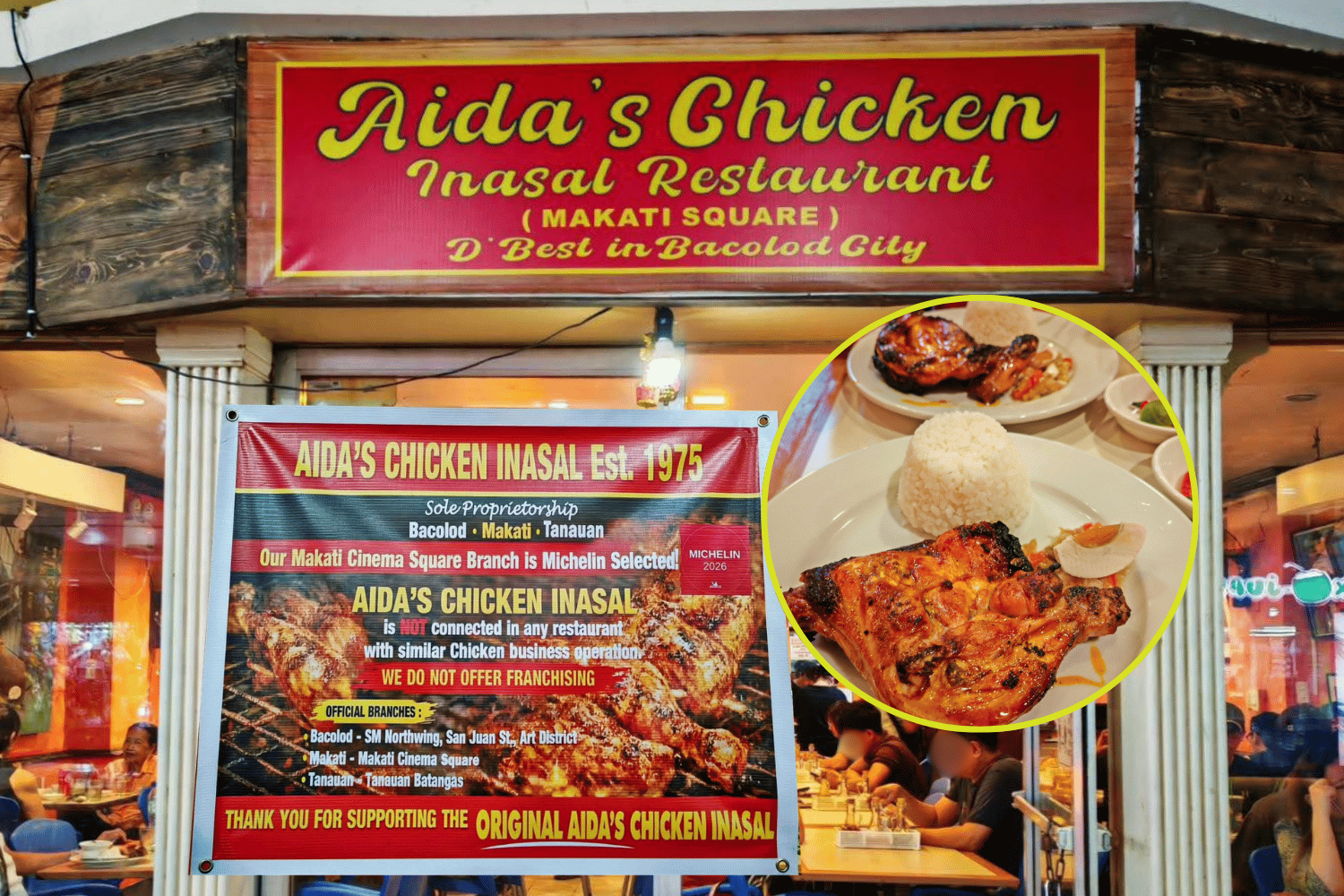
Aida’s is a Michelin Selected restaurant—not a Michelin-starred one—and remains among the Guide’s affordable Filipino choices. Michelin praises its Bacolod-style chicken inasal for being succulent and superbly smoky, with the chicken grilled to order.
But waiting appears to be becoming part of the experience.
Other customer reviews have similarly reported long waits and queues during busy periods. These individual experiences do not necessarily represent Aida’s normal service time, but they illustrate the operational pressure that can come when a once-local favorite suddenly attracts a much larger audience.
There is also an understandable reason for some delay. Aida’s signature chicken is grilled to order rather than simply pulled from a large pre-cooked batch. That helps preserve what made the restaurant famous in the first place—freshly grilled, smoky inasal—but also limits how quickly orders can leave the kitchen when dine-in customers, takeout orders and online deliveries arrive simultaneously.
Aida’s traces its roots to Bacolod, where it became part of the city’s celebrated chicken inasal culture. Its Makati Cinema Square branch eventually brought the family tradition to Metro Manila and earned Michelin recognition.
Its appeal remains unusually democratic: internationally recognized Filipino food served in a no-frills setting without the prices normally associated with prestigious restaurant guides.
That success, however, brings a new challenge.
Michelin can put more people at the table. The harder job is making sure the kitchen can still feed them before excitement turns into frustration.
READ: