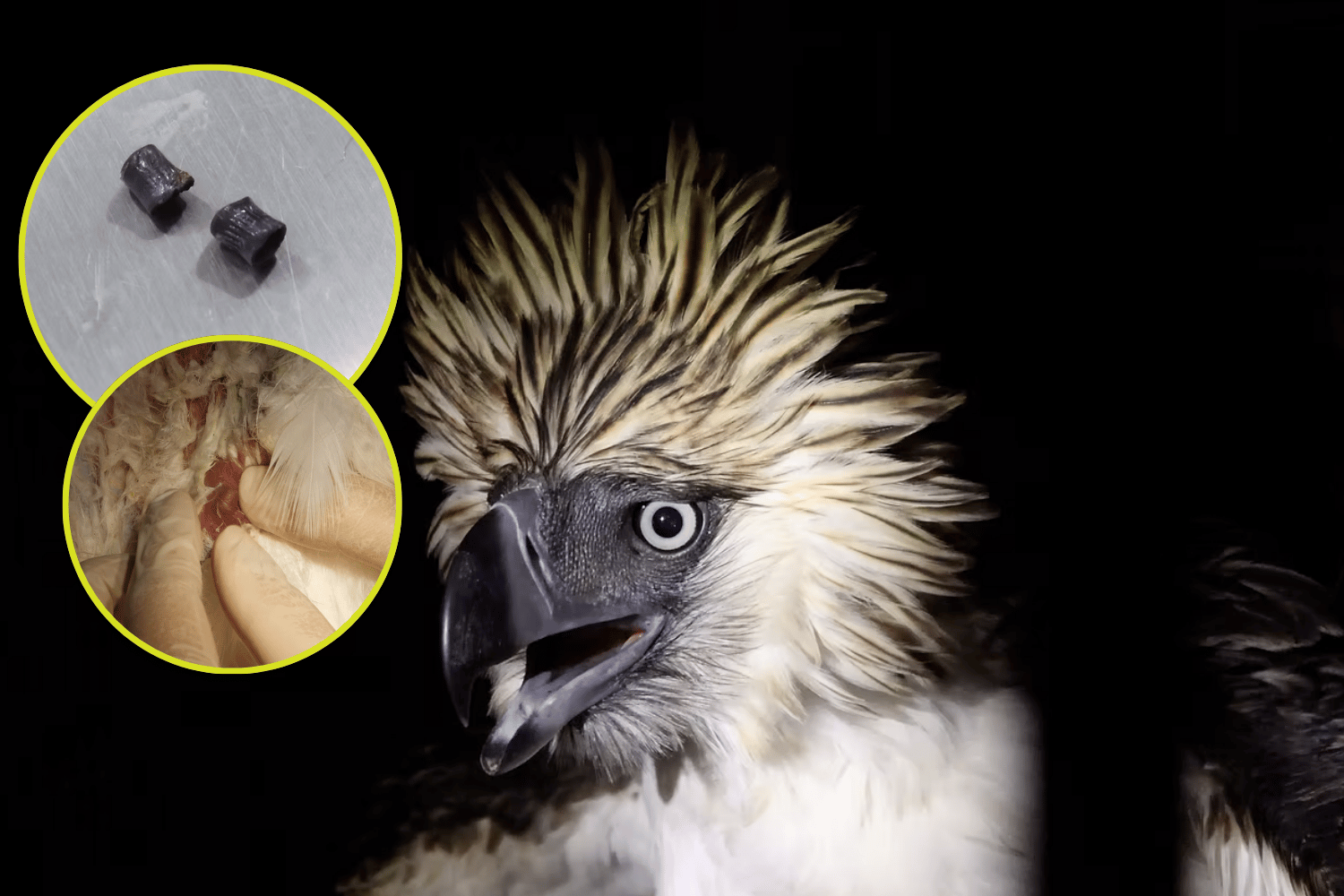
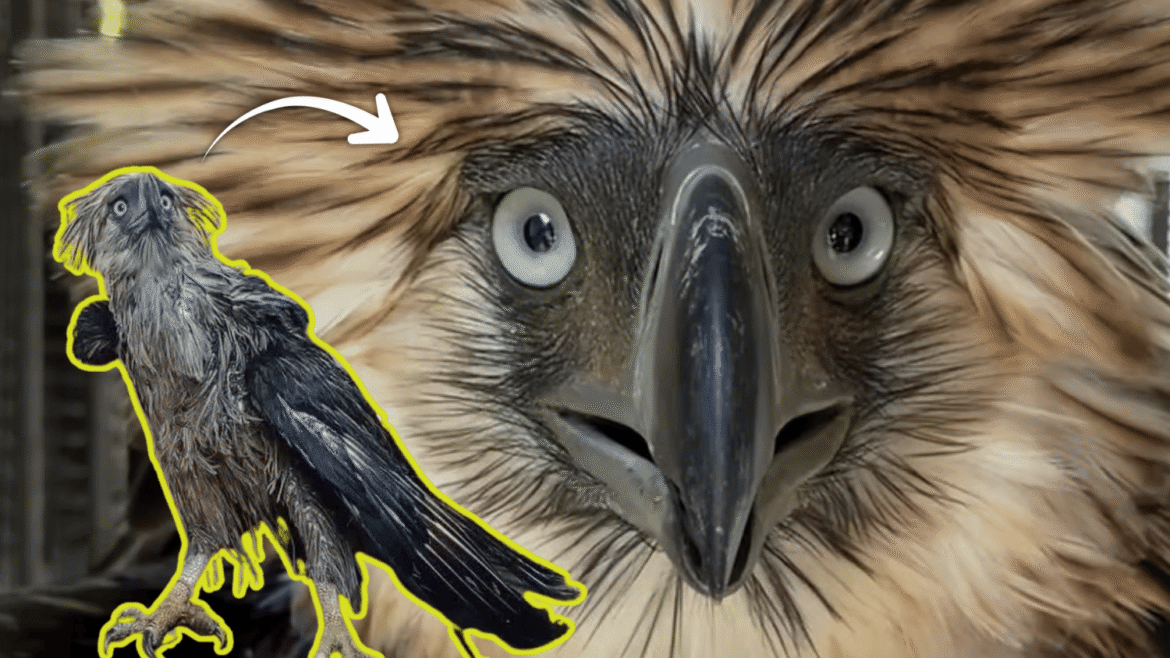
A young Philippine Eagle rescued in Magpet, Cotabato was found carrying three airgun pellets inside its body, according to the Philippine Eagle Foundation.
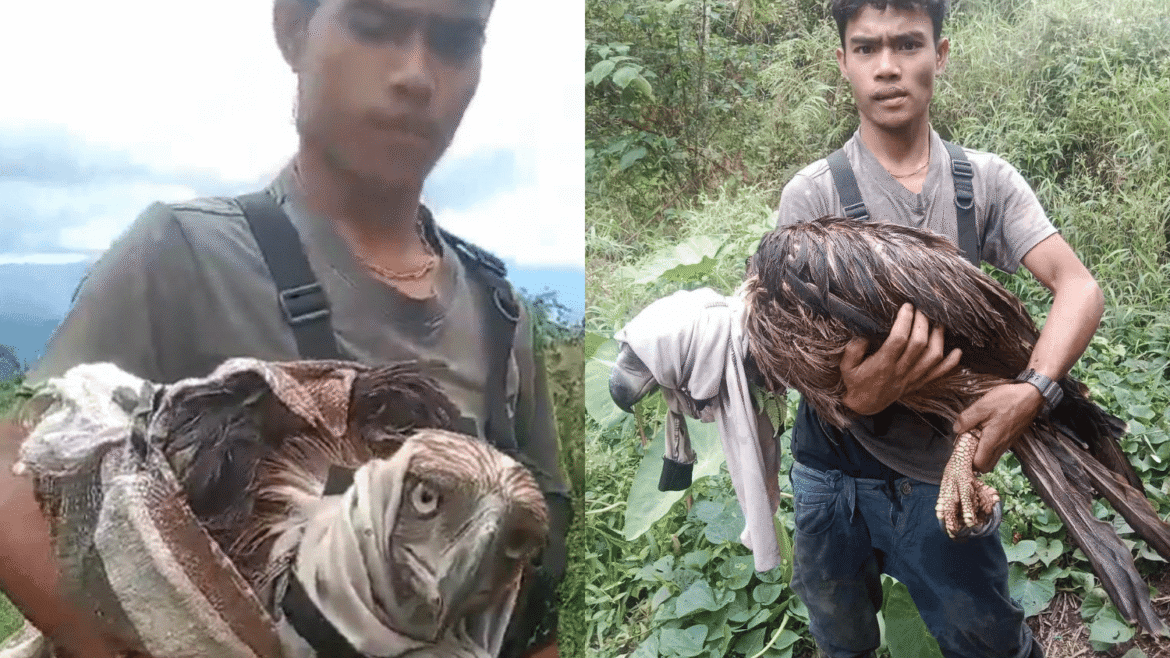
In a post published on its website on Oct. 1, the PEF said the eagle—approximately five years old and presumably female—was found weak on Sept. 27 in Barangay Manobo. The bird was later brought to its headquarters for examination and treatment.
An X-ray showed three pellets lodged near the bird’s right wing, right leg, and the base of its tail. Two were removed under local anesthesia, while the third was left in place after veterinarians determined that removing it could pose additional risk.
The PEF said no fresh entry wound was found, suggesting the eagle may have been carrying the pellets for some time. The bird, later named “Magpet,” remained bright, alert, and responsive during its initial examination.
The incident is not the first shooting involving a Philippine Eagle in the area. In 2013, a juvenile eagle rescued in nearby Barangay Amabel, Magpet later died from a .22-caliber gunshot wound.
“We have seen this happen too many times. Philippine Eagles continue to be shot with air guns and improvised firearms,” PEF Executive Director Dennis Salvador said.
The Philippine Eagle is classified as critically endangered by the International Union for Conservation of Nature, with the PEF estimating around 400 pairs remaining in the wild. A 2023 study put the potential breeding population at 392 territorial pairs, or about 784 mature individuals, based on modeled suitable habitat and the species’ average home-range requirements.
Found only in the Philippines, the country’s national bird inhabits the forests of Luzon, Samar, Leyte, and Mindanao.
The PEF identifies habitat loss and human persecution, including shooting and trapping, among the major threats to the species. The foundation also says at least one Philippine Eagle is killed by shooting every year.
Magpet was rescued in an area with a long history of Philippine Eagle nesting, with records dating back to 1983. The last confirmed nesting record there was in 1990.
The area is also part of the greater Mt. Apo Key Biodiversity Area, which PEF said covers around 100,000 hectares and includes 10 old Philippine Eagle nest sites.
The foundation said the rescue confirms that Philippine Eagles are still using the wider landscape, even after decades without a confirmed nest in the area.
Magpet remains under veterinary care, with the areas where the pellets were removed being monitored for swelling, infection, and other complications.
The PEF said it will continue to provide updates on Magpet’s recovery and rehabilitation.
READ: