A viral Threads post has sparked a curious question: Who owns bananas hanging over a neighbor’s wall?
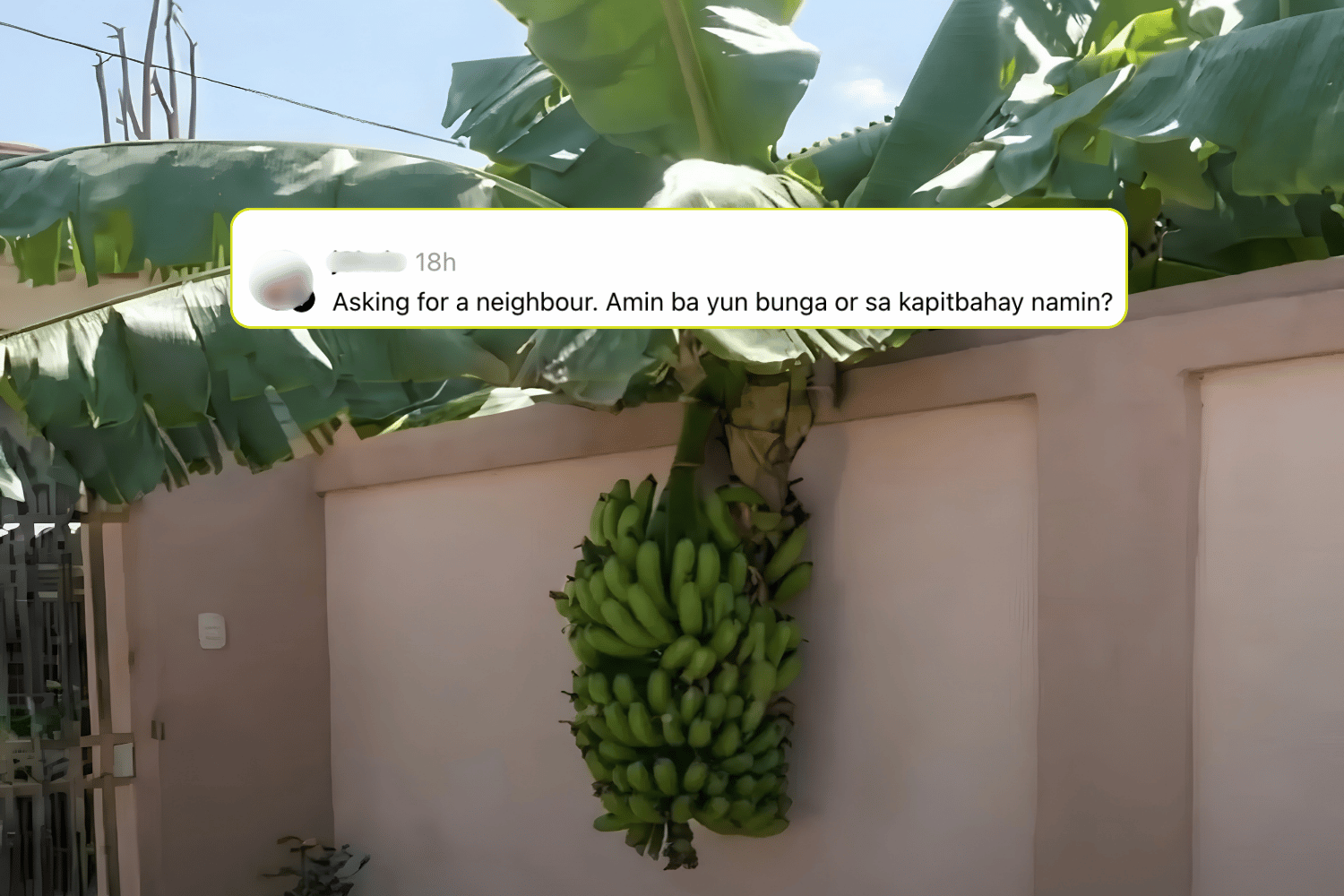
The Oct. 2 post showed the poster’s backyard with a banana tree from the neighboring property extending over the wall. Its leaves and fruit were already hanging above the backyard.
“Asking for a neighbour. Amin ba yun bunga or sa kapitbahay namin?” the poster asked.
Under Article 681 of the Civil Code, “Fruits naturally falling upon adjacent land belong to the owner of said land.”
And there’s the important caveat: the fruit must have already fallen—naturally.
Article 415 helps explain why. It considers “trees, plants, and growing fruits, while they are attached to the land” as immovable property. So bananas that are still growing on the tree remain attached to the land where the tree is planted.
Even if the fruit hangs over the neighbor’s property, it doesn’t become the neighbor’s simply because it has crossed the property line. It remains attached to the tree until it is severed or naturally falls.
Article 544 also provides that “Natural and industrial fruits are considered received from the time they are gathered or severed.”
Simply put: Bananas hanging over your wall don’t automatically make them yours.
Picking them without the neighbor’s consent could also raise a theft issue. Article 308 of the Revised Penal Code covers taking another person’s personal property without consent and with intent to gain, among other circumstances.
For this particular backyard banana dilemma, the answer is fairly simple: if it falls into your property, it can be yours. If it’s still hanging, it belongs to the neighbor.
A few bananas may not be worth losing a good relationship with the kapitbahay—or having a run-in with the law.
READ: