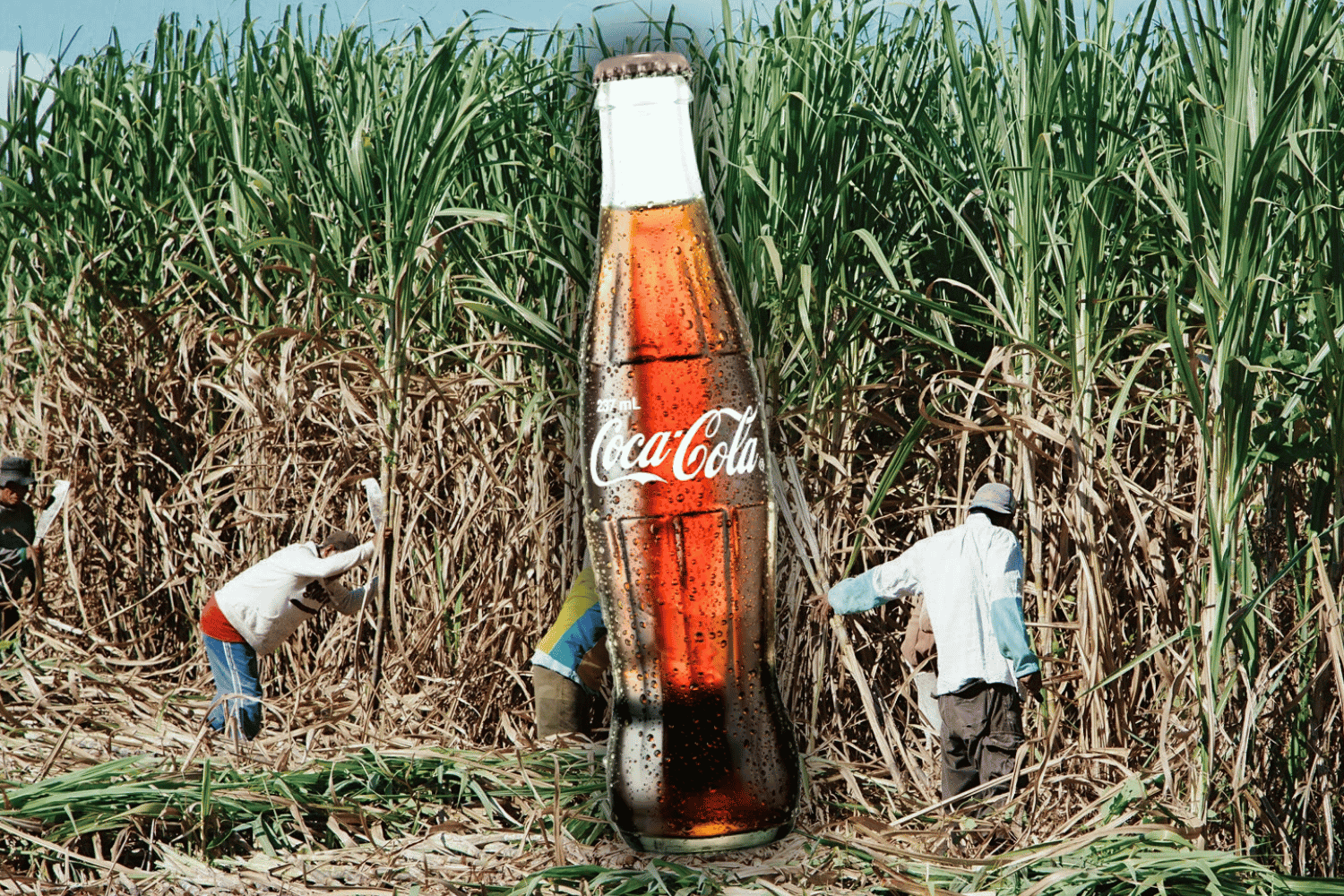
The federations insisted Coca-Cola’s support must reach sugar communities nationwide.
Major sugar federations have welcomed Coca-Cola Europacific Aboitiz Philippines’ (CCEAP) commitment to use 100% locally produced premium refined sugar in its Negros operations, but urged the beverage giant to extend the policy nationwide amid concerns over imported finished products.
In a joint statement issued October 7, the Sugar Council, composed of the Confederation of Sugar Producers Associations (CONFED), National Federation of Sugarcane Planters (NFSP), and Panay Federation of Sugarcane Farmers (PANAYFED), acknowledged CCEAP’s October 5 announcement while pressing the company for greater transparency.
“We welcome Coca-Cola’s commitment to use 100% locally produced premium refined sugar in Negros, but we appeal to CCEAP to expand that commitment to Filipino sugar sourced throughout the country,” the council said.
The federations stressed that sourcing sugar domestically supports not only sugarcane farmers but also millers, refiners, industrial workers, transporters, and entire agricultural communities.
However, the groups questioned why CCEAP’s announcement focused primarily on its Bacolod operations without disclosing the actual volume of locally purchased sugar.
They also raised concerns over the reported importation of 16.98 million liters of finished Coca-Cola products from Indonesia, questioning its impact on domestic beverage production and demand for Philippine refined sugar.
“How does the 16.98 million liters of finished Coke products imported from Indonesia affect domestic production and local refined-sugar demand?” the council asked.
The federations argued that importing finished beverages effectively excludes Filipino sugar producers and local manufacturing workers from that portion of the production chain.
The dispute comes as sugarcane farmers continue to face mounting financial pressures.
According to the council, farmers lost billions of pesos in potential revenue during Crop Year 2025–2026 because of what it described as excessive refined-sugar imports.
These losses, the groups claimed, have weakened farmers’ ability to cope with rising fuel and fertilizer costs and infestations of the red-striped soft scale insect, a pest threatening sugarcane production.
The council emphasized that CCEAP, which it described as the country’s largest industrial buyer of locally produced sugar, plays a significant role in sustaining the domestic sugar industry.
While recognizing Coca-Cola’s nearly eight decades of operations in Bacolod, the federations maintained that its commitment should benefit sugar-producing communities across the Philippines.
The groups called for greater disclosure of sugar procurement volumes and a clearer explanation of how imported finished beverages affect local demand.
“To move forward in a spirit of genuine partnership and to give Filipino stakeholders a complete picture of the market, we call on CCEAP to prioritize Filipino sugar not only in Negros but throughout the country,” the council said.
The council’s statement did not provide independently verified figures establishing the impact of the Indonesian imports on domestic sugar demand. CCEAP’s response to the latest questions was not included in the material provided.
For the sugar federations, the central issue remains whether Coca-Cola’s commitment to supporting Filipino sugar producers will extend beyond Negros to the entire country.
READ: