Scientific studies on dreams and sleep explain why.
You lean back in your chair and close your eyes. You convince yourself you’re just taking a quick break from the screen.
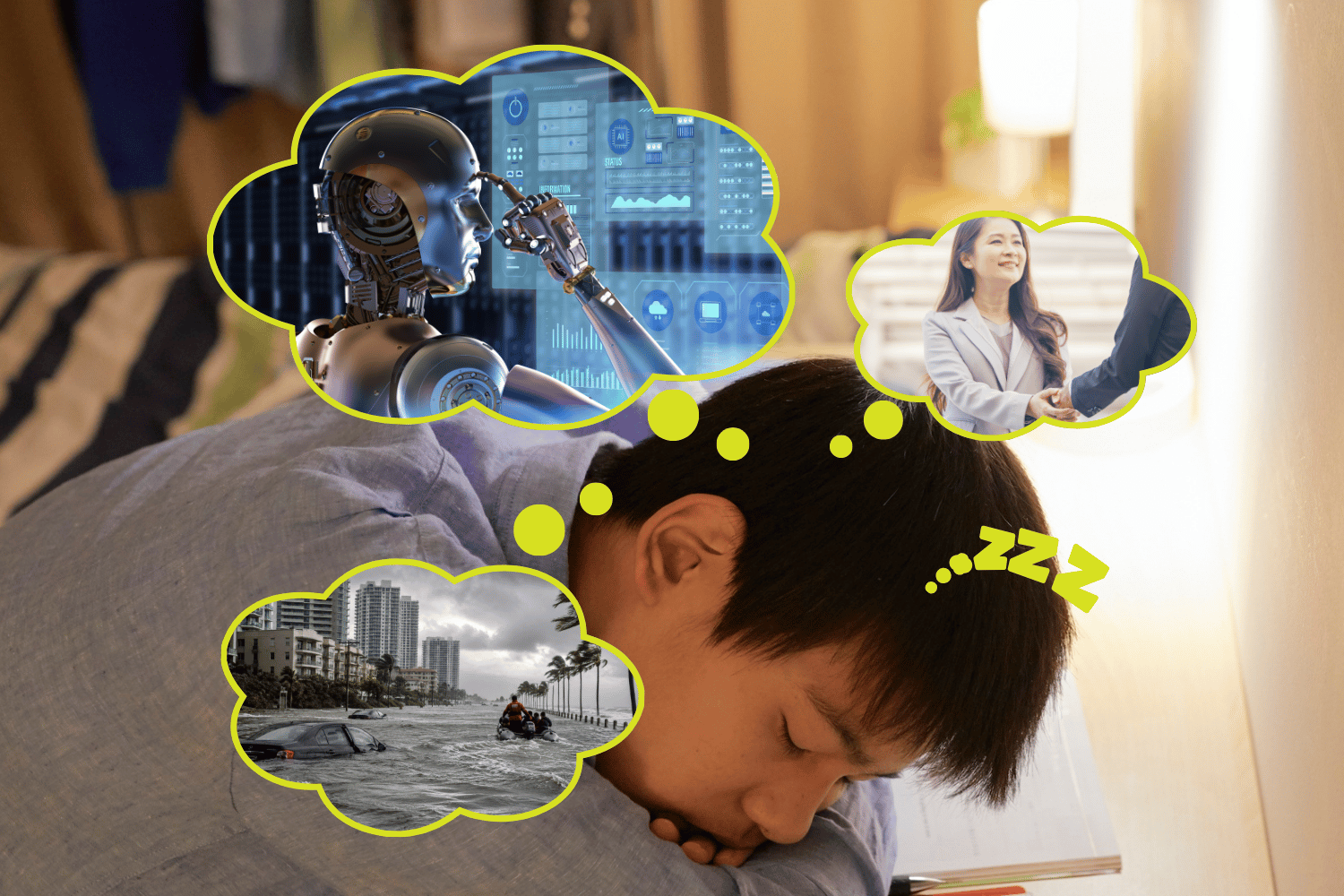
Then you find yourself somewhere else. A house you’ve never been in, a street you’ve never walked before, and a person you’ve never met talking to you like they’ve known you for a long time. One moment you’re in a panic as floodwaters are about to reach your second floor. Suddenly you’re in a lab, and a robot tells you the serum in your hand is about to end a pandemic. Then you’re about to break open a door before you’re jolted awake.
You wake up and realize it was all a dream. Fifteen minutes was all it took to make everything feel real. But the strange part is that REM, the stage where most vivid dreaming happens, usually doesn’t start until 70 to 90 minutes after you fall asleep. So what was it?
You’ve probably slipped into the first stage of sleep, called N1 or hypnagogia. The US National Institute of Neurological Disorders and Stroke describes it as the changeover from wakefulness to sleep. You’re between being awake and being asleep, but not fully under.
Dreams can happen in any stage of sleep, though they’re usually most vivid in REM. The first few minutes can come close. In a 2005 study, researchers at Semmelweis University in Budapest measured activity deep in the brain as people fell asleep. They found a REM-like pattern that peaked about 30 seconds in. It fits an idea sleep scientists call the covert REM hypothesis: bits of REM show up early and bring vivid, dreamlike images with them.
In a 2020 study, researchers at MIT played audio cues to people during this stage, and those cues found their way into their dreams. The hum of the aircon or a coworker’s voice can slip into the scene the same way.
Some naps skip ahead to REM altogether, and your schedule plays a part. In the Wisconsin Sleep Cohort, a community-based US sleep study, men who worked shifts were more likely to slip into REM soon after dozing off during daytime nap tests. So if your hours are all over the place, your naps might get stranger.
Falling asleep is also hard on memory. In a 1994 study at the University of Arizona, people who slept for 10 minutes struggled to recall words they’d heard just before nodding off, while those woken after 30 seconds remembered them. A short nap can end right in the middle of a dream, so that one is still fresh when you open your eyes.
Some people have tried to use this on purpose. According to the Paris Brain Institute, Thomas Edison reportedly napped holding a metal ball so it would drop and wake him just as he drifted off, and Salvador Dalí also used short naps to spark ideas. In 2021, the institute put the idea to the test. Researchers gave 103 people math problems with a hidden shortcut. Of those who spent at least 15 seconds in this first stage of sleep, 83 percent found the shortcut, compared with 30 percent of those who stayed awake. The effect disappeared when people sank into deeper sleep.
And then you go back to your screen and try to pick up where you left off. You’re no longer watching floodwaters creep up to your second floor window and no longer holding a serum that’s about to end a pandemic. And a part of you still wonders what’s behind that door.
READ:

Beauty sleep on a tight budget: health professionals weigh in
Rei Marquez
October 21, 2025

SELF-HELP: You can actually train your brain to change
Top Dagohoy
September 20, 2026

The Philippines’ complicated relationship with sleep
Rei Marquez
October 21, 2025