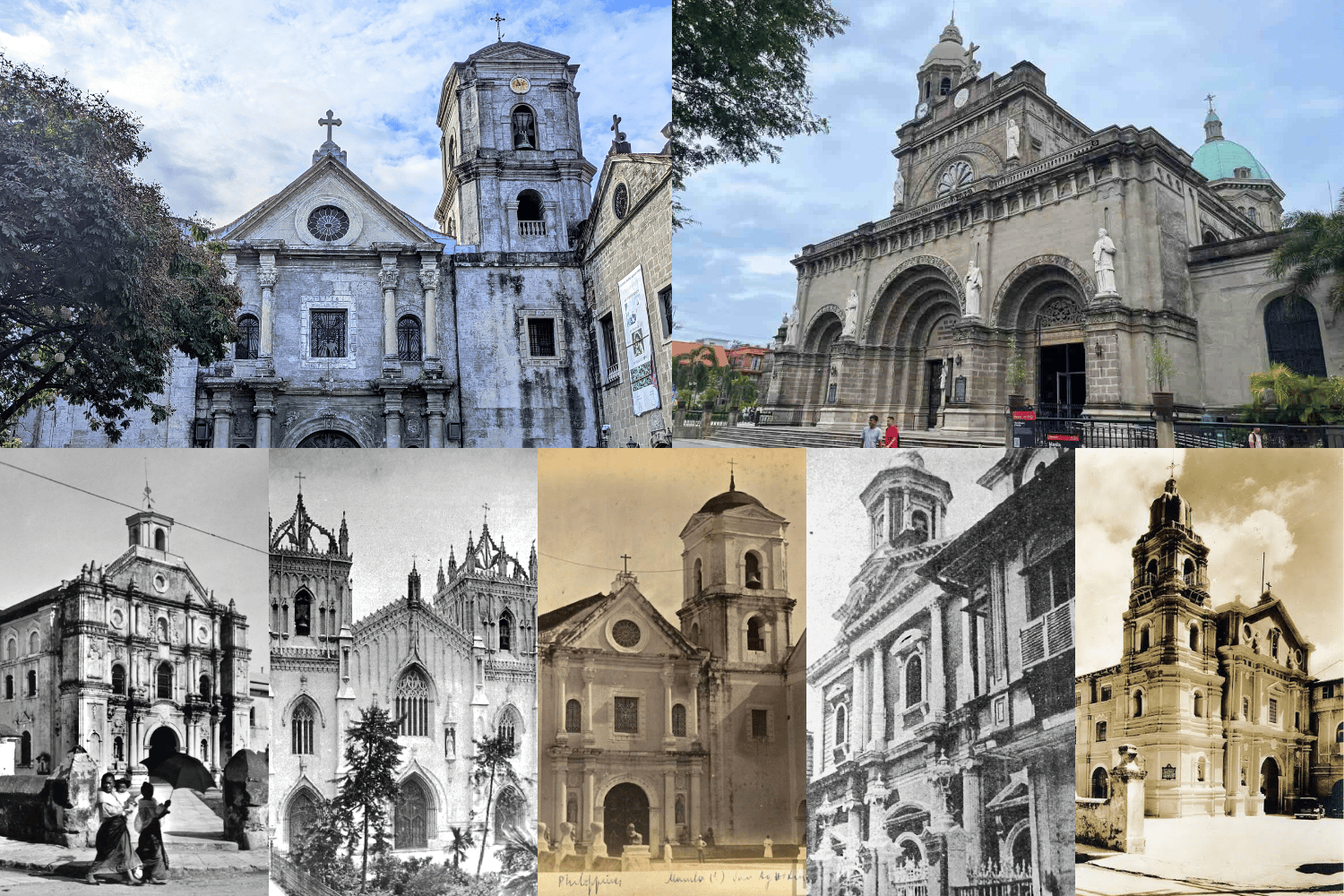
Only San Agustin survived mostly intact, while the Manila Cathedral was rebuilt in 1958.
You’re walking through Intramuros, surrounded by seven magnificent churches standing just a few streets apart. Their bell towers dominate the skyline, their centuries-old interiors remain intact, and tourists from around the world marvel at one of Asia’s greatest collections of Spanish colonial architecture.
Every corner reveals another masterpiece. Elaborate altars, religious paintings, carved wooden ceilings, and centuries-old stonework make Manila feel like a historic European capital.
This could have been Intramuros today.
Before World War II, the walled city was celebrated as the ‘Rome of the Far East,’ partly because of its extraordinary concentration of churches and religious institutions.
Seven major churches defined its landscape: Manila Cathedral, San Agustin, Santo Domingo, San Francisco, San Ignacio, San Nicolas de Tolentino, and Lourdes.
Then came World War II.
The Battle of Manila in 1945 devastated Intramuros. American artillery bombardment, Japanese military destruction, and widespread fires reduced much of the historic city to ruins. Santo Domingo had already been destroyed in 1941.
Of the seven churches, only San Agustin survived substantially intact. Manila Cathedral was rebuilt and reopened in 1958. The other five never returned as churches within the walls.
What Manila could have become
Had these churches survived, Intramuros might have rivaled historic religious districts in Rome, Prague, or Latin America.
Tourists could have visited seven monumental churches in one afternoon. Holy Week could have brought thousands of pilgrims for an extraordinary Visita Iglesia experience.
Heritage hotels, museums, restaurants, and walking tours might have flourished around these architectural treasures.
Santo Domingo and Lourdes eventually found new homes in Quezon City. San Francisco and San Nicolas were never restored within Intramuros, while the former San Ignacio site was repurposed for heritage use.
Today, only San Agustin and the rebuilt Manila Cathedral remain as major historic churches inside the walls.
The tragedy of World War II was not simply the destruction of buildings. Manila lost an extraordinary architectural landscape that could have made Intramuros one of the world’s greatest heritage destinations.
READ: