
Veteran theater director and film critic Rito Asilo examines Rain Yamson II’s horror anthology and its unsettling truths about human nature.
Rain Yamson II is a cinematographer whose body of work demands attention. Over the past 14 years, his mood-driven framing and time-honed ability to command an emotional atmosphere have become staples of contemporary Filipino indie filmmaking. From the raw gravity of Jason Paul Laxamana’s “Magkakabaung” and Joseph Abello’s “Double Twisting Double Back,” to the distinct textures of Howard Yambao’s “Best. Partee. Ever” and his own directorial debut “Angkas,” Yamson doesn’t merely light a scene; he anchors its rhythm.
It is precisely this cinematic instinct that transforms Yamson’s staging of “Anino: Tatlong Dula ng Lihim, Takot at Pamana”—which wraps up its three-week run at 6F Rah a Sulayman Bldg. in Legaspi Village, Makati on Oct. 30 and 31 (with 4 p.m. and 8 p.m. performances)—into an exercise in tension. By refusing to pull its punches, the production stands as a fiercely provocative examination of the latent anxieties and forbidden compulsions that truly rattle the human psyche.
Stepping into the director’s chair for this three-part theatrical anthology—comprising Patrick Libao’s “Sinalikway,” his own “Aswang sa Bundok,” and Darryl Yap and Kristofer Galinato’s “Watawat”—Yamson treats the 60-seater Ilviso Studios in Makati not as a static stage, but as a live viewfinder.
“Anino” is blocked like a sequence of deliberate film frames, proving that while Yamson may have swapped mediums, his instinct for capturing the dark impulses of human nature remains undiminished. Its disquieting spell only breaks during scene transitions: the supposedly ritualistic choreography leans inadvertently comedic rather than chilling, momentarily puncturing the play’s otherwise claustrophobic mood.
Why pursue theater now? “As they say, first love never dies,” Yamson told radar Entertainment. “Theater has always been my roots. I started in Grade 4 and continued through college, long before transitioning to cinematography. Theater taught me how to tell stories visually, master movement, create atmosphere, and leverage space to communicate emotion. I still carry those exact principles with me. The only difference is the tool—in film, I use the camera to guide the audience’s perspective; in theater, I utilize the entire stage.”
For this writer, the ultimate draw is “Anino’s” chilling thematic palette, arriving in a production perfectly timed for Halloween. With three standalone stories unified by themes like deep-seated fears and suppressed desires, it explores the grim realities of what happens when buried truths refuse to stay interred.
The most unsettling segment, “Sinalikway,” investigates a sinister iteration of the nature-versus-nurture debate. Here, Luis (Kurt Deseo) grudgingly returns home after a long absence to announce his girlfriend Denise’s (Fiona Heaggans, striking a sharp, empathetic chord) pregnancy to his doting mother and cruel father. The creepy thriller tracks the deeply uncomfortable lengths to which a family will go to keep their darkest secrets hidden from the light.
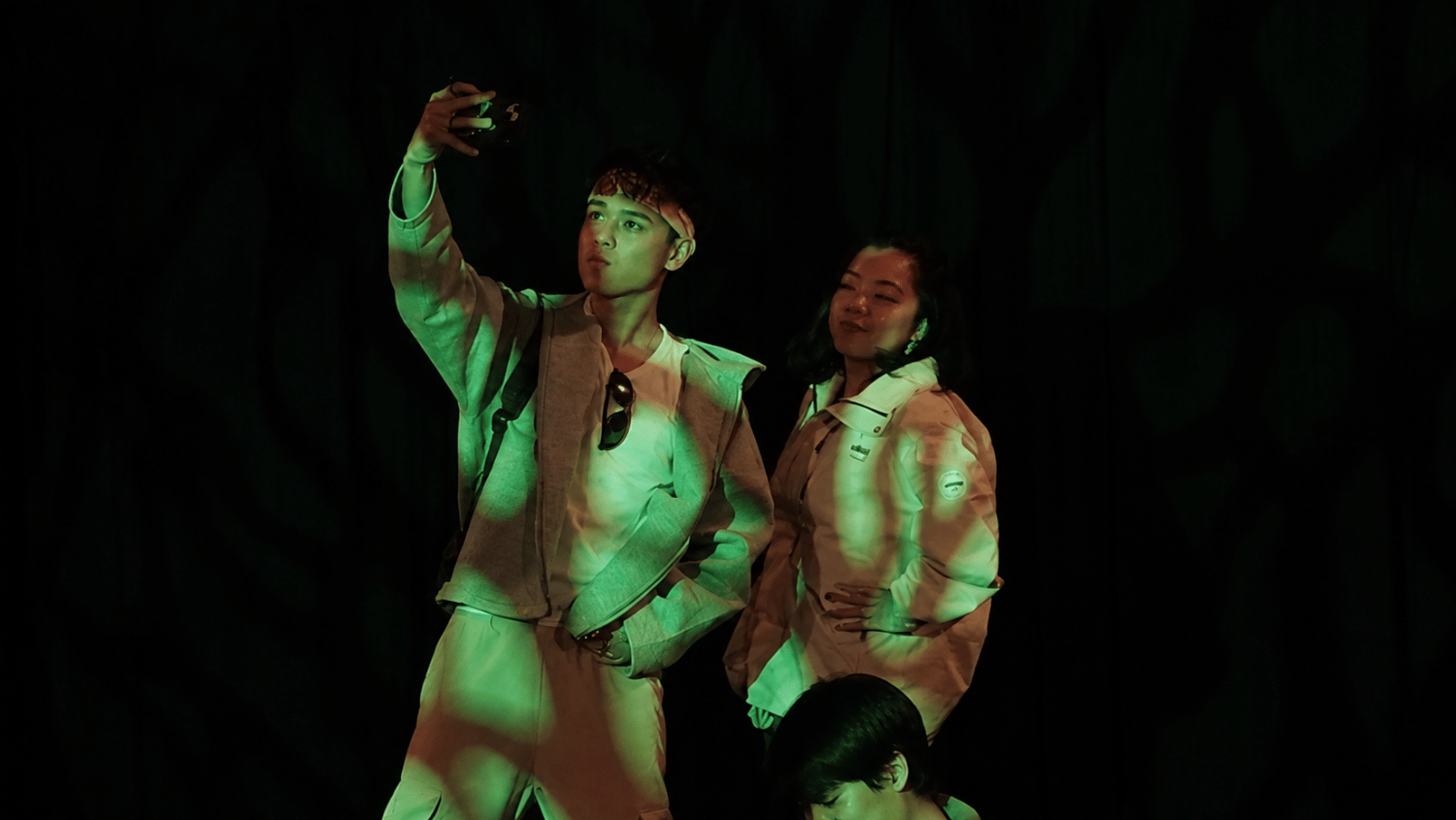
“Aswang sa Bundok,” the production’s most entertaining part, blends local folklore with psychological horror, even if the momentum is occasionally bogged down by stagnant transitions, some missed cues, and unnecessary dead air. Having caught the production on opening day, one can reasonably assume these technical wrinkles will have been ironed out for a tighter, more seamless experience by the final performances.
It follows friends (Hiro Shimoji and Mose de Leon, both delivering sharply tuned, self-deprecating performances) whose wilderness adventure unearths far more than a fear of supernatural creatures. Ultimately, Yamson’s piece interrogates the fragility of belief and loyalty, tracing the lingering presence of a curse that has stalked its characters long before they realize they are prey.
Finally, “Watawat” is as sexually provocative as it is thematically daring—complete with brief nudity and uninhibited erotica—yet it stands as the anthology’s least successful chapter, ultimately buckling under the weight of its ambition. The story follows Maria (the lovely Sherrymae Valenzuela, juggling a fine balance between radiance and profound vulnerability) as she finds herself helplessly entangled in the true, albeit duplicitous, nature of the friendship shared by Fernando (Marky Miranda) and Isagani (Lloyd Agustin).
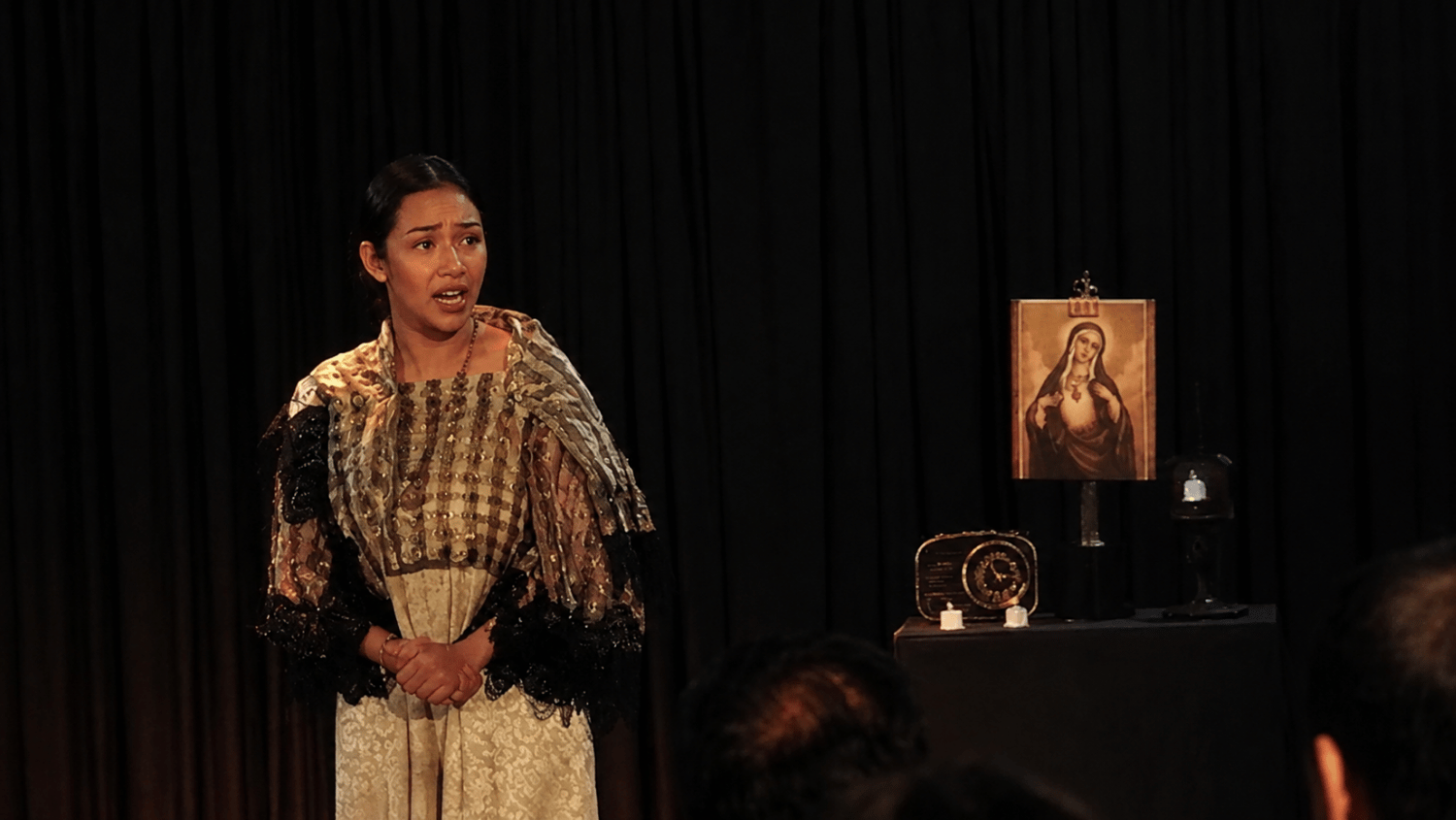
Infused with subversive historical subtext, this final piece zeroes in on legacy and human impulse, stripping away conventional morality to expose the raw anatomy of survival and personal devotion.
Asked if launching Ilviso Studios with such terrifying material was a deliberate move, Yamson acknowledged the calculation: “With Halloween just around the corner, we knew that horror and suspense would naturally appeal to a wider audience. So we saw it as the perfect opportunity to introduce Ilviso through ‘Anino.’”
Ilviso’s ambitions stretch far beyond cheap jump scares, he said: “We wanted to explore fear in different forms—not just by way of horror, but through human emotions, secrets, and the choices people make. All three stories are meant to leave the audience with something to think about.”
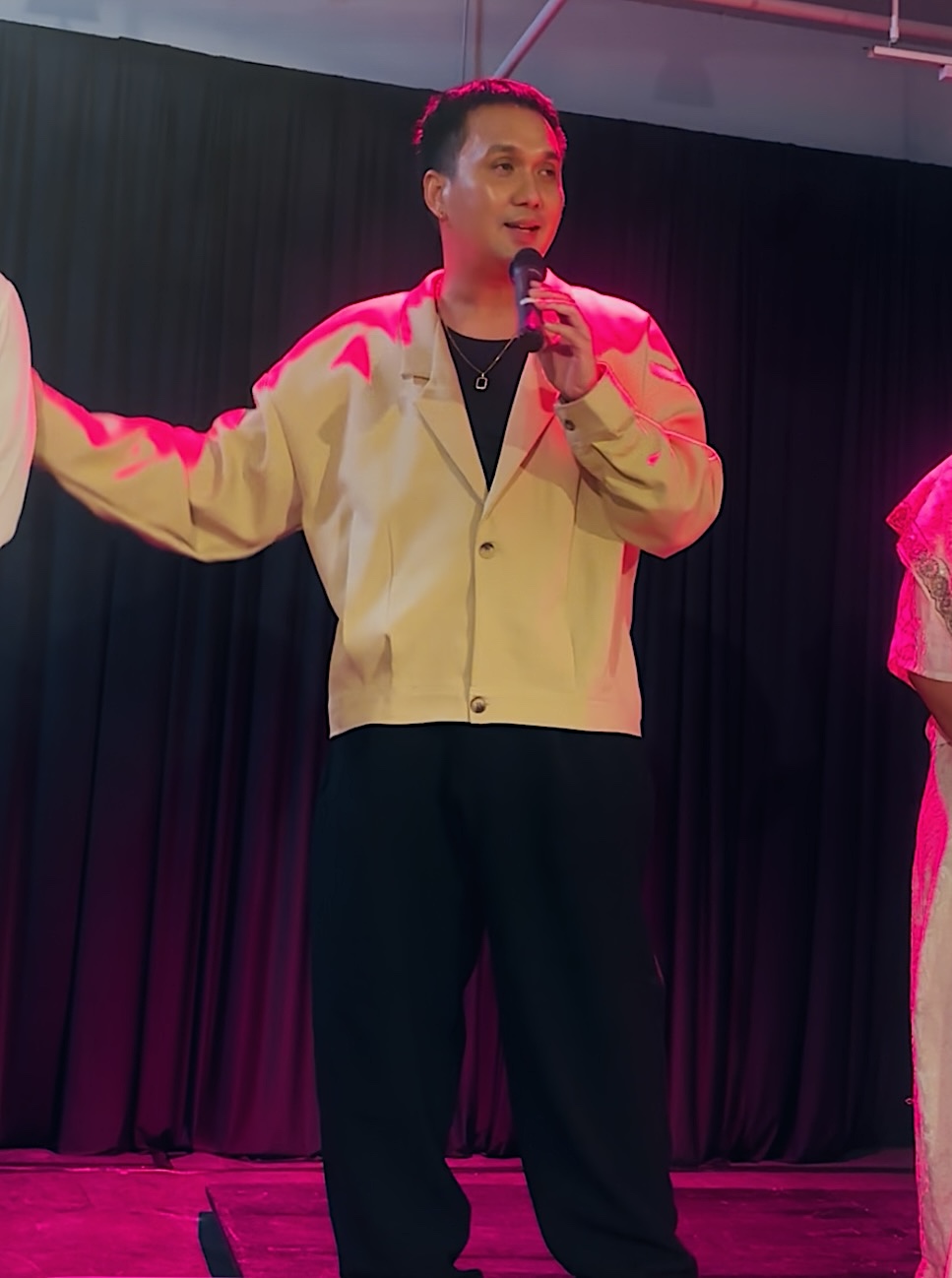
For Yamson, the ultimate measure of a narrative is its psychological half-life. “We want people to leave the theater not just entertained or frightened, but asking questions, reflecting, and perhaps seeing things from a different perspective.”
It is a philosophy that will guide the studio’s multiplatform future. “Ilviso Studios isn’t limiting itself to theater,” he disclosed. “Our goal is to produce different forms of entertainment—from stage productions to films and digital series. We’re set to shoot a rom-com miniseries and, by next year, we’re targeting to produce two full-length films.”
What, then, does Yamson wish viewers to take away from “Anino”?
“We want people to realize that there are forces far more terrifying than any supernatural phenomenon,” he cautioned. “Certainly, the lengths to which mere mortals will go when driven by passion can sometimes be infinitely more disturbing and dangerous.”