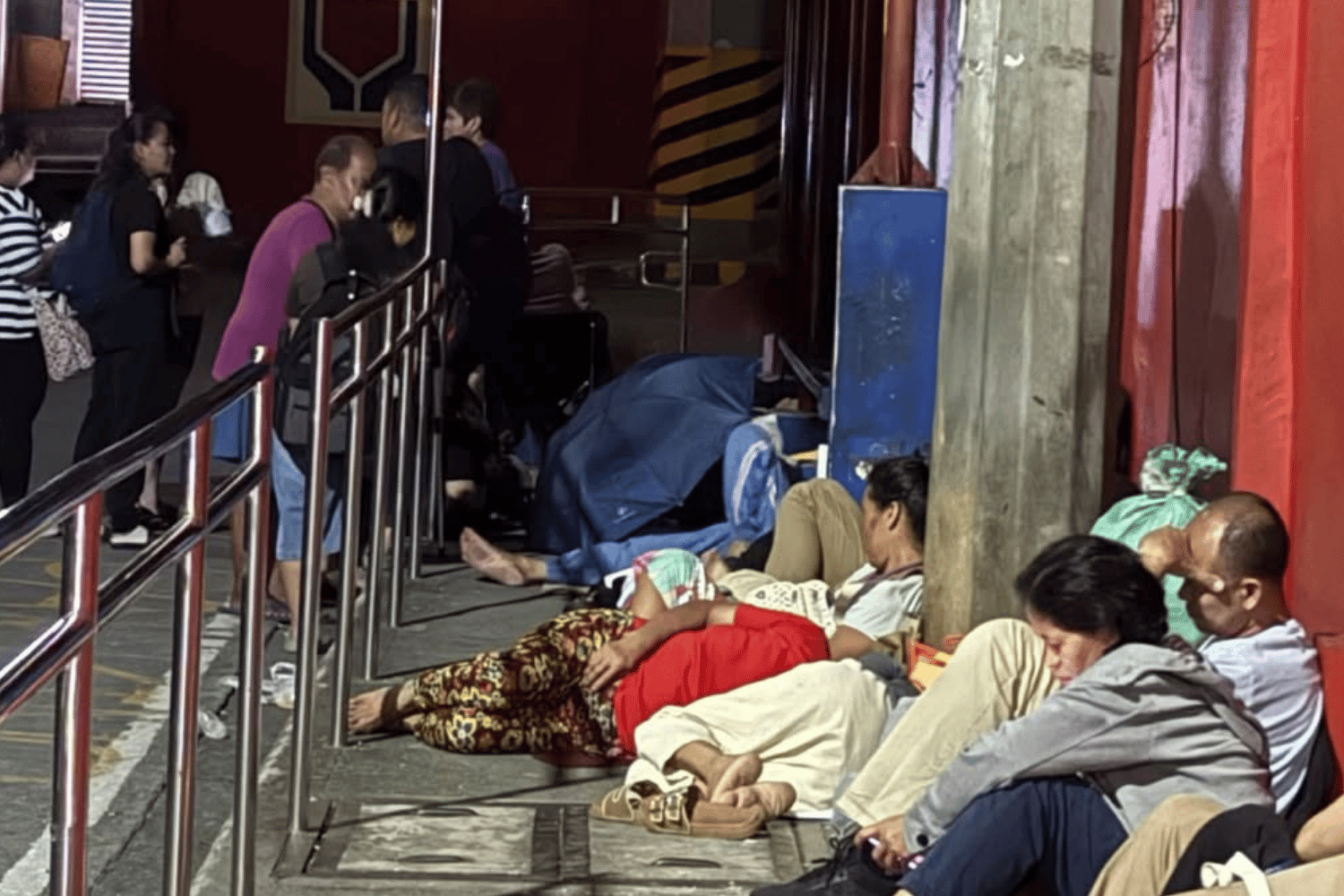
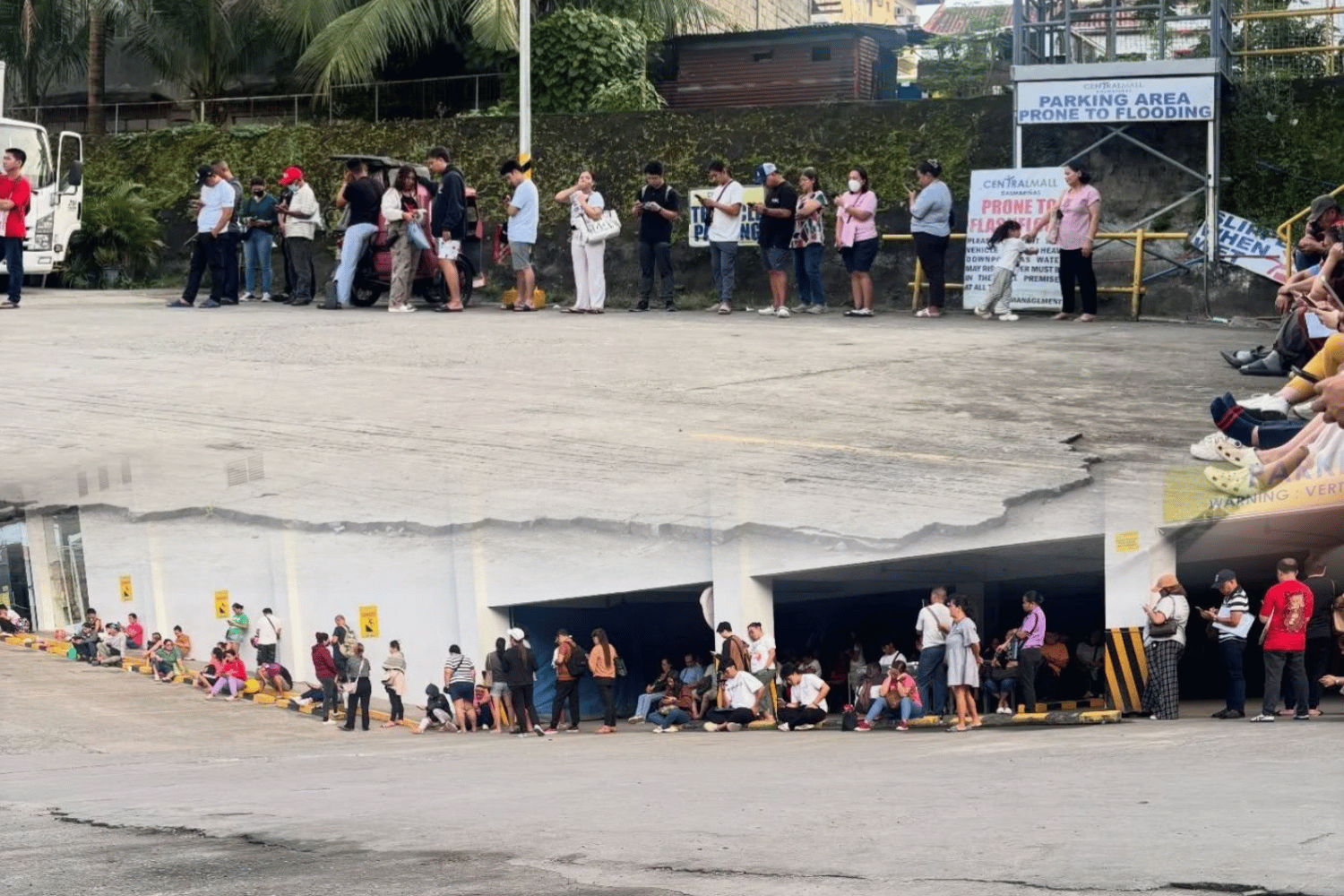
Threads user @paulette_cgyn shared photographs of people lying on the sidewalk, some resting against concrete pillars, while others waited nearby.
According to the uploader, the scene was outside the Department of Social Welfare and Development (DSWD) and the House of Representatives, where applicants were hoping to receive financial assistance.
“Mawawalan ka talaga ng lakas kapag nakikita mong ganito kalala ang sistema ng pagpapagamot sa bansa,” the uploader wrote.
“Kawawang maging Pilipino.”
The uploader claimed that people were already spending the night outside as early as 10 PM, hoping to secure a place in the queue the following day.
Even more disturbing was the apparent lack of basic accommodations for applicants, many of whom were already dealing with illness, financial hardship, or a death in the family.
“Ano ba yung magprovide tayo ng kahit upuan na lang eh o bubong na masisilungan para sa kanila,” the uploader lamented.
Public outrage erupts
The photographs unleashed angry reactions from netizens who questioned why taxpayers must practically beg for assistance from their own government.
“Para ka palaging nagmamakaawa sa sarili mong pera,” commented @mrnclrv.
Another netizen, @daleks747, criticized a system that seemingly forces ordinary citizens to plead for assistance that should be accessible to them.
Others shared their own experiences of exhausting queues and complicated procedures.
One commenter recalled spending an entire day processing burial assistance documents in 2023, only to return a week later for the release of the money.
The original uploader also claimed that some applicants had gone home after being told that the day’s 150 available slots were already filled.
A system that punishes the poor?
The controversy has renewed criticism of the country’s fragmented medical assistance system.
Government programs such as DSWD’s Assistance to Individuals in Crisis Situation (AICS) and the Department of Health’s Medical Assistance to Indigent and Financially Incapacitated Patients (MAIFIP) are designed to help Filipinos struggling with medical expenses.
Yet for many applicants, obtaining assistance can mean navigating multiple offices, submitting extensive documentation, and enduring long queues without any guarantee of approval.
Netizens are now demanding a more humane system, including organized appointments, adequate waiting areas, extended service hours, and faster processing.
The precise circumstances of the photographed queue, including the location and date, have not been independently verified. The agencies concerned have not been shown in the supplied material to have responded to the specific allegations.
But the outrage points to a disturbing reality: For Filipinos already devastated by sickness and poverty, seeking government assistance can become another battle for survival.
The cruelest part is not simply that people are sleeping on sidewalks. It is that desperation has become an accepted part of asking the government for help.
READ: