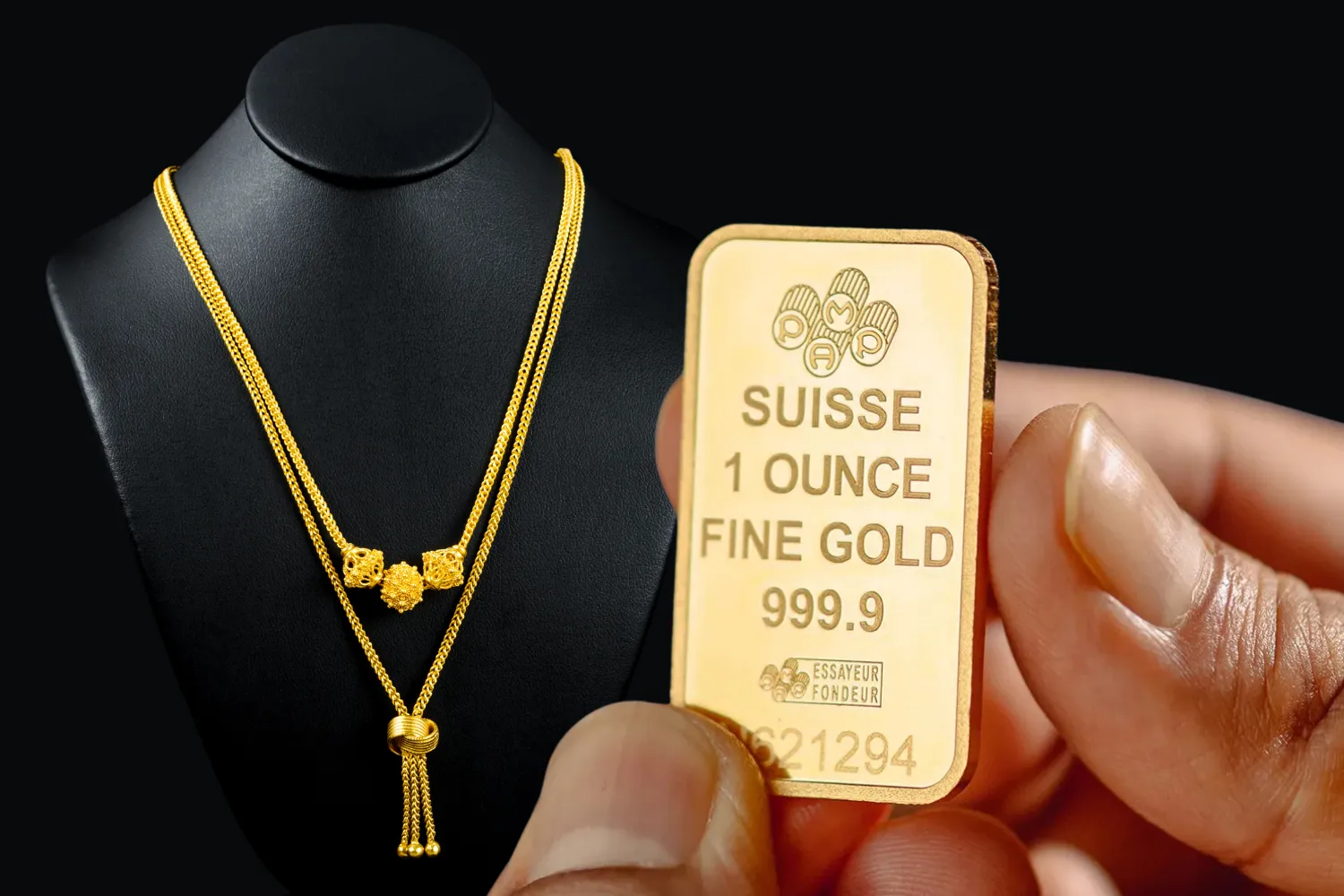
A Filipino buys a gold necklace for ₱50,000, believing its value will increase over time. But when the necklace is brought to a pawnshop, the offer could be considerably lower than the original purchase price.
Where did the money go?
The answer lies in the difference between the actual value of gold and the retail price of jewelry.
Gold purity makes a difference
Gold purity is measured in karats, with 24K representing nearly pure gold.
Investment-grade gold bars typically contain 99.5% to 99.99% gold, while jewelry is commonly mixed with other metals for durability.
A 14K necklace contains approximately 58.3% gold, 18K contains 75%, and 22K contains 91.7%.
For comparison, a 10-gram 18K necklace contains approximately 7.5 grams of pure gold. A 10-gram 999.9 gold bar contains approximately 9.999 grams.
The hidden cost of markups
Gold bars may carry dealer premiums of approximately 3% to 10% above the prevailing market price.
Gold jewelry can carry markups of 30% to 100% or more because of craftsmanship, design, branding, and retail expenses.
These are illustrative ranges, not fixed Philippine market rates.
Suppose the gold content of a necklace is worth ₱30,000. With a 50% markup, its retail price becomes ₱45,000.
When resold, the buyer generally cannot recover that additional ₱15,000.
Why pawnshops pay less
Philippine pawnshops typically assess jewelry based on weight, purity, authenticity, and prevailing gold prices.
They generally do not compensate owners for craftsmanship, designer labels, or sentimental value.
A ₱50,000 necklace could therefore receive a substantially lower valuation.
A pawn loan, however, is different from an outright sale, and the amount offered also depends on lending policies.
When jewelry makes sense
Gold jewelry has advantages bullion cannot offer. It can be worn, gifted, and readily pawned during emergencies.
Pre-owned or subasta jewelry may offer better value than brand-new pieces, particularly when priced closer to their actual gold content.
How to buy gold wisely
Smaller gold bars generally carry higher premiums per gram. A 1-gram bar can therefore cost proportionally more than a 10-gram bar or a 31.1-gram troy-ounce bar.
Buy from reputable dealers, verify purity, request documentation, and compare selling and buyback prices.
Taxes, storage expenses, and transaction costs also matter.
Gold does not earn interest or dividends, and its price can decline. Maintaining an emergency fund and settling high-interest debts should come before investing.
For Filipinos primarily seeking wealth preservation, bullion generally offers better value per peso than jewelry.
The distinction is simple: buy gold bars for their investment value and jewelry for the pleasure of wearing it.