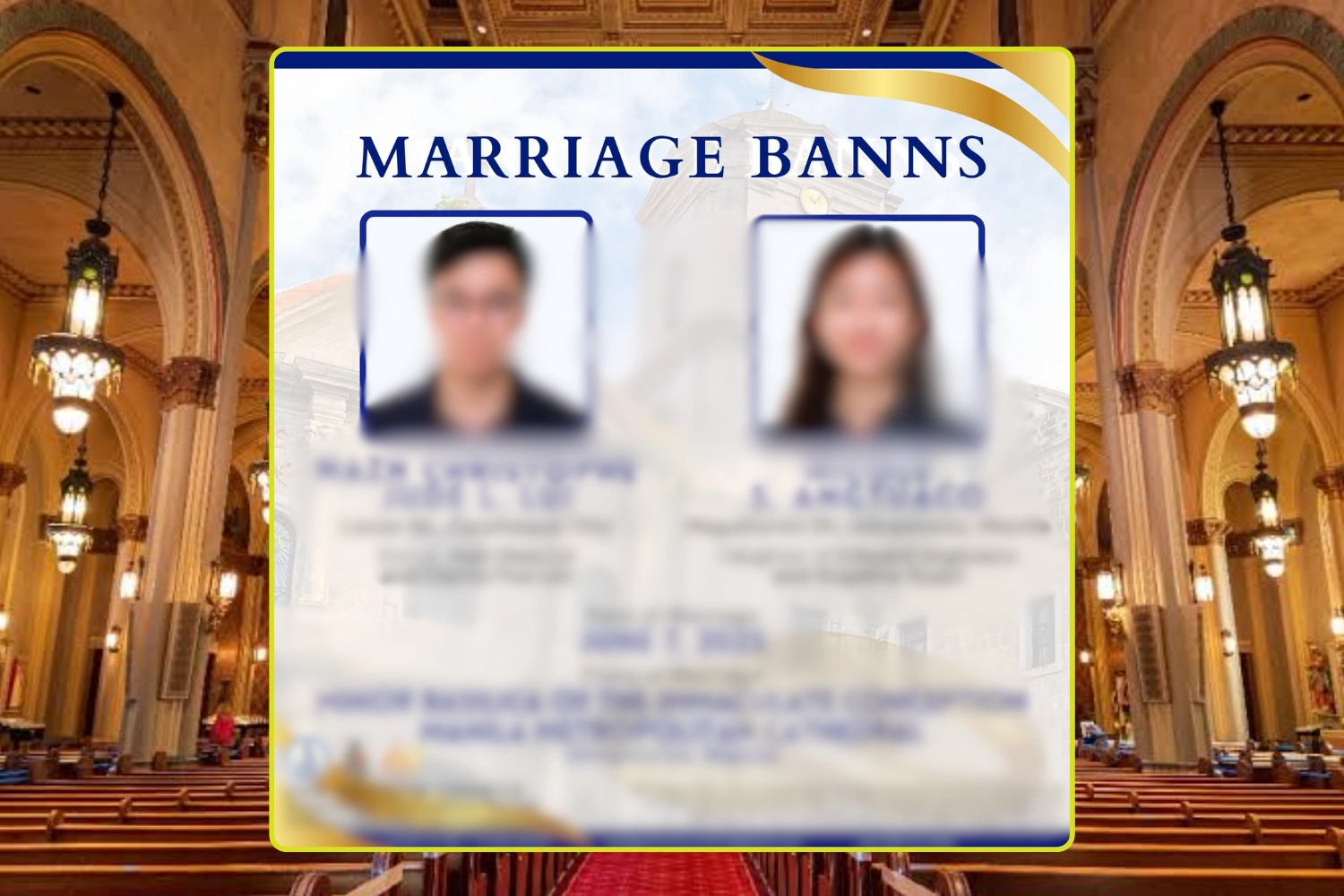
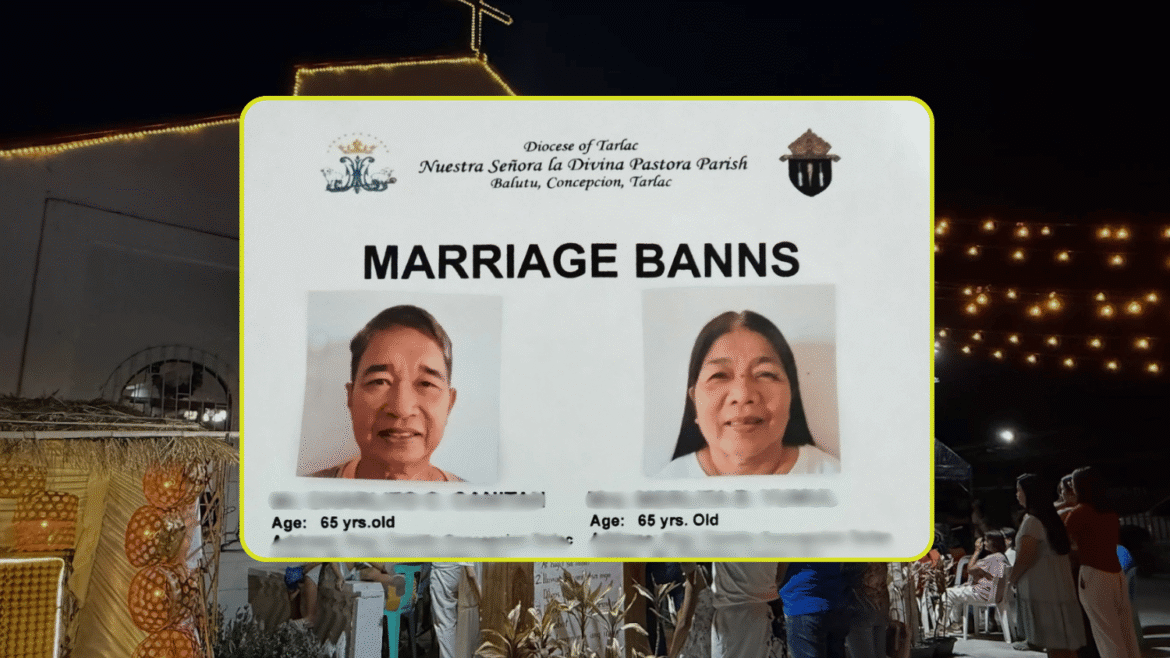
You’re scrolling through Facebook when something interesting suddenly appears on your feed: a marriage announcement bearing the future bride and groom’s photos, full names, hometowns, and their wedding date.
You check the comments. Some give their best wishes, while others seem confused. “Bakit kailangan pang i-announce?” one asks. Another jokes, “Invited ba kami sa kasal?”
But these posts aren’t simply for the clout. They’re marriage banns, a long-standing Catholic Church practice that has found its way from parish bulletin boards to social media.
Marriage banns are public announcements made before a couple’s wedding. Traditionally, they’re read during Mass or posted in the parishes of the bride and groom.
The purpose is straightforward: to give anyone who knows of a possible legal or Church-related impediment a chance to speak up. This could include an existing marriage or another circumstance that might prevent the couple from marrying.
In the Philippines, the Catholic Bishops’ Conference of the Philippines’ complementary norms to the Code of Canon Law provide for announcements on three consecutive Sundays or Holy Days of Obligation. They may be made orally or in print, with church postings also allowed under the local bishop’s authority.
Marriage banns have roots in medieval Europe, with public announcements of intended marriages traced to France in the late 12th century. In 1215, the Fourth Lateran Council made the practice a general Church requirement, directing priests to announce upcoming marriages publicly so anyone aware of a legitimate impediment could come forward.
The Council of Trent reinforced the rule in 1563 through its decree Tametsi, which specified that couples’ names be announced during Mass on three consecutive holy days. The measure aimed to discourage secret marriages and help uncover obstacles to a valid union.
The practice eventually reached the Philippines during Spanish colonial rule, becoming part of the preparations for Catholic weddings. Known locally as tawag sa kasal or amonestaciones, the announcements remain a familiar requirement for couples marrying in the Catholic Church.
From churches to social media posts
For generations, couples’ names were announced from the pulpit or displayed on parish bulletin boards. Now, some churches also publish marriage banns on their official Facebook pages and websites.
The shift makes the notices easier to find, especially for relatives, friends, and community members who may live far from the couple’s parish. The familiar announcements now come in the form of social media cards, often featuring the couple’s photos and wedding details.
Social media, however, is simply a newer way to circulate the notices. It is not a separate requirement under the Code of Canon Law, which provides for oral and printed announcements and church postings.
For government offices, the publication of marriage-license notices is part of their statutory duties. Catholic parishes, meanwhile, must consider a different set of obligations when they publish marriage banns.
Although marriage banns are part of the Church’s marriage procedures, parishes must still comply with the Data Privacy Act when collecting and publishing personal information.
Since details such as marital status and religious affiliation are classified as sensitive personal information, their publication must fall under one of the lawful grounds provided by the law. This may include obtaining the couple’s prior, informed, and specific consent for the publication.
The law also requires transparency and proportionality. Organizations should explain why they are publishing the information and limit what they disclose to what is necessary for that purpose.
But a parish’s decision to publish banns doesn’t make the information public property. The original posting serves a specific purpose: allowing the community to raise any known impediment to the marriage.
Downloading and resharing the couple’s photos and personal details beyond that purpose raises separate data privacy concerns.