OPINION: The best pasalubong from Taiwan isn’t pineapple cake
It's the hunger for cities that put people first
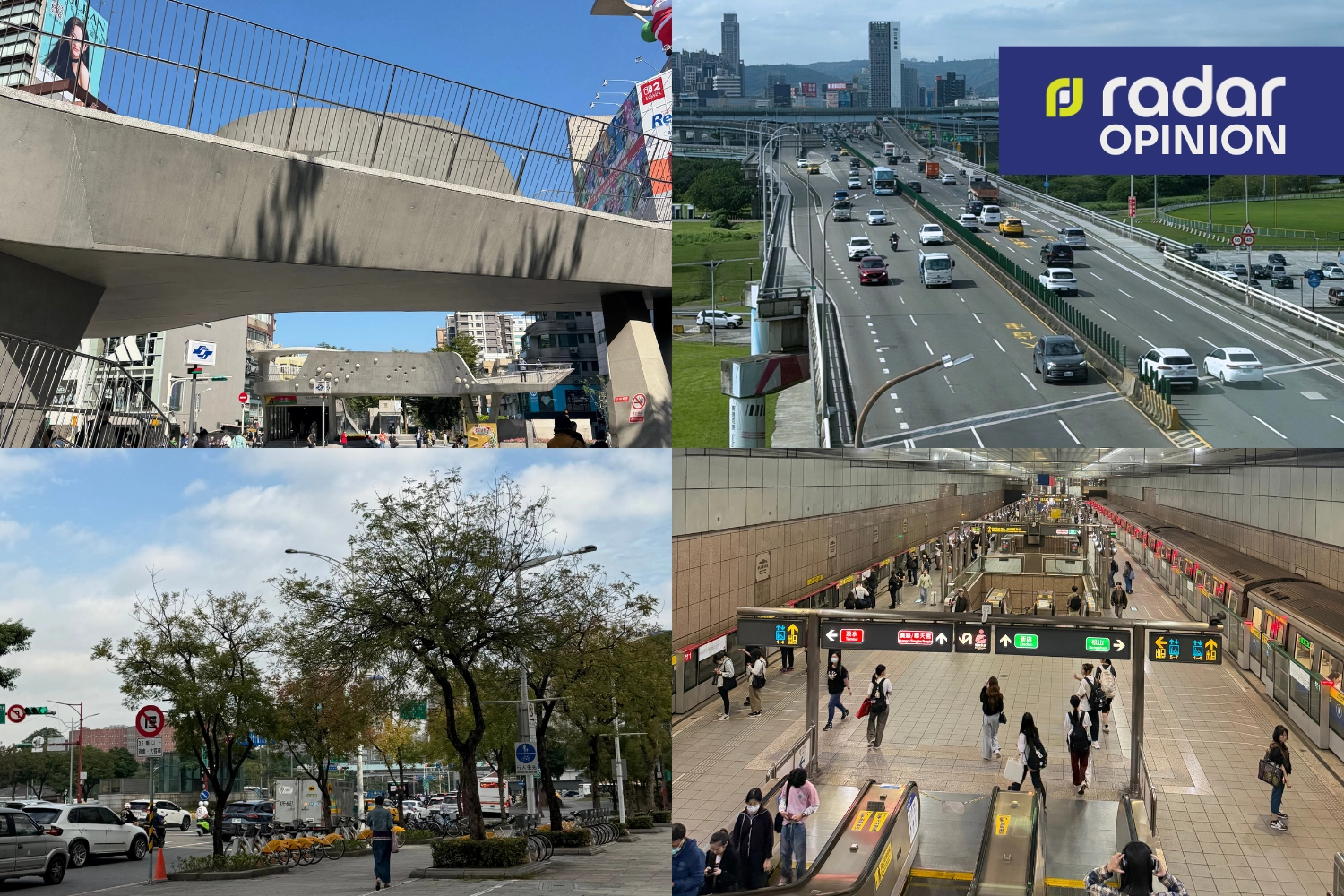
It took me a whole year to save up for our trip to Taiwan, months to plan the itinerary and weeks to pack while monitoring the weather.
It’s my fourth time traveling there, and it’s probably the closest I can get to a Japan-style trip on a budget. Would you believe me if I said I love it there because it’s easy to move around, the walkways feel safe, people follow the rules, and there’s barely any trash on the streets?
It may sound petty, but it isn’t. For a few days, moving around a city didn’t feel like a negotiation. Even though my legs hurt from hitting my 20,000th step, I still couldn’t stop comparing.
Filipinos leave for Taiwan in record numbers
Filipinos have always loved to travel, but the numbers lately are something else. Outbound trips rose 11.6% in 2025 to 7.65 million, according to the Department of Tourism. That’s more Filipinos flying out than the roughly 6.5 million international visitors who flew in, a count that already includes balikbayans.
Taiwan has become one of our favorite countries to visit. It welcomed nearly 630,000 Filipino visitors in 2025, a record and roughly a third more than the year before. In the first quarter of 2026 alone, arrivals passed 210,000, up 43%. It is now one of our top destinations alongside Hong Kong, Japan, Singapore and Thailand.
The easy explanations are all true. Filipinos have been able to visit Taiwan visa-free for up to 14 days since 2017, and that privilege now runs until July 31, 2027. One travel survey found that 89% of Filipinos pick a destination because it’s popular on social media.
But I don’t think that’s the whole story.
It was a vacation from vigilance
If anyone asks me what I loved about a trip to Taipei, I would say the food first. I’d think about Ay-Chung’s misua or freshly steamed xiao long bao on a 14°C day without hesitation. I’d think about Xing Fu Tang’s bubble tea or the unusual tea flavors in milk cartons.
Then, almost always, I’d think about the versatile EasyCard, the trains, the easy-access bicycles, the sidewalks. I’d think about how clean it was and how safe it felt to walk at night.
Back home in Metro Manila, walking is a skill. Sidewalks often double as parking spaces, store extensions and obstacle courses of rough pavement and posts. Crossing the road means losing your breath to a footbridge or sprinting across four lanes in a few short seconds, if not saying a prayer that the vehicles will stop for pedestrians.
When Australian comparison site Compare the Market ranked 53 cities for walkability in 2024, Manila placed fifth from the bottom.
Taiwan wasn’t born this way
Interestingly, while waiting between MRT rides from Ximen to Taipei Zoo, I looked up whether Taiwan had always been this way. And that’s the part that changed how I saw it all.
Taiwan used to be called “Garbage Island.” In 1993, only about 70% of its trash was even being collected, and virtually none was recycled. By the mid-’90s, two-thirds of its landfills were full or nearly full. What fixed it wasn’t a miracle that made its citizens tidy. It was policy. Taipei, for one, banned leaving garbage on the ground in 1997 and began charging for trash by the bag in 2000. Today, Taiwan ranks third in the world for recycling.
In 2022, CNN Travel reported on Taiwan’s “living hell” traffic, borrowing the name of a local Facebook page, “Taiwan is a living hell for pedestrians.” Lawmakers responded by passing pedestrian-safety rules, and the Cabinet set a goal of halving pedestrian deaths by 2030.
In other words, Taiwan isn’t paradise. But it decided these problems mattered and kept working on them.
Old buildings were kept for people
Some of Taipei’s best public spaces aren’t new at all. They’re old buildings the city chose to keep and hand back to the public.
The Red House in Ximending, built in 1908 as Taiwan’s first official market, now holds a teahouse, a theater and art markets. Huashan 1914, a former sake brewery, was saved after a theater troupe staged a show there in 1997 and the director’s detention sparked a public uproar. Songshan Cultural and Creative Park, a cigarette factory until 1998, reopened in 2011 as a home for exhibitions and design events.
These aren’t museums. They’re places people use, to meet friends, support local businesses, catch a show or simply sit somewhere shaded. We’ve done it at home, too. Escolta’s First United Building, a 1928 Art Deco landmark designed by Andrés Luna de San Pedro, now houses HUB: Make Lab, a space for young makers and small creative shops, and won the top prize at the 2024 Good Design Award Philippines. But for every First United Building, there are more old buildings left to decay.
Discipline was a system, not a personality
I am wary of the usual conclusion, that we Filipinos are simply undisciplined.
When we’re abroad, we line up on the train platform, we hold onto our wrappers until we find a trash bin, we cross at the lights. It’s the same people, different system. In every situation where the right thing is easy and the wrong thing has real consequences, most of us choose to do the right thing.
But at home, the system pushes us the other way. The Ecological Solid Waste Management Act has been law since 2001, but collection is still a problem. Much of what we buy comes in sachets, and it isn’t because we don’t care about the environment, but because tingi has always been what many households can afford.
It’s hard to ask people to be disciplined in a city that isn’t built to help them.
The pasalubong that matters
It’s lovely to bring home a box of pineapple cake, nougat or boba chocolate. But the best thing I brought back was a raised standard.
A sidewalk meant for walking. A train that comes when it says it will. People who line up without being told. Feeling safe on the walk home at night. An old building turned into a place where anyone can spend an afternoon. None of these should feel like a tourist attraction. They’re the everyday basics a city owes the people who live in it.
Taiwan itself was a mess not long ago. It got better through choices, enforcement and patience, and it’s still working at it.
I’ll keep traveling, and I hope more Filipinos get to. Travel should stay a joy, the kind you save up for and plan for months. But I hope that someday, we won’t have to fly to another country to know what it feels like to live in a city that puts people first.
READ:
OPINION: One year later, the ₱500 Noche Buena looks even more ridiculous
Kenneth M. del Rosario
November 23, 2026
OPINION: Politicians should experience the hardships their policies force Filipinos to endure
Top Dagohoy
November 18, 2026
OPINION: Filipinos need good governance, not feel-good spectacles
Kenneth M. del Rosario
November 16, 2026
Tags: Andrés Luna de San Pedrodepartment of tourismEasyCardEcological Solid Waste Management ActEscoltaFirst United BuildingheritageHuashan 1914 Creative ParkHub Make Labmetro manilapedestrianspublic spacespublic transportationrecyclingRed HousesafetySongshan Cultural and Creative ParksustainabilityTaipeiTaipei MetroTaiwantourismtravelurban planningwalkabilityWaste ManagementXimending