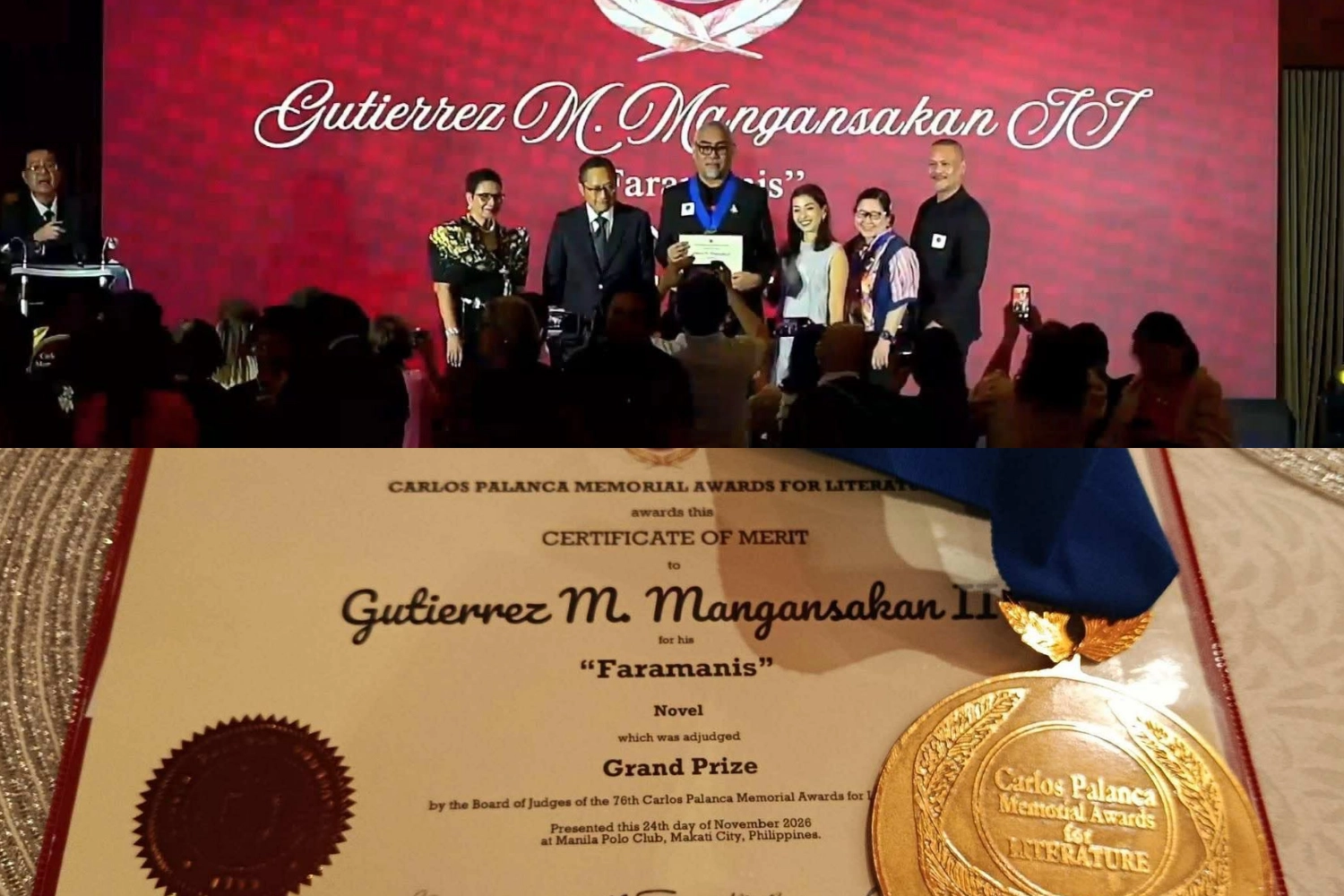
However, as the challenges of producing a period film mounted, acclaimed writer Danton Remoto encouraged Mangansakan to explore another medium for telling his story: literature.
“I took his advice and then spent more than two years writing, doubting, deleting, and rewriting again,” Mangansakan shared.
“Thank you, Danton, for seeing a novel in a screenplay that had temporarily lost its way.”
In transforming the screenplay into a novel, Mangansakan sought insights from people knowledgeable about history, Charles Darwin, and Teduray cosmology, helping him develop the language and texture of his literary work. He also credited writer Luis Gatmaitan for encouraging him to submit his manuscript to the Palanca Awards.
For Mangansakan, however, the recognition carries a significance that extends beyond his personal achievement as a filmmaker and writer.
“I receive it as a recognition of the possibilities of Bangsamoro literature, of the stories that come from our histories, our communities, our languages, and our complicated memories,” he wrote.
“This is for Bangsamoro literature.”
While “Faramanis” has yet to find its way to the big screen, the story has already found a place in Philippine literature. What began as a filmmaking setback ultimately opened another creative avenue for Mangansakan, earning him one of the country’s most coveted literary distinctions.