A 10-year roadmap aims to modernize the Romblon marble industry through 2035.
Romblon has spent decades building a reputation around something that comes from the ground. Its marble has made the province known across the Philippines and abroad, with the government describing its high-grade material as comparable to Italy’s Carrara marble. The province’s marble products are exported to markets including Japan, China, and the United States.
But for a province known as the “Marble Capital of the Philippines,” what piques the imagination now is what Romblon can do with the marble it already has. Can it turn the resource into a higher-value business?
Romblon now has a 10-year roadmap for the industry through 2035, developed by the Department of Science and Technology (DOST) MIMAROPA with the University of the Philippines Diliman. The plan calls for stronger local and international markets, better product designs, wider distribution and skills training for workers.
The roadmap comes after a DOST-led environmental scan in 2024 identified several challenges facing the industry, including an aging workforce, slow adoption of modern technology, competition from cheaper imports, machinery and skills needs, research and innovation, logistics, environmental sustainability and regulatory support.
In other words, Romblon already has the raw material and a market reputation. The challenge now is building the technology, skills, products and businesses that can capture more value before the marble reaches the end customer.
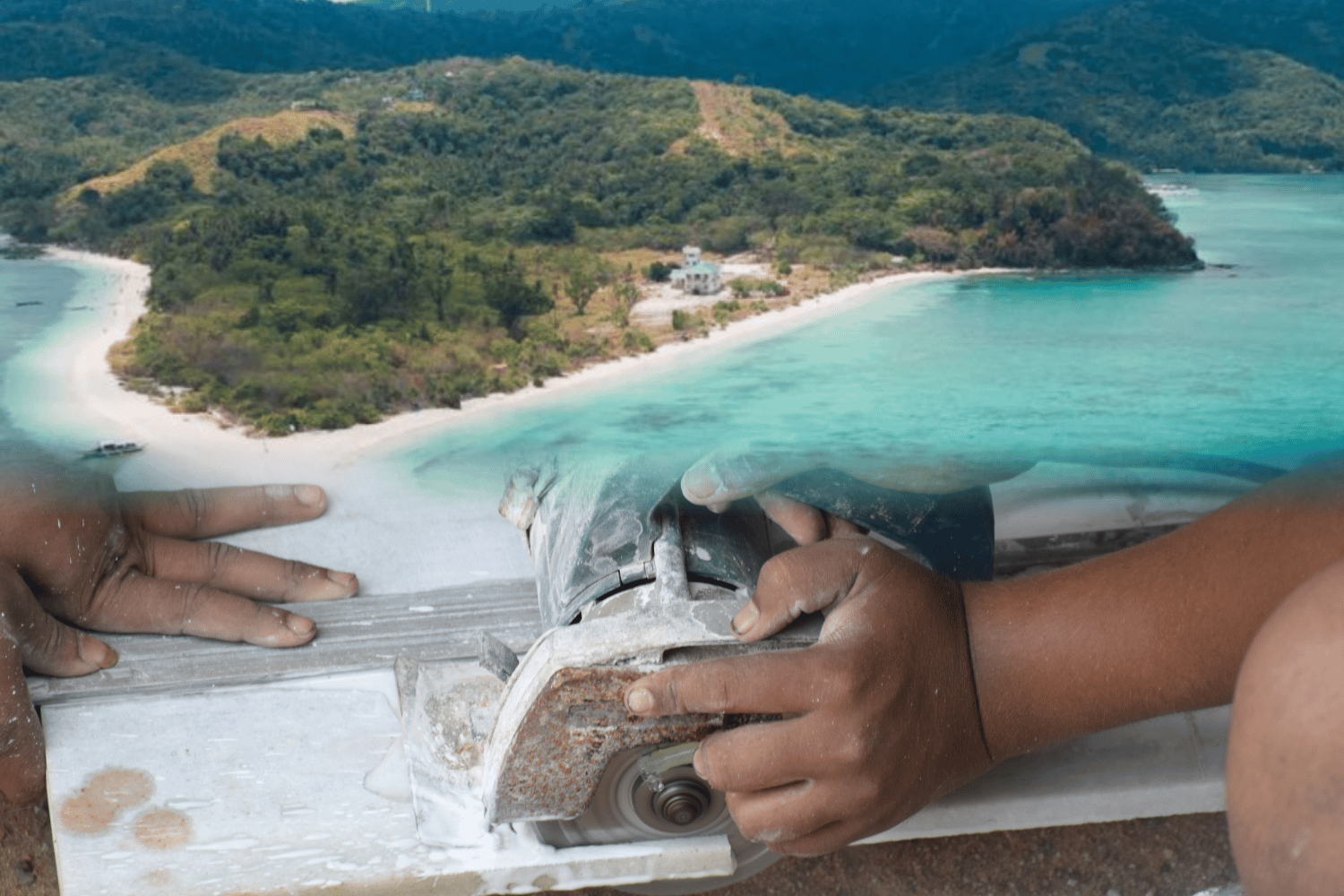
There are already efforts to push the industry in that direction. DOST-MIMAROPA said in June 2026 that it was introducing technologies such as automated carving, computer numerical control (CNC) equipment, which uses computer-programmed machines to cut and shape marble with greater precision, as well as 3D modeling and laser engraving. The agency is also working toward a Marble Center for research, product development and innovation, while exploring blockchain-based traceability for Romblon-made products.
A ₱3.25-million innovation grant secured in late 2025 is supporting a separate program focused on digital upskilling, design thinking, CNC carving, 3D modeling, laser engraving and product prototyping. DOST-MIMAROPA said the program is intended to help artisans and young people develop value-added marble products and strengthen the industry’s competitiveness.
That push could also help address one of the industry’s more difficult problems. Who will carry the craft forward?
Looking beyond traditional marble products
When DOST turned over the roadmap in August 2025, Secretary Renato Solidum Jr. pointed to the aging workforce and called for greater youth participation. He also urged the industry to look beyond traditional marble products and put more emphasis on design, innovation and environmental sustainability.
The opportunity is not limited to finished marble products, either. DOST and Romblon State University have been studying ways to use marble dust and rubble in other applications, potentially turning some of the material left over from processing into another source of value rather than waste.
The bigger test will be whether these efforts translate into businesses that can sell more sophisticated products at better prices, create skilled jobs locally and reach customers beyond the province. A new machine or product prototype can improve what an artisan makes, but the industry still needs buyers, financing, logistics and distribution to turn those improvements into sustained income.
There is also an environmental cost to consider. A 2021 Commission on Human Rights study examined the experiences of communities in Romblon’s quarrying areas and raised concerns about the effects of marble extraction on the environment and community welfare.
Romblon therefore faces a fairly specific business challenge. It needs to make each piece of marble worth more before extracting more of it. Moving further into design, processing, technology and finished products could allow local businesses and workers to capture more of the value created from the province’s best-known resource, while better use of marble waste could make the industry more efficient.
If Romblon can make that model work, its experience could offer a useful lesson to other resource-rich provinces. A natural resource can create an industry, but the bigger economic opportunity often comes from building the skills, businesses and supply chains that allow local communities to capture more of the value themselves.
READ:
ANALYSIS: Pax Silica could reshape the chip industry, but questions remain over the Philippines’ deal
Kenneth M. del Rosario
August 3, 2026
ANALYSIS: Thailand built a homegrown coffee chain with nearly 5,000 stores. Why doesn’t the Philippines have one?
Kenneth M. del Rosario
August 11, 2026
ANALYSIS: Can an Indian consumer goods company take Filipino brands regional?
Kenneth M. del Rosario
August 10, 2026