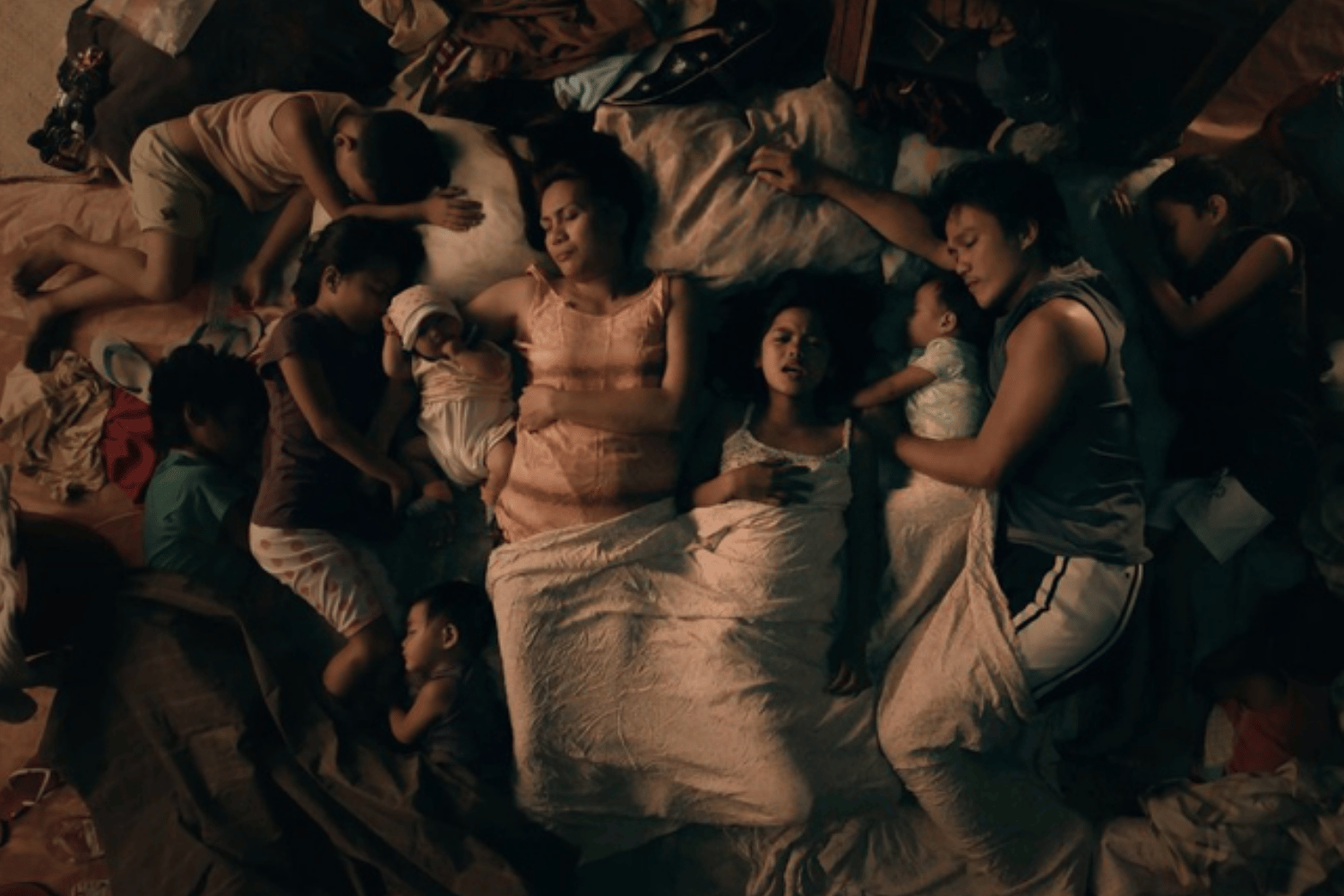
Fertility rates may have fallen, but teenage pregnancy may also involve abuse.
“Isang taon pa lang ako / Nasundan na ni Toto… Grade 2, walong taon pa lang / Apat na bata ang inaalagaan.”
The opening verse of “Inakup…arekup” cut deep for a generation of Filipino kids who grew up watching television in the 2010s. In a Department of Health commercial, the haunting song became a warning about what happens when families have children without planning.
The song itself was a cover of Geneva Cruz’s 1994 “Inakup…arekup,” with music credits listing Jimmy Antiporda, Yoly Ong, and Marilyn Villapando as composers.
The 45-second public service announcement aired in 2014, at a time when the Philippines was preparing to pass the 100-million population mark and the government was beginning to fully implement the Reproductive Health Law after years of controversy.
Republic Act No. 10354, or the Responsible Parenthood and Reproductive Health Act of 2012, had been signed two years earlier, but legal challenges delayed its implementation. The Supreme Court upheld the law’s constitutionality in 2014, clearing the way for the government to move forward with reproductive health and family-planning programs.
Produced by Campaigns & Grey, the commercial followed a young, out-of-school sampaguita seller who sang about becoming responsible for her younger siblings as her family grew. It showed how her parents’ lack of family planning could affect a child’s education, health, and daily life.
Then-DOH Usec. Janette Garin appeared toward the end of the commercial to remind the public about the agency’s “Ang Planadong Buhay ay Maayos na Buhay” family-planning campaign.
A Philippine Institute for Development Studies report said the campaign reached more than 104.5 million viewers nationwide, helping make its message familiar to generations of TV audiences.
Fertility rate drop over a decade later
More than a decade later, the country’s demographic picture has changed significantly.
The Philippine Statistics Authority reported that the total fertility rate—the average number of children born to a woman—fell from 2.7 in 2017 to 1.9 in 2022, before reaching 1.7 in 2025. The replacement level needed to maintain a stable population is 2.1.
But the decline in overall fertility does not mean the need for reproductive health campaigns has disappeared.
In 2025, 4.9% of Filipino women aged 15 to 19 had already experienced pregnancy, including 3.5% who had given birth.
Not always lack of family planning
But teenage pregnancy is not always a family planning failure. In some cases, there may be an older partner, an abuse of power, or even sexual violence involved.
PSA data on adolescent births has shown that many teenage mothers had children with older men, while research on adolescent pregnancy in the Philippines has pointed to age and power differences that can increase the risk of sexual coercion and abuse.
A 2023 PSA report found that 6% to 7% of babies born to adolescent girls from 2016 to 2020 had fathers at least 10 years older, while most had male partners three to five years older. Among girls aged 10 to 14, 2,299 gave birth in 2021, up from 2,113 in 2020, while births in this age group rose 11% from 2016 to 2020.
That means some cases involving girls below 18 cannot simply be framed as teenagers failing to plan their families. The question is not only why these girls are getting pregnant, but what circumstances and power dynamics put them at risk in the first place.
Netizens are now calling on the DOH to bring back similar public-facing campaigns, this time speaking to the new generation facing a different problem and using the same memorable approach to make teenage pregnancy, contraception, and responsible family planning relevant.
But any new campaign should go beyond telling girls to avoid pregnancy. It should also confront the realities of consent, sexual violence, older partners, and the adults and systems that have a role in protecting young girls.
READ:

Sarah Geronimo sparks pregnancy rumors after debuting stunning short haircut transformation
Kiko Escuadro
August 25, 2026

Five lessons the new DOH Secretary Edwin Mercado can learn from Juan Flavier
Top Dagohoy
August 11, 2026

James Reid admits nerves over Kathryn pairing, shuts down Issa pregnancy rumors
Melba Llanera
June 30, 2026
Tags: Ang Planadong Buhay ay Maayos na BuhayCampaigns and GreyDepartment of Healthfamily planningfertility rateGeneva CruzInakup...arekupJanette GarinJimmy AntipordaMarilyn VillapandoPhilippine Institute for Development StudiesPhilippine Statistics Authorityreproductive healthRepublic Act No. 10354Responsible Parenthood and Reproductive Health Act of 2012Supreme Court of the Philippinesteenage pregnancyYoly Ong