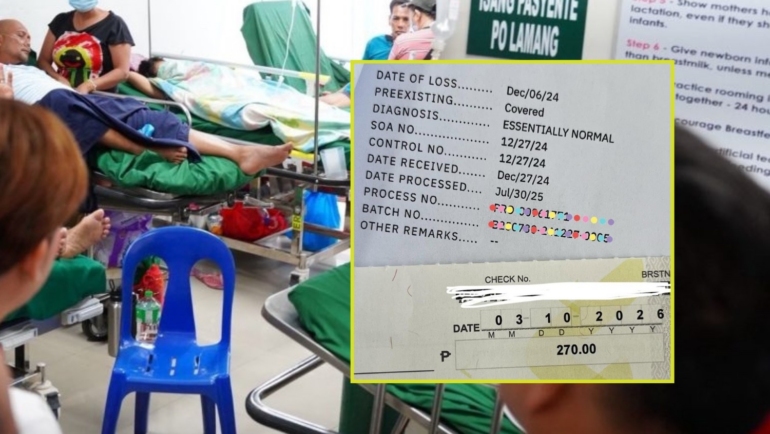
Monthly payments are reshaping how households judge affordability, with many now focusing on what fits the budget rather than the total price.
The rise of installment plans has changed the way many Filipinos decide what they can afford.
Instead of looking first at the full price, many consumers now start with the monthly payment. The decision often begins with one simple question: Can I fit this into next month’s budget?
Breaking a purchase into monthly payments changes how people evaluate it. Instead of focusing on the total amount, people begin thinking about whether the monthly payment fits the budget. A ₱60,000 phone is still a ₱60,000 phone, but presented as ₱2,500 a month, it becomes much easier to justify. The total cost stays exactly the same. What changes is how people think about it.
Installment plans have become so common that they are now part of the shopping experience itself. Consumers are routinely offered the option to spread payments over several months, whether through banks, retailers, or buy now, pay later services.
In many ways, installment plans have made life easier. They allow families to acquire essential items without waiting years to save up the full amount. They help spread out major expenses and provide access to products that might otherwise remain out of reach.
Households do not always have the luxury of waiting until enough money has been saved. Installments allow today’s purchase to be paid using tomorrow’s budget by spreading the cost over several months. Over time, they have become less of a financing option and more of a regular part of how many Filipinos manage money.
Perhaps the biggest change is not how people pay, but how they think about affordability.
The question used to be, “Can I afford this?” Today, it has become, “Can I afford the monthly payment?”
Those two questions sound similar, but they often lead to very different decisions.
A household may decide that ₱1,500 a month for a gadget is manageable. Another ₱2,000 goes toward a new appliance. A few hundred pesos here and there cover subscriptions, memberships, and other recurring expenses. Individually, each payment appears reasonable. Over time, those monthly payments can take up a significant portion of a family’s income.
There is also a reason installment plans have become such a normal part of daily life. The cost of many purchases has risen steadily over the years, while paying for them in one go has become less practical for many households. As prices climb, spreading the cost over several months becomes less of a convenience and more of a necessity.
The promise of “0% interest” has reinforced that mindset. Seeing no additional borrowing cost makes the monthly payment feel like the number worth paying attention to. Once the purchase is framed that way, fitting it into the budget often becomes a much easier decision.
This is one reason many consumers feel financially stretched despite earning more than they did in previous years. Their salaries are not necessarily disappearing into one large purchase. They are being divided among a growing number of monthly commitments.
Most people are not using installments to fund luxury lifestyles. They are using them to furnish homes, replace aging appliances, buy work devices, or cover purchases that genuinely improve daily life. Installments provide flexibility that would otherwise be impossible for many households.
The challenge is rarely one installment on its own. It happens when several of them begin to overlap. Each monthly payment may look reasonable by itself, but together they leave households with less flexibility than they realize.
At that point, installments stop functioning as a financial tool and start becoming a financial habit.
None of this means installment plans are inherently bad. Used carefully, they can be practical and even necessary. The issue is that they make spending feel smaller than it really is.
A ₱50,000 purchase still costs ₱50,000, whether it is paid today or spread across two years. The amount never changes. Only the way it is paid does.
And perhaps that is the real truth about installment culture. It has not changed what things cost. It has changed how those costs are experienced.
READ:

ANALYSIS: The changing reality of the Filipino middle class
Kenneth M. del Rosario
June 15, 2026

ANALYSIS: Leasing takes center stage as Ayala Land recalibrates its growth strategy
Kenneth M. del Rosario
April 28, 2026
ANALYSIS: Why BPI’s free transfers may change expectations in digital banking
Kenneth M. del Rosario
July 1, 2026