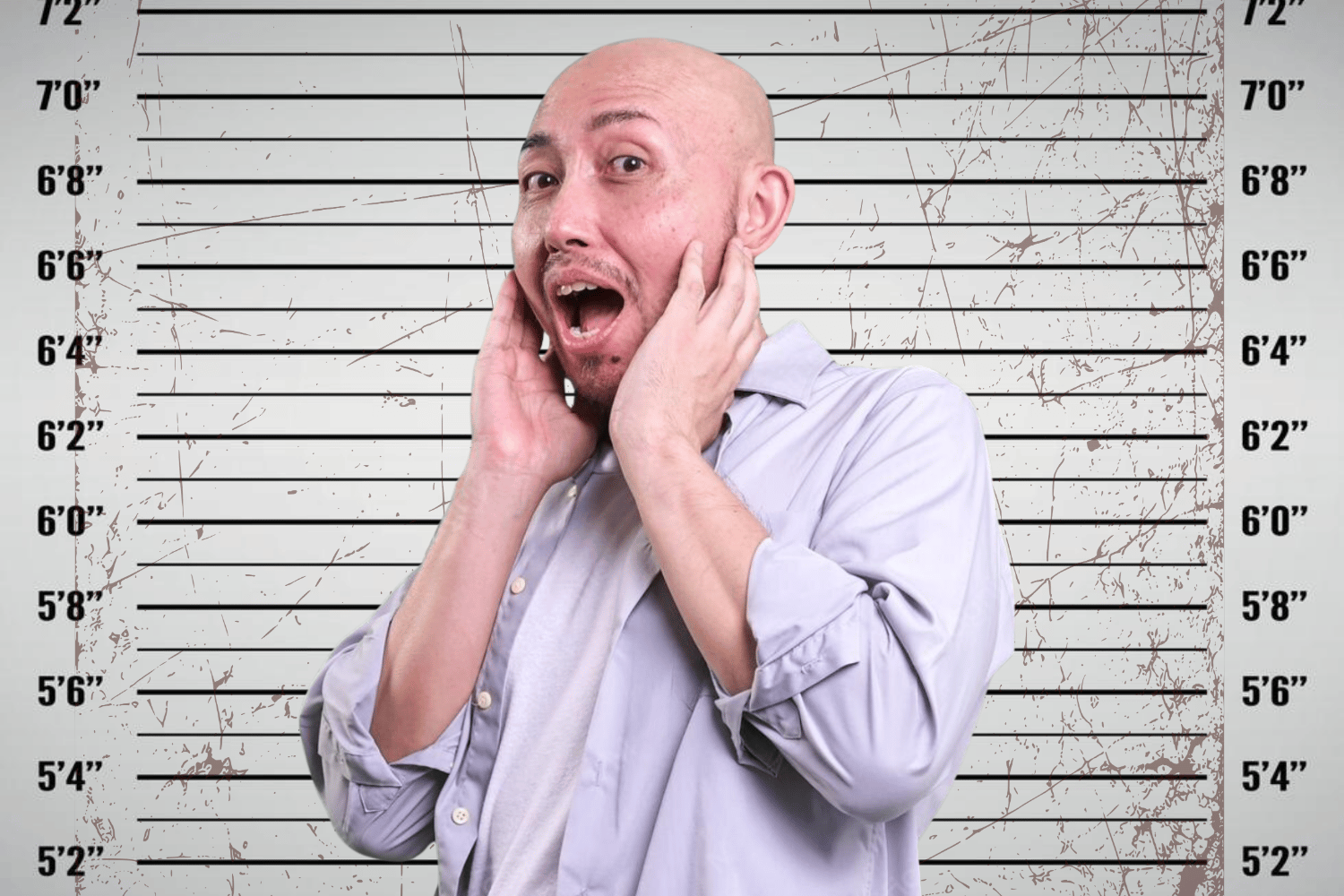
Can someone wear a wig for a police mug shot to protect their appearance or avoid embarrassment? The short answer is no.
In the Philippines, the booking process is designed to capture a suspect’s natural appearance as accurately as possible. Under the Philippine National Police (PNP) Standard Operating Procedures on the Booking of Arrested Suspects, officers are required to take mug shots that clearly show a person’s identifying features. Anything that changes, hides, or distracts from those features must be removed before the camera clicks.
That includes wigs.
Artificial hairpieces, wigs, and toupees are generally prohibited because they can conceal a person’s true hairline and natural appearance, making identification more difficult. The same rule applies inside detention facilities, where the Bureau of Corrections also prohibits inmates from wearing wigs or artificial hairpieces as part of standard regulations.
Medical exceptions may be considered in rare cases, such as individuals undergoing chemotherapy or suffering from serious medical conditions that require the use of a wig. Even then, the matter is subject to evaluation by authorities.
But the rules go far beyond hair.
Headwear such as caps, hats, beanies, hoodies, and bandanas must be removed to expose the entire head, forehead, ears, and hairline. Face masks are also taken off unless a specific medical emergency requires otherwise. Even religious head coverings, when permitted, must be adjusted so the entire face—from the hairline to the chin—is fully visible.
Eyewear is another common restriction. Sunglasses and tinted lenses are never allowed because they hide the eyes, one of the most important features used in visual and biometric identification. Even prescription glasses are typically removed to eliminate glare and ensure that the eyes and eyelids are clearly visible.
Large earrings, bulky necklaces, and other accessories that frame or obstruct the face are likewise removed and logged as part of the suspect’s personal belongings during the booking process.
The PNP also discourages anything that deliberately changes a person’s facial appearance. Heavy theatrical makeup, face paint, or extreme contouring meant to alter facial structure may be removed or prohibited. Long hair covering the cheeks, ears, or jawline must be tucked behind the ears or tied back so every facial feature can be documented.
Even posing for the camera is not allowed.
Unlike selfies or ID photos, police mug shots require a neutral, expressionless face. Smiling, winking, grimacing, making peace signs, flashing gang signs, or covering any part of the face with the hands are prohibited. The purpose is not to create a flattering photograph but to produce a standardized identification record that can be reliably used by investigators, prosecutors, and the courts.
While mug shots often become public discussion online, their primary function remains legal—not cosmetic. Every rule, from removing a wig to keeping a straight face, exists for one reason: to ensure that authorities capture an accurate and unmistakable record of a person’s identity.
READ: