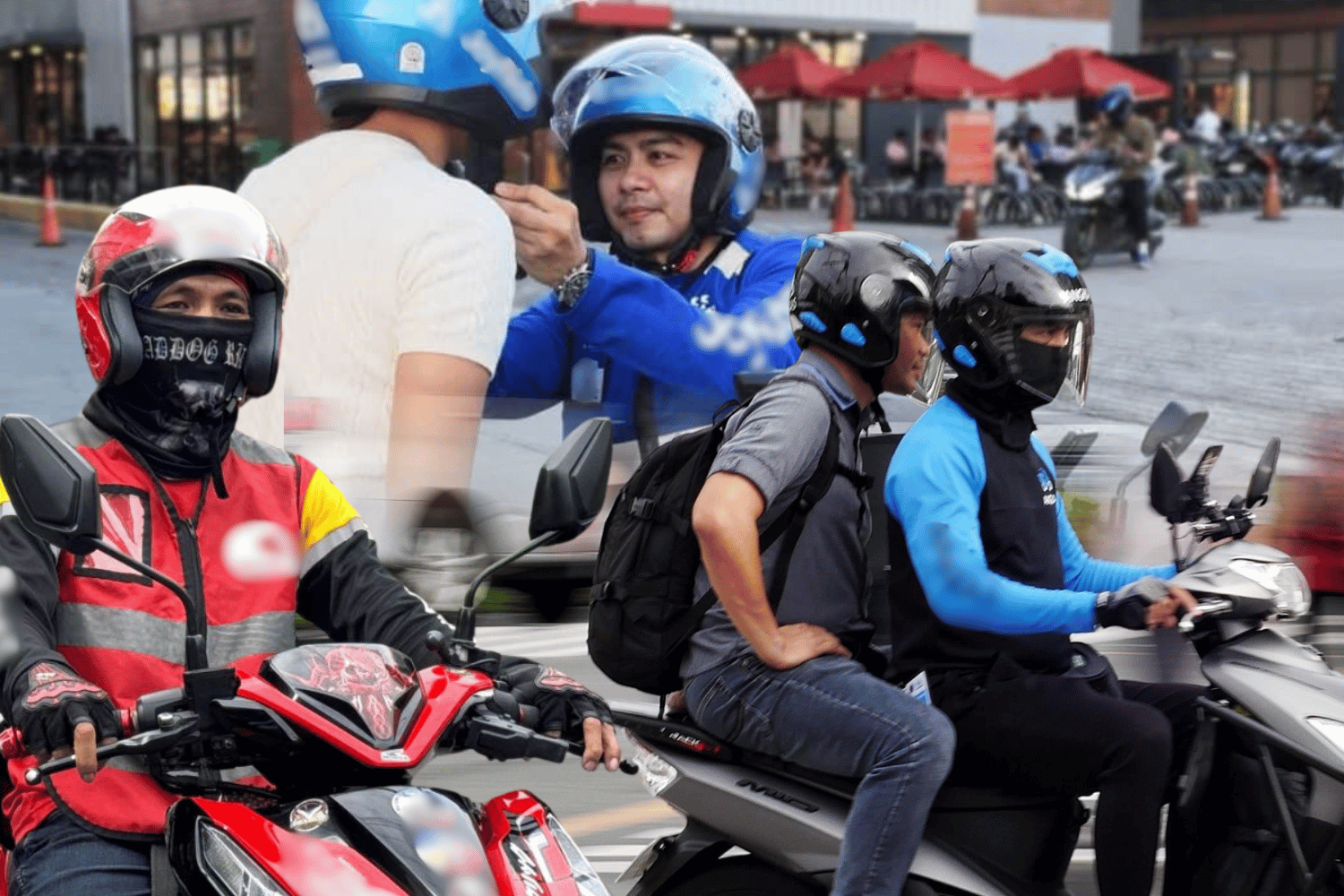
Is it time to formally expand to provinces like Pampanga and Batangas?
In places where traffic can turn a short trip into a long commute, getting on a motorcycle can make the difference between spending an hour on the road and reaching a destination much sooner. The service has also opened another source of income for riders, while giving commuters another option when conventional public transport falls short.
It is easy to see why motorcycle taxis have found demand and why there is interest in bringing them to more parts of the country.
The industry, however, is still being developed through a pilot framework that the government has been working to expand and formalize for the past 7 years.
The original motorcycle-taxi pilot covered Metro Manila, Metro Cebu, and Cagayan de Oro, with Angkas, JoyRide, and MOVE IT among the participating platforms. The government has since explored expansion into other areas, including plans in 2024 to allocate 8,000 additional slots outside Metro Manila.
Increasingly, motorcycle-taxi services appear to be reaching commuters well beyond the original pilot jurisdictions. Based on several social media posts, some of which have gone viral, drivers are seemingly being onboarded and moto-taxi services offered by players like Angkas and JoyRide in parts of Cavite, Laguna, Batangas, Pampanga, Bulacan, and Iloilo—areas not originally covered by the pilot.
Rather than a problem to be stamped out, this pattern is worth reading as a signal. It shows that demand for safe, organized motorcycle-taxi services already exists in these communities, and that commuters there are looking for the same faster, more flexible mobility the pilot cities have enjoyed.
That demand raises a more useful question than whether each activity is strictly authorized. It asks why the pilot has not yet expanded to meet a need so clearly already there. These services are already running in areas the pilot doesn’t cover, which means they’re technically not legal to operate. They’re still digital habal-habal.
That is not a safe place for anyone, whether it is the riders betting their income on the business, the commuters who rely on the service or the platforms investing in it. The uncertainty also puts the onus on regulators. After seven years of operating under a pilot framework, isn’t it time to formally open these cities to motorcycle-taxi services?
Onboarding on pause
There is also the timing of the onboarding to consider. Earlier this year, following discrepancies between platform-submitted rider lists and government records during the rollout of transport aid, the Department of Transportation directed the LTFRB on May 1 to halt the onboarding of new TNVS drivers and motorcycle-taxi riders.
The LTFRB later announced that accreditation for motorcycle-taxi platform providers and applications for riders’ Provisional Authority to Operate would resume on Aug. 5, with approvals tied to rider caps, unchanged since 2019, allocated by the Motorcycle Taxi Technical Working Group.
Yet in the months between, the demand did not pause, and neither, it seems, did the work. With services still surfacing in provinces beyond the pilot, riders kept coming forward to meet commutes that were happening anyway.
Players like Angkas and JoyRide, for their part, appear to have kept the livelihood going where the demand was, reportedly holding onboarding activities in several cities. This is no small thing at a time when fuel prices and rising costs make every earning opportunity matter more.
The demand is there. The service has become an important mobility option, and expanding it can give more commuters access to a faster and more flexible way to travel while opening more earning opportunities for riders.
But as the industry reaches more communities, that livelihood is best protected inside the framework, not outside it.
LTFRB and the Department of Transportation should study and clarify the current operating and onboarding authority of motorcycle-taxi platforms nationwide, including the areas where operations are authorized, the rider allocations covering those areas, and the approvals behind any expansion so that riders know where they can legitimately earn and commuters know where they can safely book.
If motorcycle taxis are now permitted to expand beyond the original pilot jurisdictions, an updated public list directly from LTFRB of authorized areas, platforms and rider allocations would give commuters, riders, and operators a clearer view of the market.
More motorcycle taxis may well be where the market is headed. The rules should make clear how we get there and how the riders who make it work can do so formally, safely, and with their livelihood protected.
READ:

VinFast takes its EV push to PH motorcycle market
Kiara Gorrospe
August 14, 2026

Motorcycle taxi riders put safety pleas on helmets amid viral rider deaths
Annah Bautista
July 25, 2026

LTFRB sets new limits on ride-hailing pick-up fees
Kiara Gorrospe
July 21, 2026