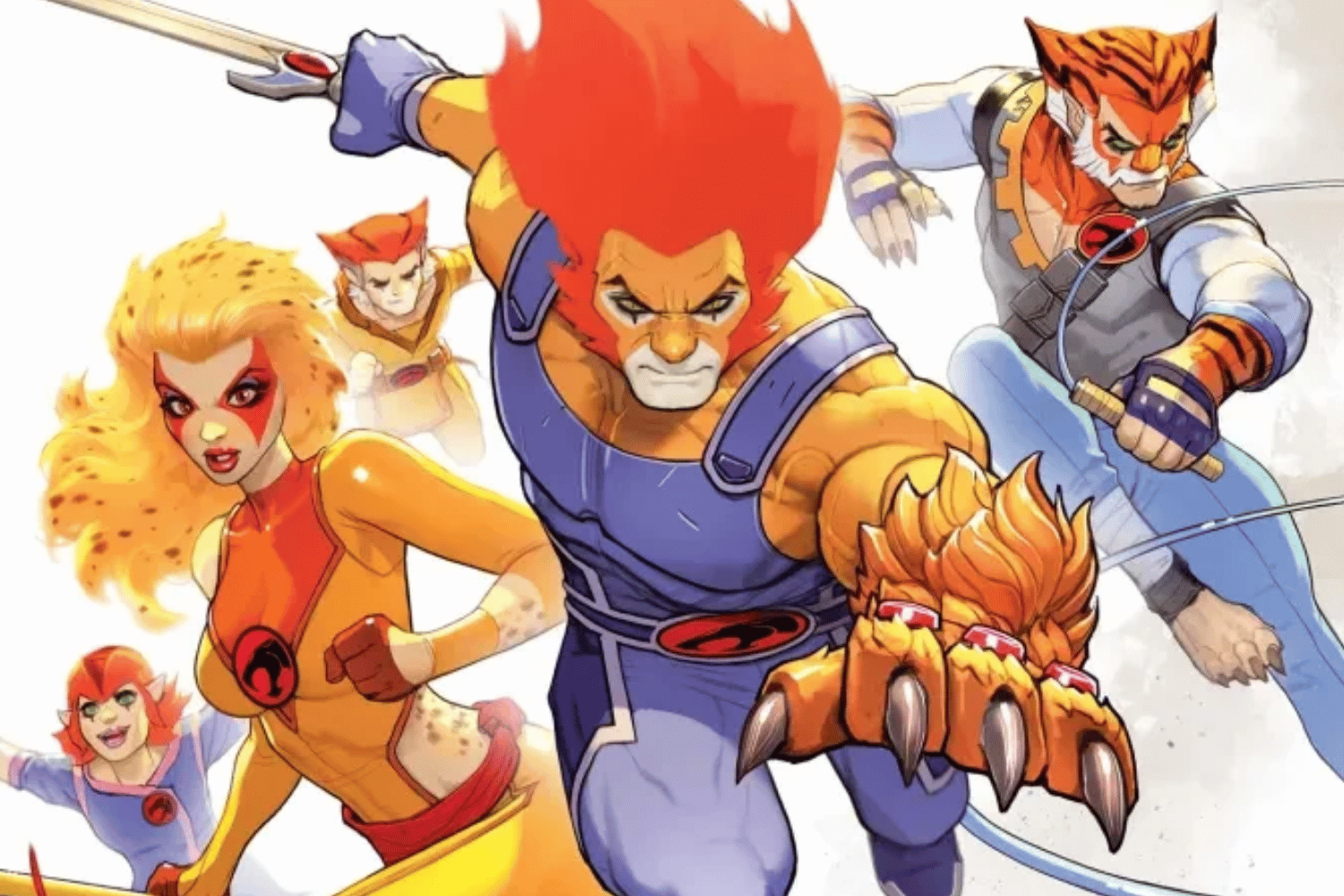
The theory exposes a fascinating aspect about revisiting childhood entertainment as adults.
For children who grew up watching “ThunderCats,” Lion-O and his feline warriors were unquestionable heroes: brave survivors fighting Mumm-Ra and defending Third Earth from evil.
But watch the 1985 cartoon again through a modern political lens and an uncomfortable question emerges: Were the ThunderCats actually colonizers?
The theory has circulated among fans online, turning a beloved ’80s cartoon into an unexpectedly complicated discussion about migration, power and colonialism.
They arrived—then built a fortress
Canon establishes that the ThunderCats are refugees. Their home planet Thundera is destroyed, forcing Lion-O, Cheetara, Tygra, Panthro, WilyKit, WilyKat and Snarf to flee. Their damaged spacecraft eventually reaches Third Earth, where they attempt to rebuild their lives.
But critics of the story’s politics point to what happens next.
The newcomers establish Cat’s Lair, an enormous technologically advanced fortress on a planet already inhabited by numerous civilizations. They also possess weapons and technology far beyond those of many Third Earth societies.
From a postcolonial perspective, the imagery can look familiar: outsiders arrive in an inhabited territory, establish a permanent settlement and quickly become a major military power.
Heroes—according to whom?
The ThunderCats soon position themselves as defenders of Third Earth, intervening in conflicts and protecting communities.
Yet the original series also complicates the colonizer argument. The Ro-Bear Berbils become friends and allies of the ThunderCats rather than conquered subjects, while the cats repeatedly defend local populations from enslavement, raiders and other threats.
They don’t impose taxes, enslave populations or extract wealth to enrich Thundera. They couldn’t even send resources back to a colonial motherland—Thundera was gone.
That makes them much closer to displaced refugees establishing a new home than traditional imperial colonizers.
What about Mumm-Ra?
One of the funniest versions of the theory flips the entire childhood narrative: What if Mumm-Ra was simply defending Third Earth from armed aliens?
Nice try.
Mumm-Ra was already portrayed as an ancient supernatural force of evil before the ThunderCats established themselves. The series repeatedly depicts him manipulating, attacking and terrorizing others, while other villains also threaten the inhabitants of Third Earth.
So Lion-O probably doesn’t owe Mumm-Ra an apology.
Still, the theory exposes something fascinating about revisiting childhood entertainment as adults.
The ThunderCats may have arrived as refugees rather than conquerors, but they also arrived with superior weapons, built a fortress and became one of Third Earth’s dominant powers.
Perhaps they weren’t colonizers.
But four decades later, it’s surprisingly easy to understand why somebody might ask.
ThunderCats, ho—or ThunderCats, go home?
READ: