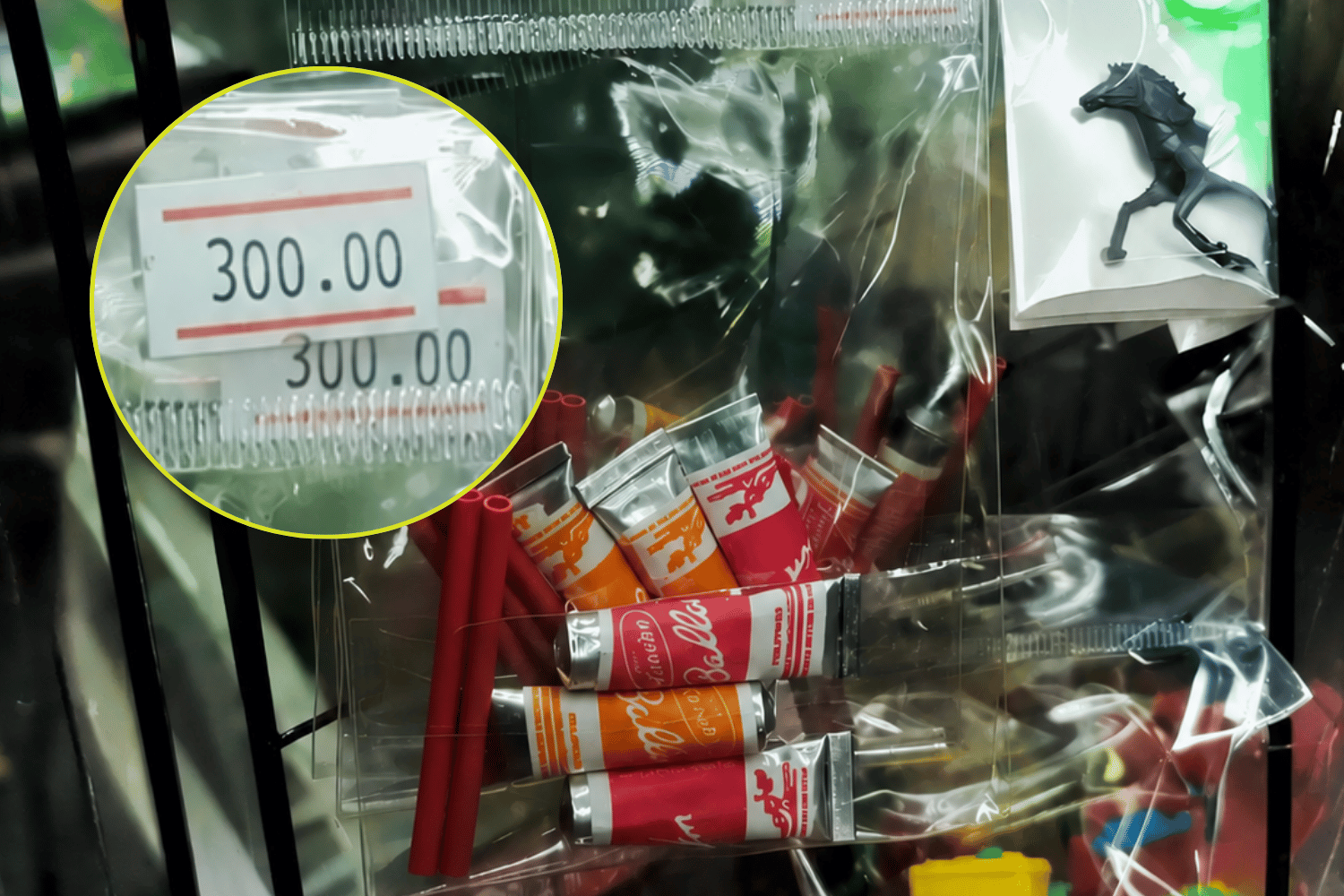
The image quickly drew thousands of reactions and comments from netizens who remembered buying the iconic plastic balloons for just ₱1 or ₱2 at neighborhood sari-sari stores.
Many joked that the toy had become an “ancient relic” or a “vintage collectible,” while others quipped that the price was more painful than the balloon popping itself.
One commenter wrote, “Ancient relic kasi ‘yan ng mga batang 90s,” while another joked, “Hindi pa ginawa’ng 3k.”
Others pointed out that similar balloon kits can still be found elsewhere for as low as ₱5, suggesting that the viral price tag may reflect a specialty or novelty shop rather than the typical market price.
Beyond the sticker shock, the post awakened memories of one of the Philippines’ most recognizable childhood toys.
Unlike ordinary rubber balloons, the classic plastic balloon came in a tiny tube filled with colorful sticky gel and a small plastic straw. Blowing one into a giant bubble took patience and technique. If it sprang a leak, kids instinctively pinched the sticky plastic together before trying again.
Many also remembered the unmistakable chemical smell of the gel, the challenge of making the biggest balloon possible, and even the old prank of slapping the flattened balloon against a friend’s forehead to make a loud popping sound.
For generations of Filipino children, it was one of the cheapest forms of entertainment—an after-school treat that cost only a few coins but could keep them occupied for hours. Many also mastered the famous “takla” trick, carefully removing the balloon from the straw before blowing it even bigger using only their lips.
Today, the toy survives largely as a nostalgic throwback, often appearing in retro shops and viral social media videos celebrating Filipino childhood.
However, health authorities have long cautioned parents against unbranded plastic balloon kits. Traditional versions use a gel made from polyvinyl acetate dissolved in acetone, and prolonged exposure to the chemical fumes may pose health risks, particularly for young children.
Whether the viral ₱300 price tag is an outlier or not, one thing became clear from the flood of reactions: for many Filipinos, the little plastic balloon is no longer just a toy—it is a symbol of a simpler childhood that, like everything else, seems to have become much more expensive.
READ: