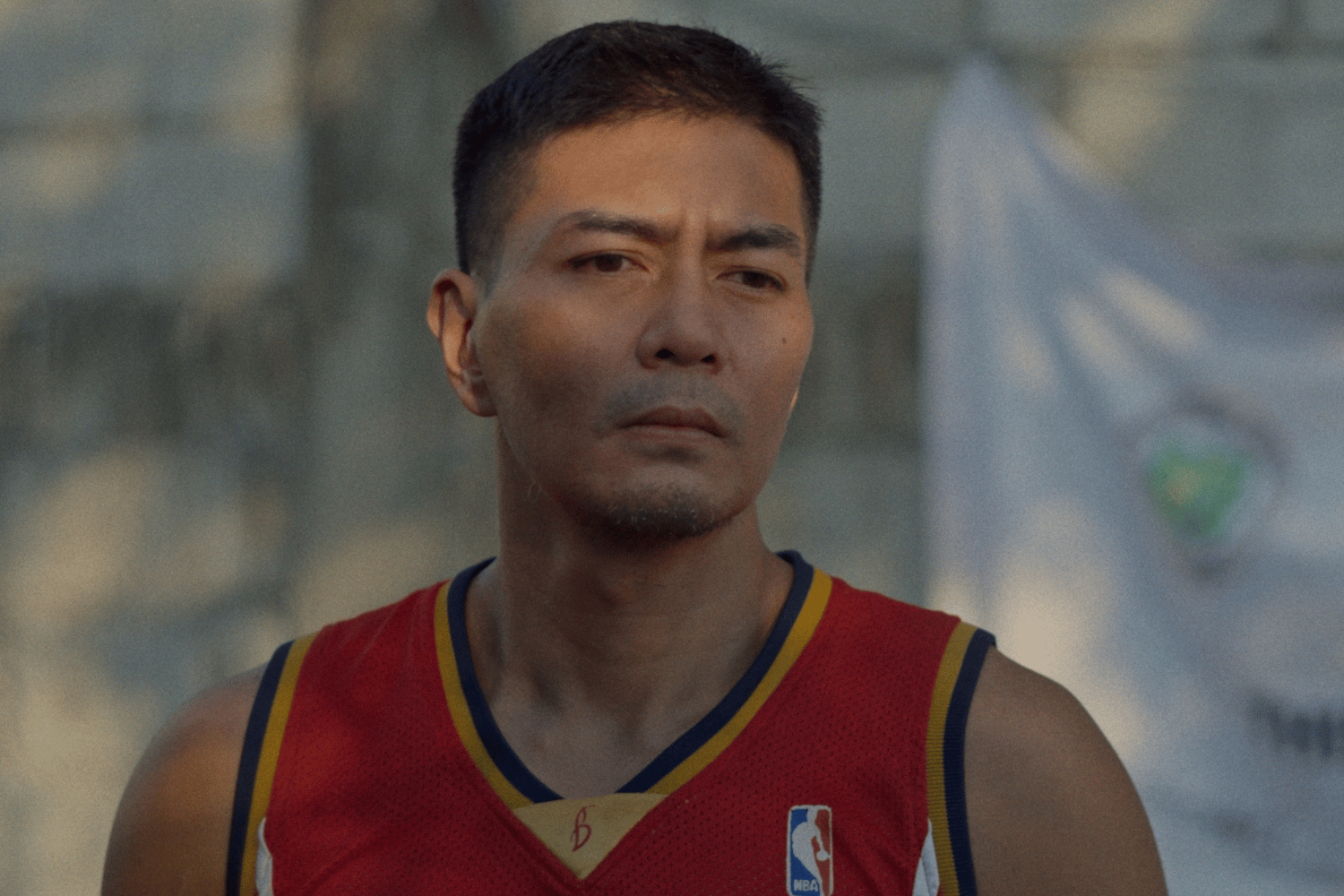
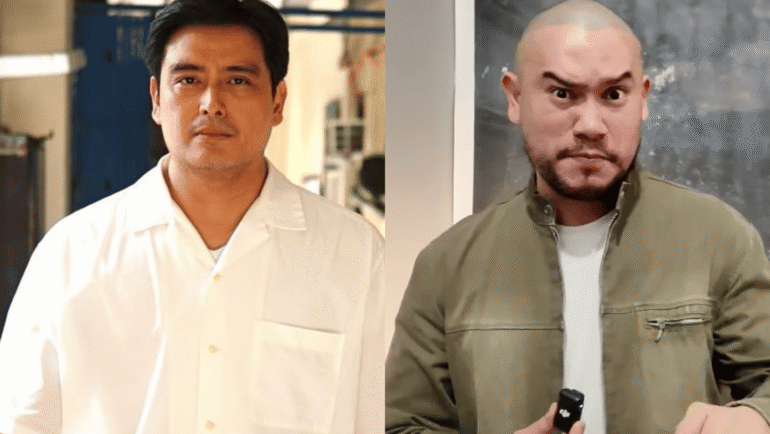
“Nang Matakasan ang Tagay” examines toxic masculinity and fatherhood ahead of its festival premiere.
Coming-out stories in Philippine cinema have often centered on rejection, confrontation, and the fear of a family refusing to accept a queer child.
Giancarlo Santiago’s Puregold CinePanalo short film “Nang Matakasan ang Tagay” takes a different route, placing the father at the center of a story about masculinity, recognition, and the complicated ways love can be expressed within a Filipino family.
The 20-minute narrative film follows Tonyo, a father preparing to leave for work at sea, as he spends his final days at home with his son, Tan-Tan. His return is interrupted by signs that something has changed in his child, from Tan-Tan’s hesitation around his bicycle to his discomfort around Tonyo’s drinking companions.
Tonyo’s world is shaped by the men around him, where drinking sessions become spaces for conversations about toughness, masculinity, and “pagkalalaki.” Their jokes and expectations reinforce ideas about how boys are supposed to behave, creating a tension that Tonyo begins to recognize through his relationship with his son.
As Tonyo tries to reconnect with Tan-Tan, the film gradually reveals the distance between the kind of man he has been taught to become and the kind of father his son needs. His relationship with his drinking buddies becomes part of the conflict, as the same culture of masculinity that gives him a sense of brotherhood also contributes to his son’s fear.
For Santiago, the film grew from a question about why some fathers fear having a queer child: “Bakit maraming tatay ang takot na magkaroon ng bading na anak?”
Rather than building the story around a dramatic declaration or an explicitly hostile reaction, “Nang Matakasan ang Tagay” examines the process through which a father begins to recognize something he has not fully understood.
This places the film within a wider conversation about how queer lives are represented on screen. While stories of coming out can understandably focus on families dealing with rejection, Santiago’s film considers another possibility: a family where acceptance does not necessarily arrive through one defining conversation, but develops through everyday encounters between a parent and child.
The film also situates that relationship within Filipino ideas of masculinity. Tonyo is surrounded by men who reinforce toughness as a measure of manhood, making his eventual confrontation with those expectations personal rather than abstract.
That perspective allows “Nang Matakasan ang Tagay” to examine toxic masculinity as something passed down through families and communities. Tonyo is not simply positioned as an antagonist to his son; he is also a product of the same expectations he must eventually question.
At heart, “Nang Matakasan ang Tagay” uses a father’s attempt to reconnect with his son to examine a form of queer representation that is less familiar in local stories: one that acknowledges the fear and expectations surrounding queer children while leaving room for tenderness, recognition, and change within the family.
“Nang Matakasan ang Tagay” will premiere alongside 18 other short films at the Puregold CinePanalo Film Festival 2026, running from September 23 to October 4.
READ: