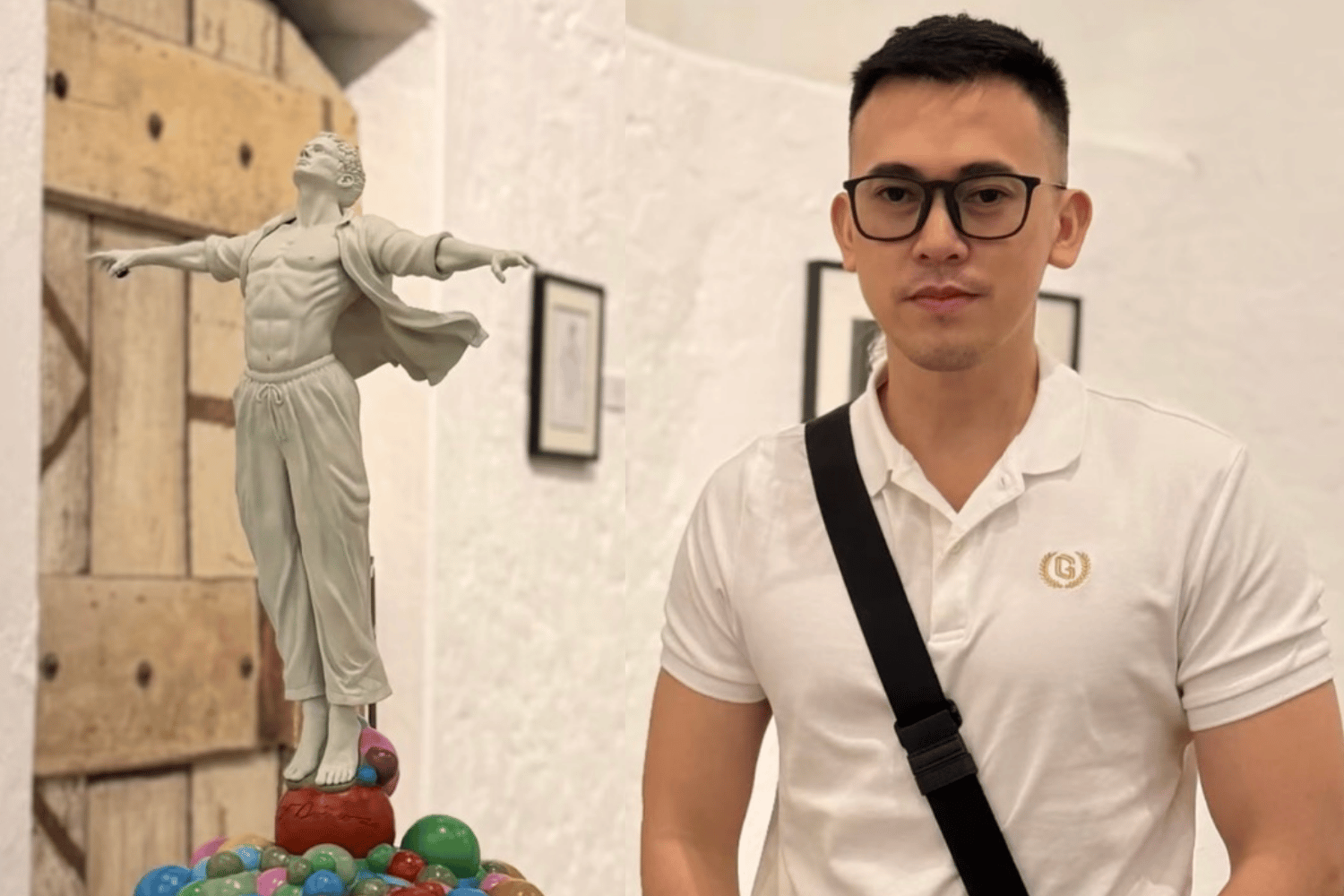
It took a long time before he was ready to give his art three dimensions.
For years, Vincent Diñoso’s human figures have appeared to float.
Across his ‘Anti-Gravity’ and ‘Ethereal’ series, bodies stretch, rise and seemingly escape the forces pulling them downward. Now, the Pasay-born artist has taken that fascination with weightlessness off the flat surface and into actual space.
Diñoso has ventured into sculpture, translating the visual language that has made his paintings recognizable among collectors into three-dimensional form.
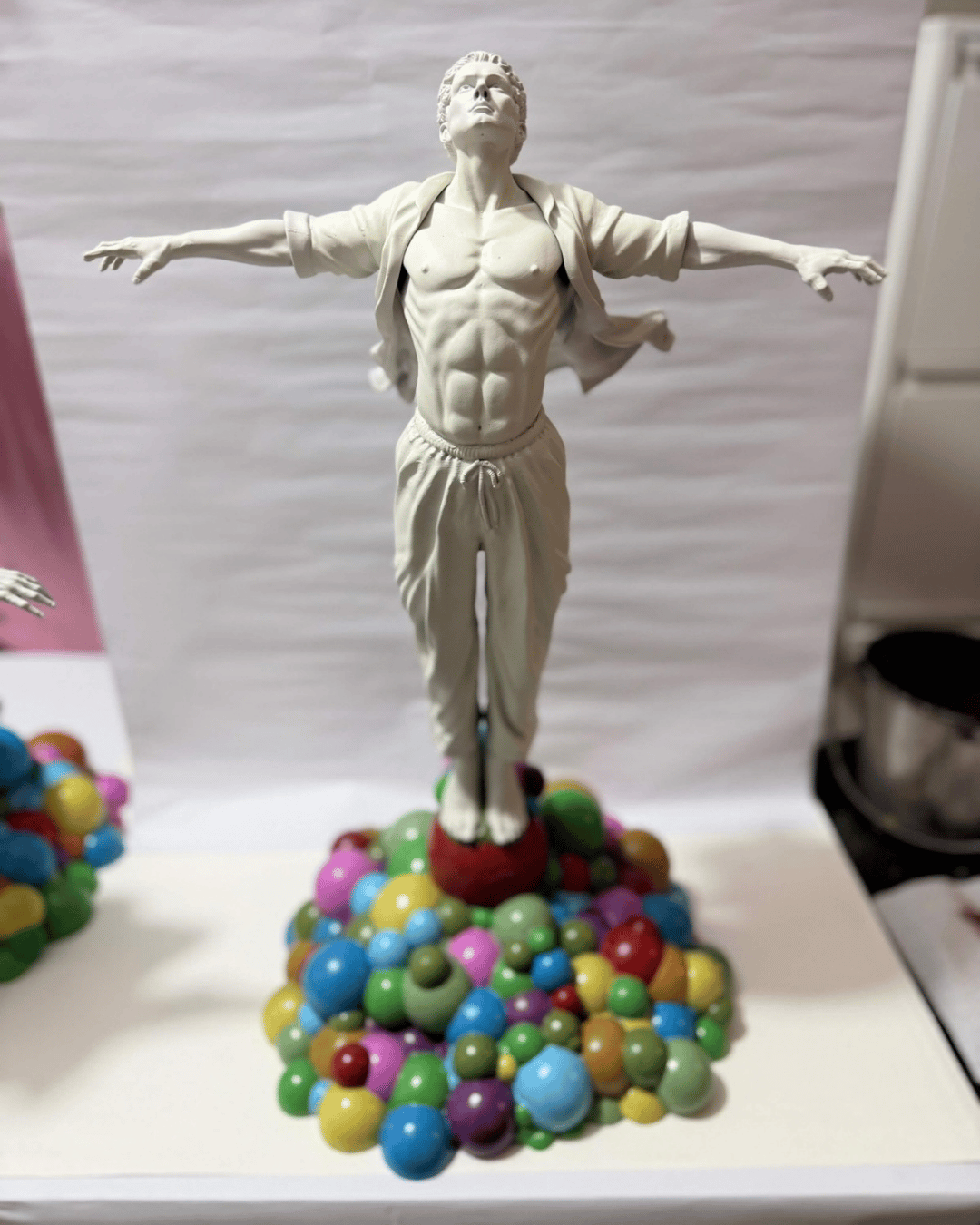
His first pieces, ‘Ethereal 912’ and ‘Ethereal 913,’ depict a muscular male figure with arms spread wide, chest exposed and face turned upward. Beneath him is a mound of brightly colored spheres, creating a striking contrast with the almost monochromatic human form.
The effect is unmistakably Diñoso: a body caught somewhere between struggle and release.
A dream two decades in the making
For Diñoso, sculpture is actually a return.
“Ever since I started the ‘Anti-Gravity’ and ‘Ethereal’ series, I’ve always imagined them in three-dimensional form,” he told radar in an exclusive interview.
But there was one thing holding him back.
“I wasn’t really confident since it’s been two decades since I did a sculpture,” he admitted.
Rather than allowing that uncertainty to stop him, Diñoso decided to invest the time, resources and effort required to relearn the medium.
“I wanted to excite myself by trying something new,” he said. “It took a lot of time and preparation. I’m just happy that I was able to make my first-ever sculptures.”
‘Ethereal 912,’ the standing version, measures 21 inches high, 14.5 inches wide and 13 inches long. ‘Ethereal 913’ measures 16.5 by 14.5 by 15.5 inches. Both 2026 works combine a resin-fiberglass base with a resin figure.
From gauze to resin
The transition is significant for an artist whose practice has become closely associated with an unusually fragile material: gauze.
A University of the Philippines Diliman graduate, Diñoso built much of his reputation around his command of human anatomy and his experimentation with gauze as a surface for acrylic and ink. Its translucency allowed bodies to appear layered, fragmented and almost spectral.
In sculpture, however, there is nowhere for the figure to disappear.
Swipe or click arrows to see photos
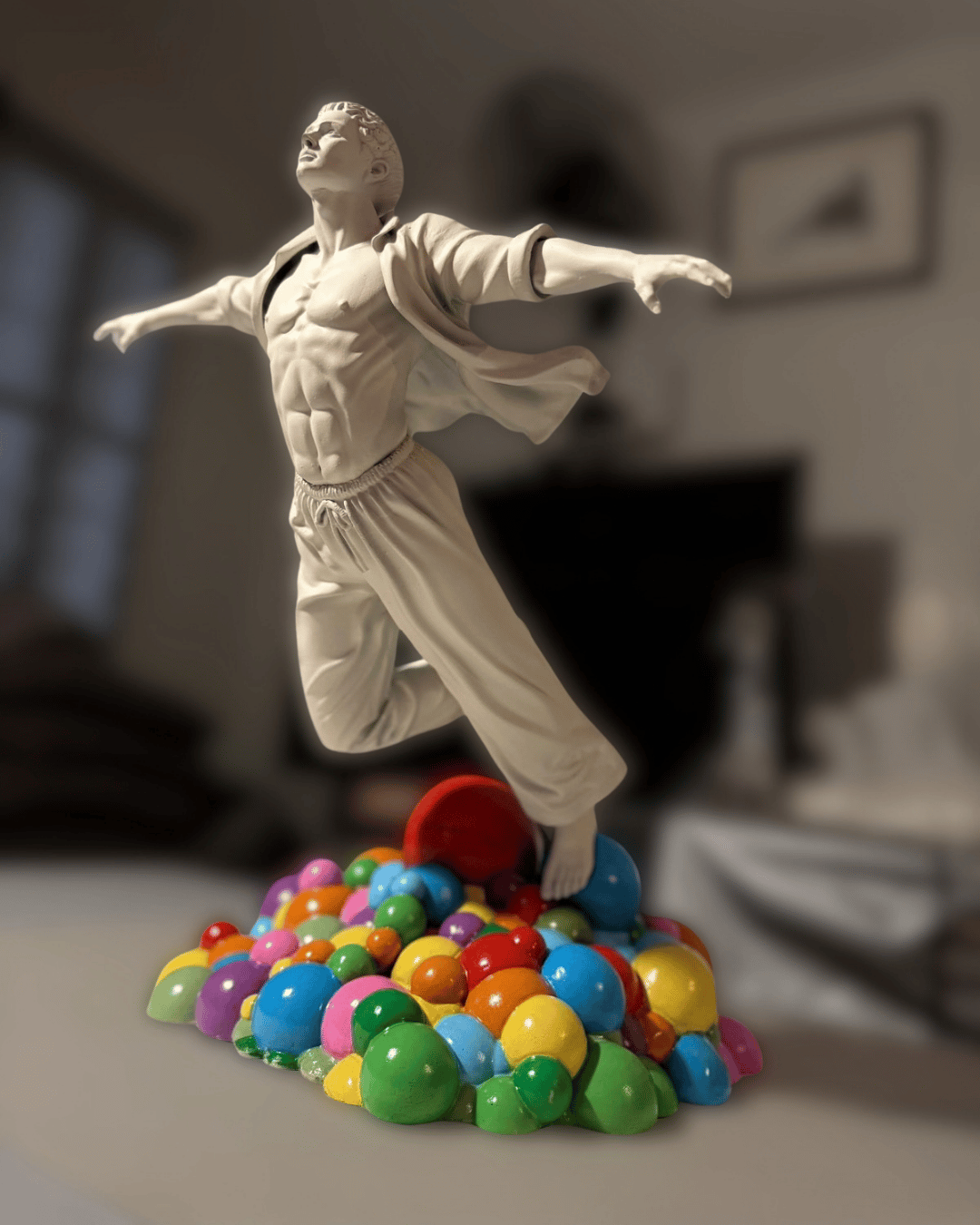
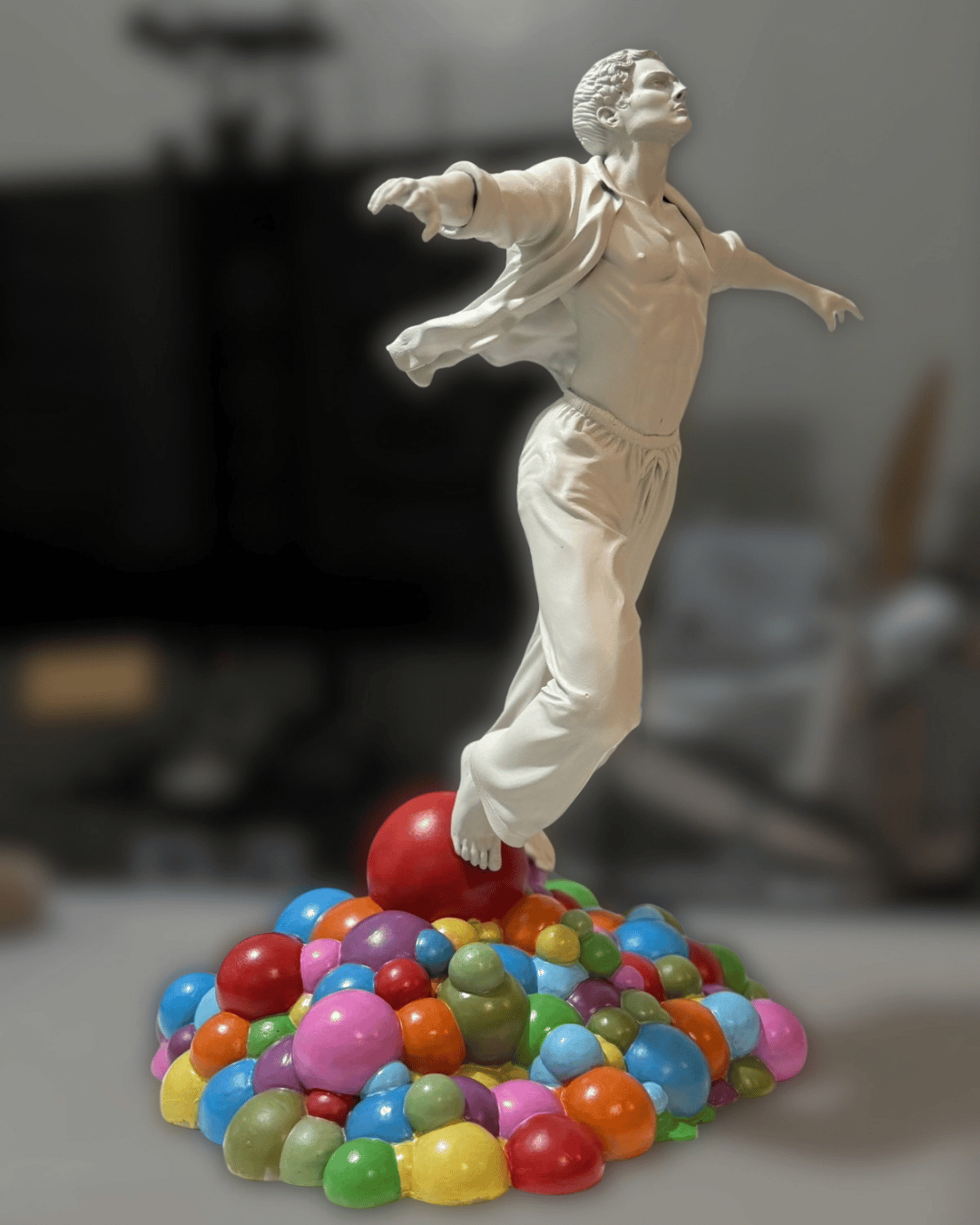
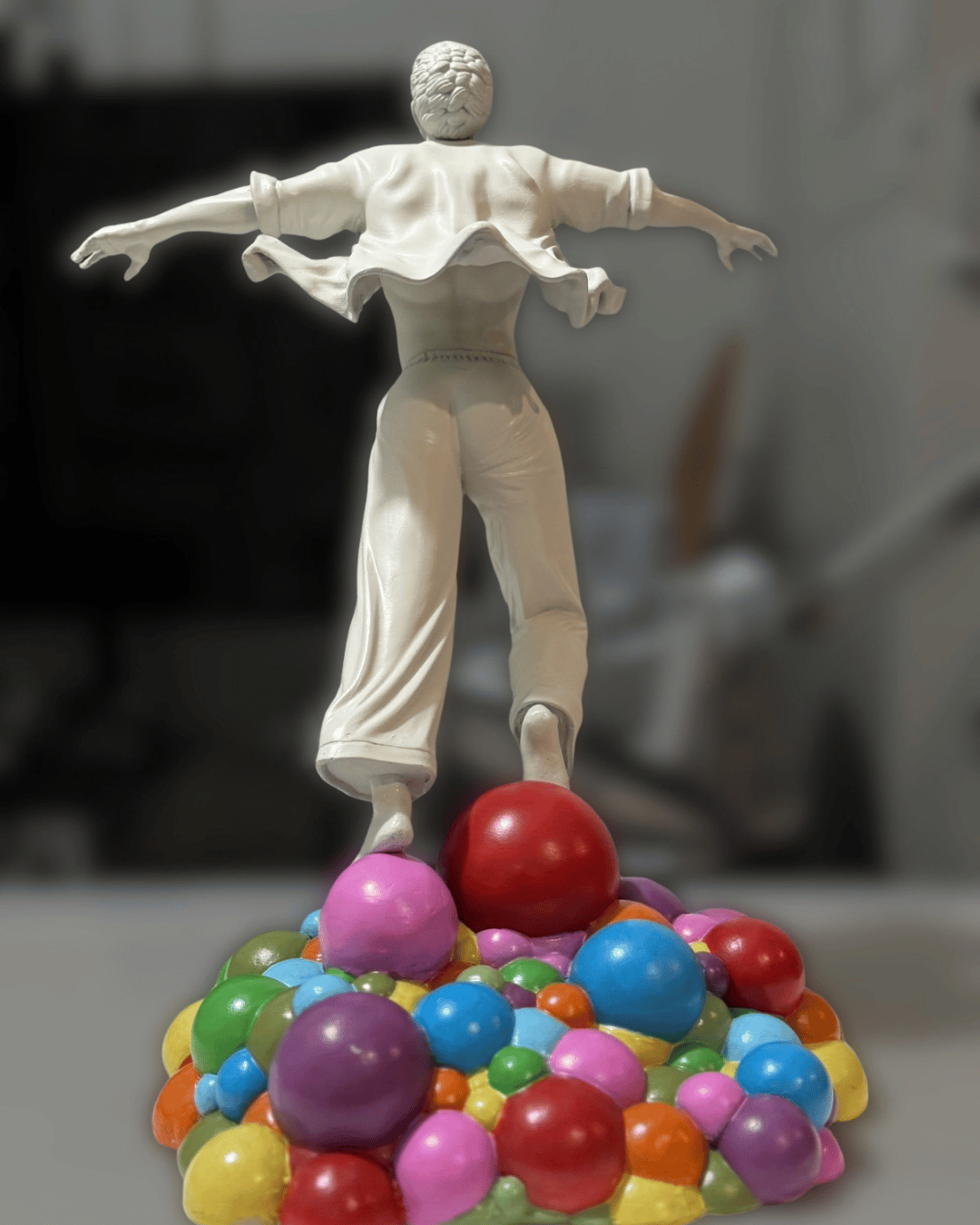
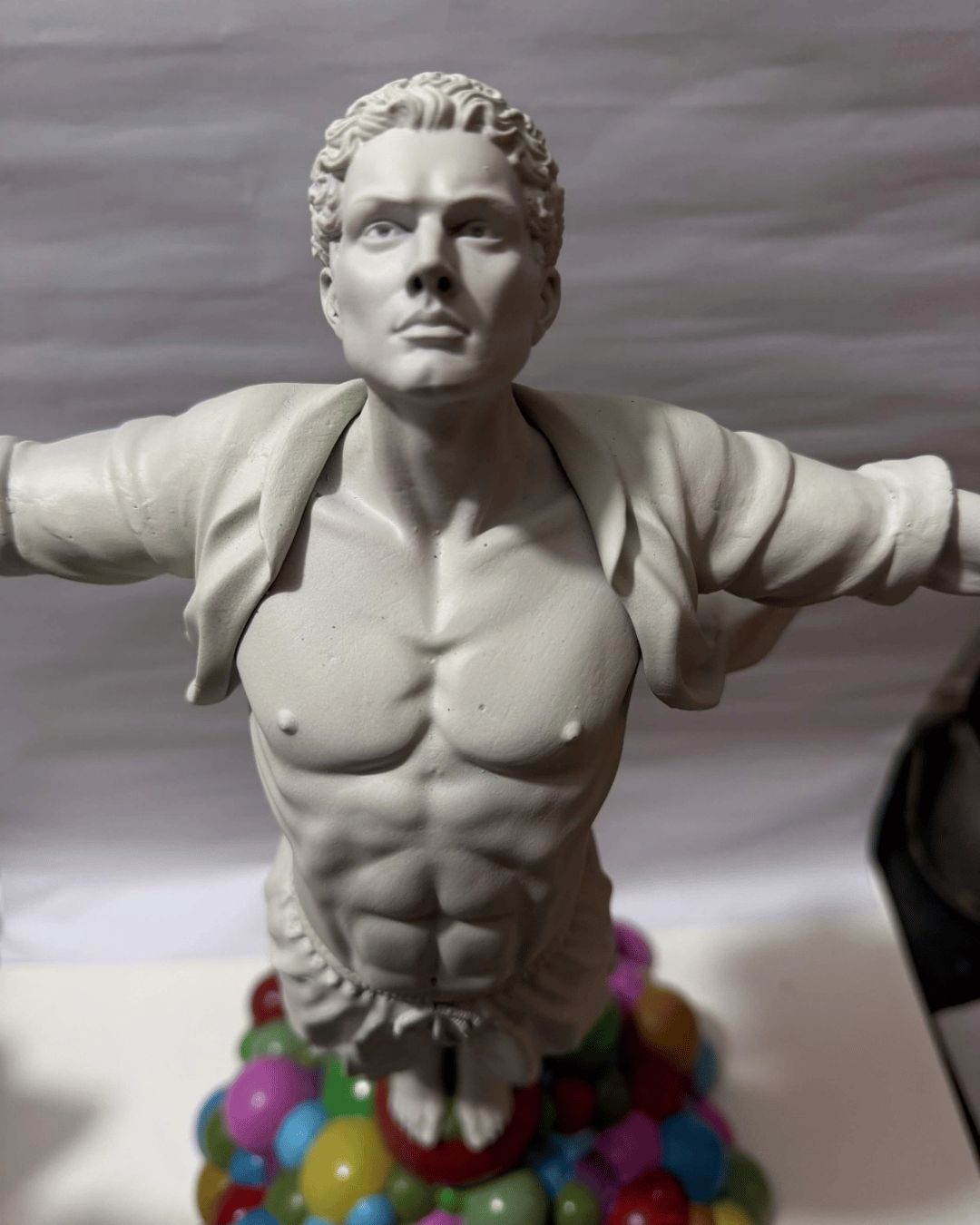
The anatomy becomes solid. Muscle occupies actual space. Arms project outward. Fabric appears caught in motion. Viewers can walk around the figure and encounter the body from perspectives impossible on a wall.
Yet Diñoso has preserved the paradox at the heart of his work: creating a sense of weightlessness out of something undeniably physical.
Waiting for the moment to rise
There is also a deeper meaning behind the new sculptures.
Diñoso dedicates them to people waiting for “the right time, the right place, and the right person,” while holding on to the hope that they can eventually free themselves from life’s heavy tides.
The outstretched arms can suggest surrender, flight or liberation. The upward gaze appears to search beyond the figure’s immediate circumstances.
For an artist who waited roughly 20 years before returning to sculpture, that message carries an added resonance.
His figure may appear ready to take flight, but it took years before Diñoso himself was ready to give it three dimensions.
And now that his ‘Ethereal’ bodies have finally stepped away from the canvas, they no longer merely create the illusion of occupying space.
They actually do.