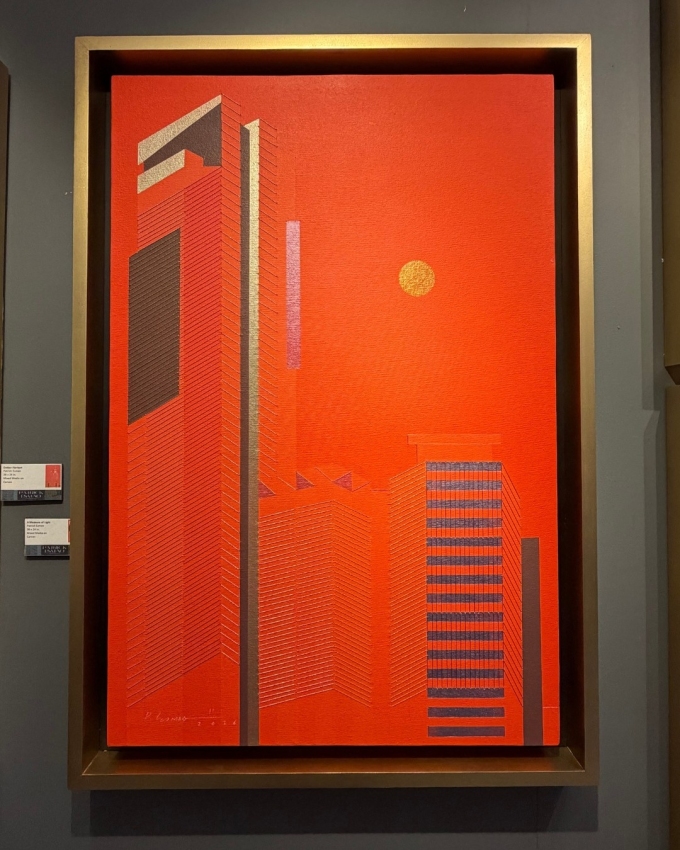
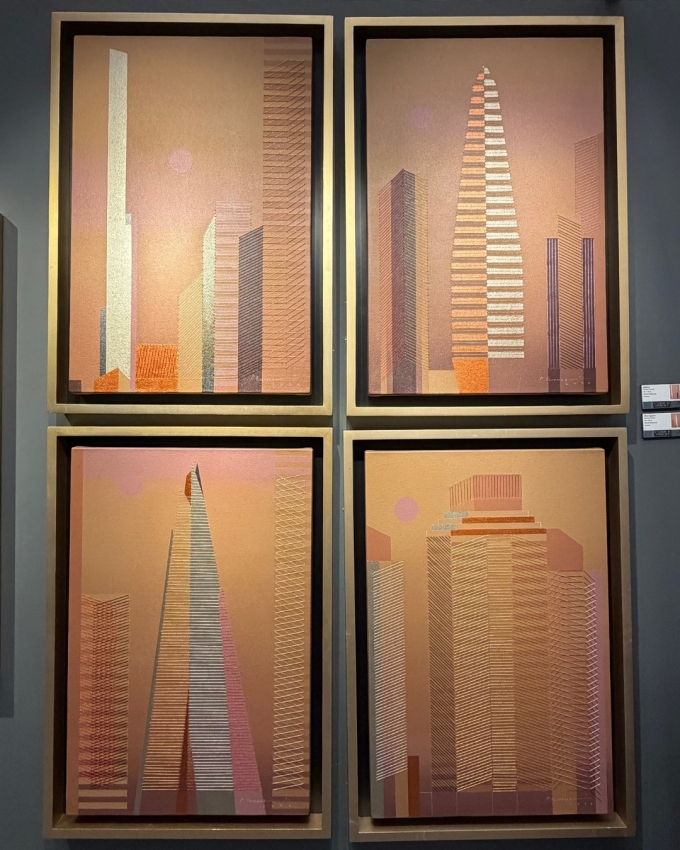
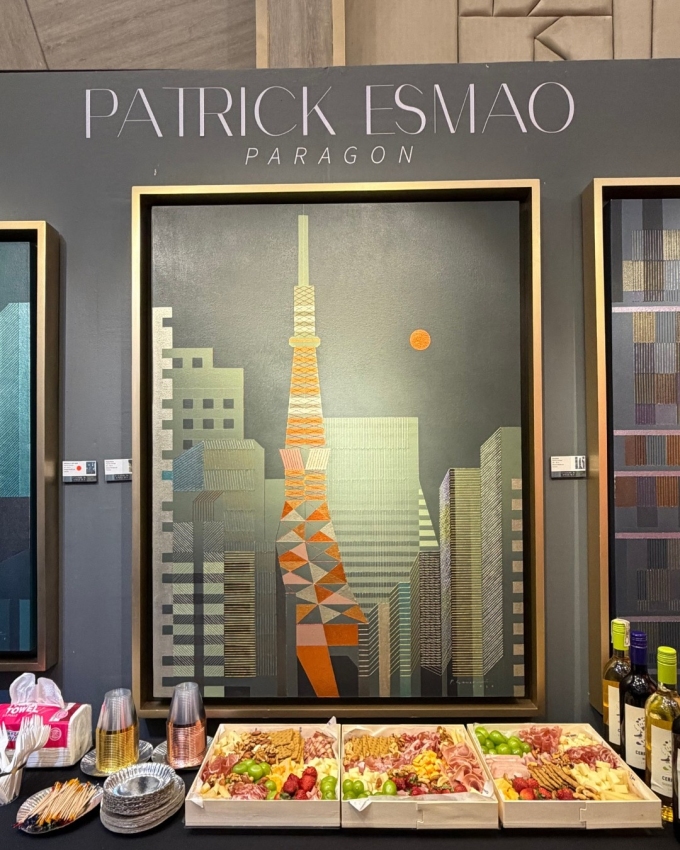
The mixed-media artist’s “Paragon” is on view at MoCAF 2026.
A typical version of this story goes: a teacher quits stable job, follows his passion, and becomes an artist.
Patrick Esmao’s version is less romantic, and more practical. He spent more than a decade teaching drafting, leaving enough time to paint only on the weekends. And then the pandemic hit, that period where things stopped for most, but opened up opportunities and discoveries for many.
But even when a gallery finally offered to represent his work, he didn’t resign. He kept teaching for another full year, exhibited on the side, mounted three solo shows, and only quit once he’d saved an emergency fund. “You have to pay the bills,” he tells radar Lifestyle with a chuckle.
Passion didn’t replace the paycheck immediately. It was slow and on purpose. That’s a more honest answer to whether passion can become a living. It’s not through just a giant leap of faith, but through patience and a plan.
Stitched, not scrolled
That same patience shows up literally in his hands. It’s a habit he traces back to drafting school: “I was trained to be obsessed with the process,” he says.
In an age of AI-generated art, Esmao points out that machine-made art tends to flatten, with references that start looking the same. His stitched canvases adds texture to the painted backdrop. A metallic thread is hand-stitched in first, gold and silver mostly, punched through and mapped out like a technical drawing.
Ask him where his colors and patterns come from, and the answer isn’t abstract theory, it’s the sky.
Esmao says he simply follows the silhouette of the sky at different hours: warm oranges, browns, and yellows for a sunset scene, cooler tones like dark green or midnight blue for something quieter and later. It’s a small but telling detail, given how geometric and constructed his work looks at first glance.
Underneath the sharp lines and stitched thread, the palette is still tethered to something as ordinary and unrepeatable as the time of day a building was framed.
He’s not too rigid about the process, either. Asked how he settles on a palette, he laughs and admits that a lot of it comes down to who’s buying, and more specifically, whose wife is doing the deciding.
“Normally, it’s the collectors. It’s the wife who decides,” he says, only half-joking. It’s a small, funny admission from someone easy to talk to, proof that even a deeply disciplined practice still has room for a sense of humor about the business side of art.
A full circle moment at MoCAF 2026
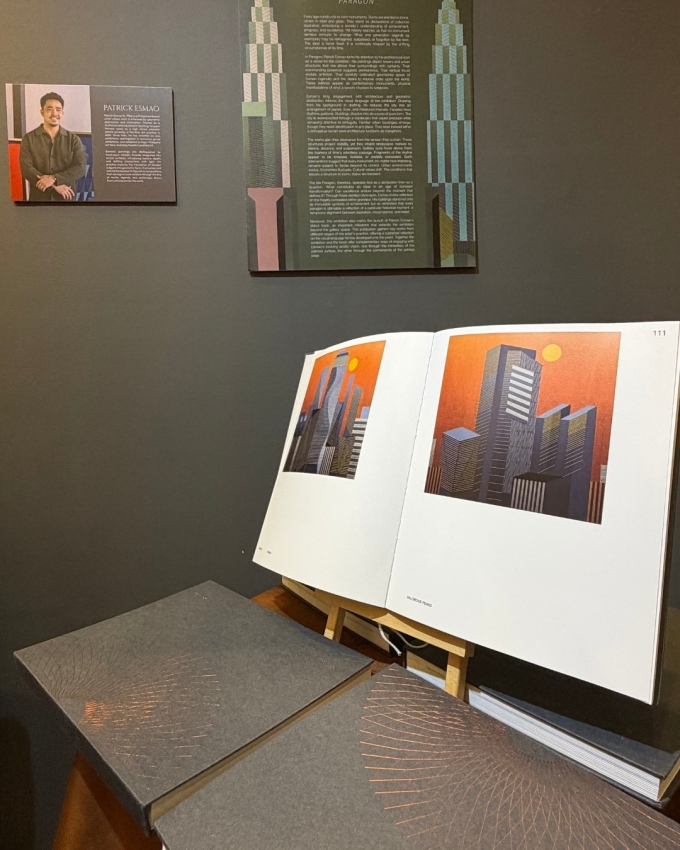
Esmao’s journey meets in the “Paragon,” his headlining presentation at MoCAF 2026, and in the debut book he launched alongside it.
Swipe or click arrows to see photos