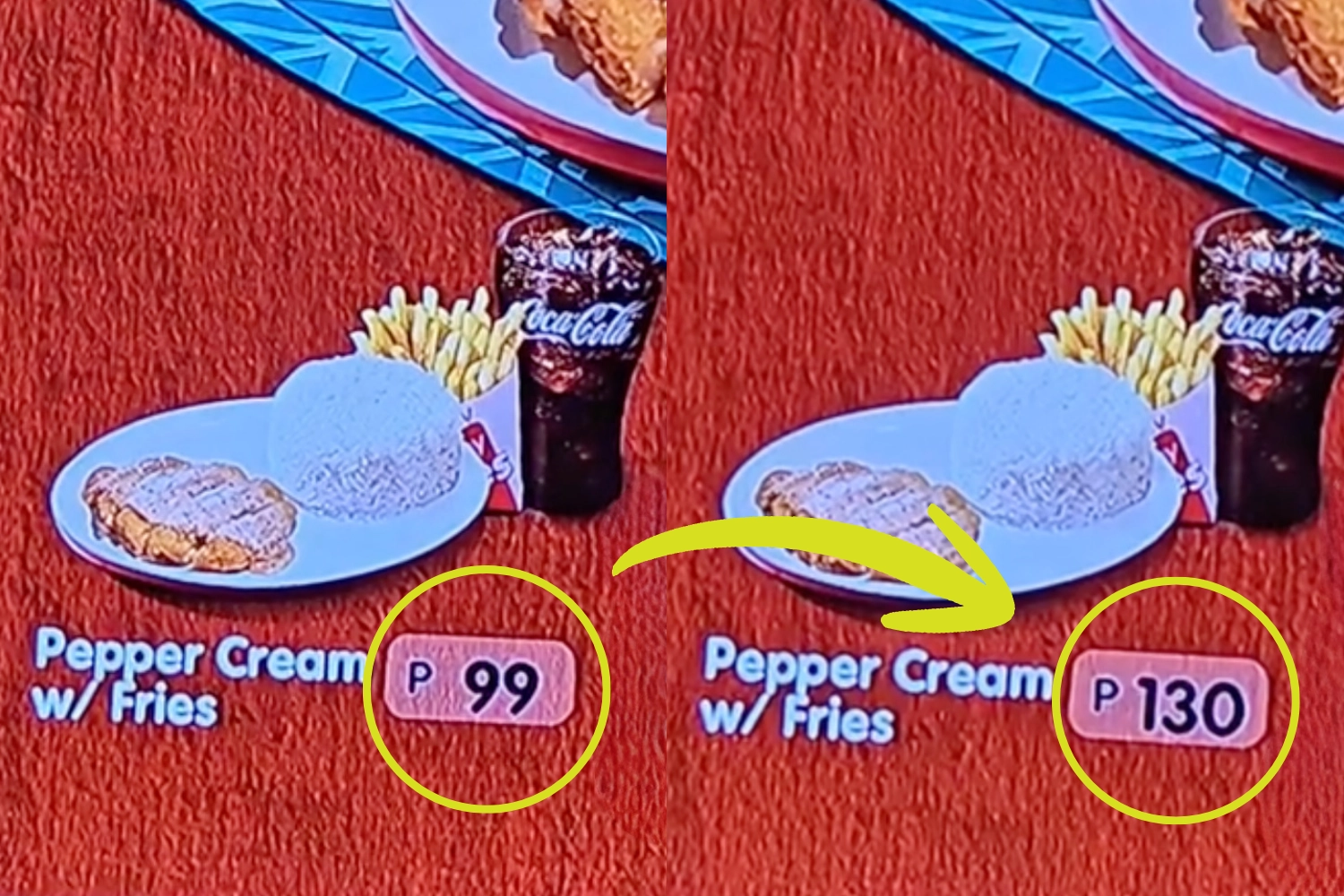
The poster said the lower price remained on the screen for around 30 seconds before changing to the higher amount for about 10 seconds. The cycle allegedly repeated several times, based on the user’s account.
Some individuals suggested that the two prices might correspond to versions with and without drinks. Others, however, questioned this explanation, pointing out that the meal image appeared to include a drink at both price points. They described the display as potentially deceptive.
According to the post, students who noticed the discrepancy asked the cashier to confirm the actual price, but the menu display reportedly continued to show the changing amounts.
The ₱31 difference represents around 31% of the lower advertised price and could leave customers unsure of how much they would actually pay before placing an order.
Article 81 of the Consumer Act of the Philippines requires consumer products offered for retail sale to carry publicly displayed prices and prohibits selling them above the stated amount.
Meanwhile, Republic Act 10909 requires establishments to indicate exact retail prices for goods or services, including applicable taxes.
The Department of Trade and Industry has also issued guidance requiring clear price displays and prohibiting unauthorized alterations.
However, whether these provisions apply to the reported incident would depend on the circumstances and any findings by the appropriate authorities.
The incident comes as the food service industry continues to expand, with the Philippine Statistics Authority recording 37,500 formal accommodation and food service establishments in 2024, up 21.5% from 2022.