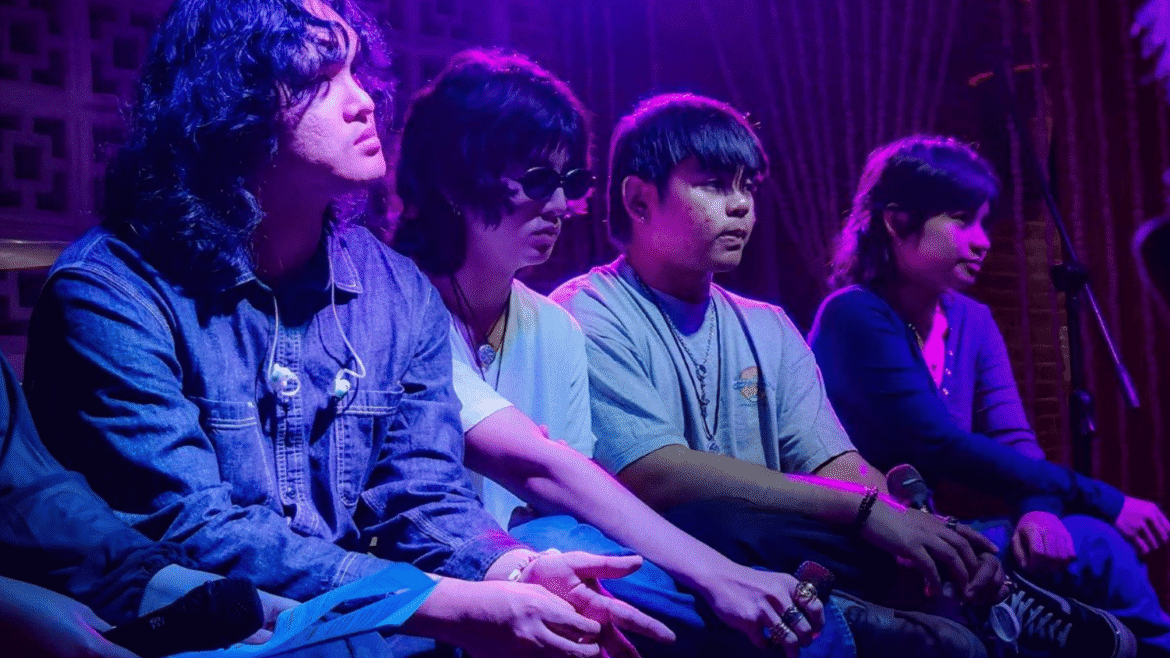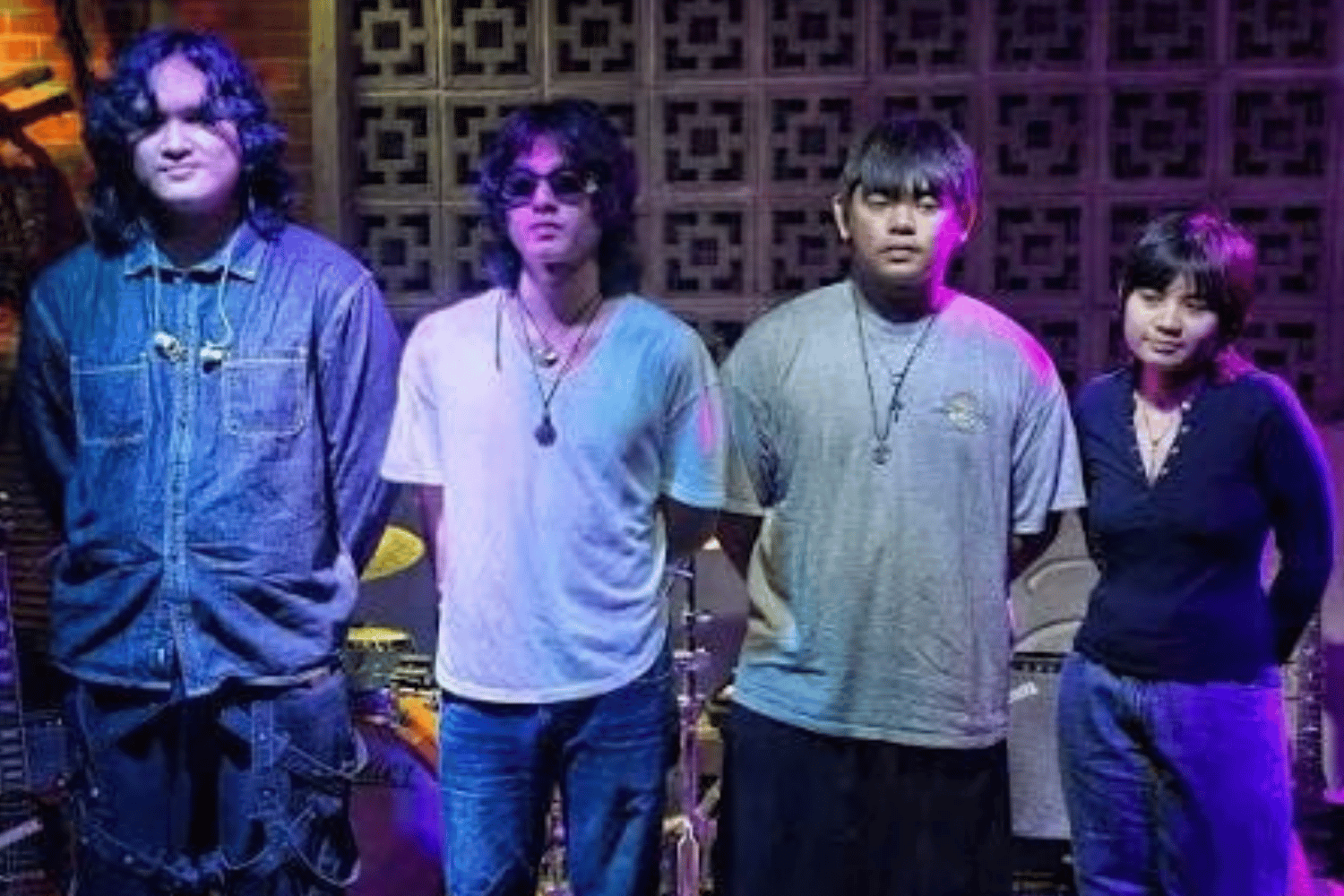
The Filipino alternative band argues that lived experiences and imperfections are what make music deeply human.
Sometimes, the imitation is convincing enough to make listeners forget that the voice was never attached to a body that stood in a rehearsal room, stumbled through a bad take, fell in love, lost someone, or carried a memory long enough to turn it into a song.
For Filipino alternative band fitterkarma, that is where the unease begins. As AI-generated covers continue to make their way across social media, the four-piece is drawing a line around something technology may imitate but cannot truly possess: the human experience behind the music.
“Una sa lahat, hindi kami gagamit ng AI para bumuo ng kanta,” the band said. “Kaya namin bumuo without it.”
On September 9, the quartet—Joao de Leon, Sophia Miranda, Sanders Bayas, and Mikee “Lory” Mendoza—released its debut full-length album, “kung tayo’y nasa isang horror na pelikula, tiyak ako ang una mong papatayin,” bringing together dark romance, shoegaze-influenced textures, and Philippine folklore.
But beneath the album launch is a discussion that feels increasingly difficult to escape. If artificial intelligence can recreate the sound of a human voice, what happens to the human feeling that made that voice worth hearing in the first place?
‘AI cannot write about experiences’
“Kulamin mo ‘ko at lagyan mo ng sumpa.”
A fitterkarma song can feel less like something being sung and more like something being remembered. Its eerie quality does not come only from horror imagery or folklore references, but from the yearning underneath them—the feeling of reaching toward something that may already be gone, or stepping closer to something frightening because the desire to know it is stronger than the instinct to run.
For Mikee Mendoza, the distinction is rooted in experience. “Ang AI kasi walang experiences, so they cannot write about experiences,” he said, arguing that the lived moments behind songwriting are precisely what make the craft difficult to replace.
Joao de Leon, meanwhile, points to human expression as something that survives every technological era. “Even in different eras [of art], hindi mawawala doon ang human expression,” he said, emphasizing that this expression is part of what makes art beautiful.
Where the stories come from
For fitterkarma, those experiences are deeply connected to where their music comes from. Joao’s fascination with horror and folklore was shaped by childhood stories, films, television programs, documentaries, and stories passed down by relatives. Those memories eventually found their way into the band’s creative world.
AI can study the sound of a horror song. It can reproduce the atmosphere and imitate a voice delivering a line about fear, desire, curses, or longing. But it cannot be the child who first heard the story. It cannot remember being afraid and grow older and look back at that fear differently.
That is the gap between imitation and experience.
Perhaps the strongest defense fitterkarma has against artificial perfection is the very thing technology is designed to erase: imperfection.
“Sa mga previous naming kanta, may little mistakes doon na nagpapa-human, na nagustuhan ng tao,” Sophia Miranda said.
Sanders Bayas puts it even more plainly, “AI makes everything perfect pero tayo, as humans, ang talagang ikagaganda ng art is the imperfections.”
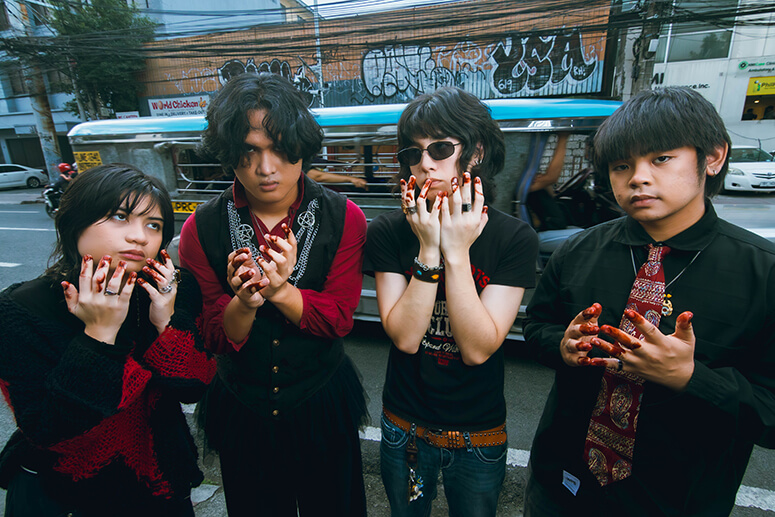
Fitterkarma finds beauty in getting it wrong, embracing the imperfections that make their music feel unmistakably human and alive. Photo from fitterkarma / Instagram
Those imperfections are not flaws waiting to be corrected. They are evidence that somebody was there.
Fitterkarma was formed in 2023, but its rise has already carried “Kalapastangan” and “Pag-Ibig ay Kanibalismo II” onto the Billboard Philippines Hot 100. The latter, which began as Joao’s thesis project, eventually became part of the story leading to their debut full-length album.
Now, “kung tayo’y nasa isang horror na pelikula, tiyak ako ang una mong papatayin” has arrived on streaming platforms, turning individual songs into a larger world.
Joao has described the album like a movie, “with a beginning, a climax, and an ending.” Its songs come from different periods and move through different sounds, textures, and genres, creating an experience meant to be heard as a whole rather than simply as a collection of singles.
It compasses what the sound carries: the fear, the folklore, the strange tenderness of dark romance, the mistakes left inside the recording, and the feeling of wanting something so badly that even a curse begins to sound like an invitation.
AI may be able to reproduce the voice and melody, even learning the imperfections well enough to make the imitation uncanny. But it cannot reproduce the ache that made the song necessary. That is what makes fitterkarma’s music haunting in the first place.