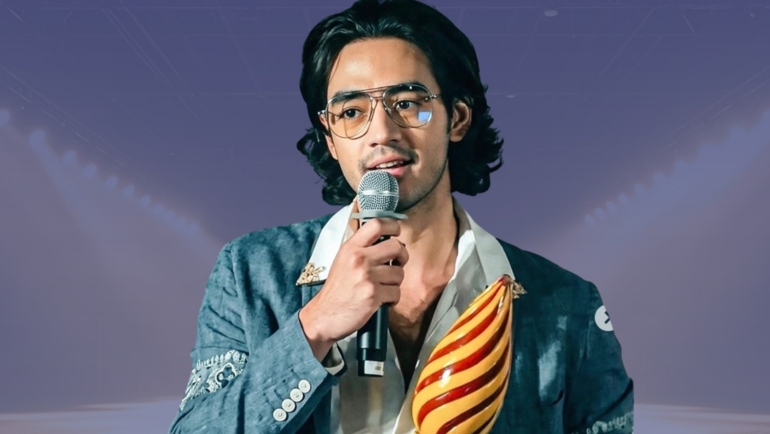
Why audiences now love to hate Sam Milby onscreen.
For years, he was the charming leading man—the safe choice, the kilig catalyst, the soft-spoken romantic audiences rooted for. But somewhere between the slow smiles and the serenades, Sam Milby found himself craving something sharper.
Now, he is no longer just playing the lover. He’s playing the threat.
And he wants you to feel it.
A new style: More intense, more kontrabida
Milby’s recent performances mark a deliberate pivot, one that trades comfort for confrontation. The actor has leaned into roles that are darker, more psychologically layered, and unapologetically antagonistic.
“Mas gusto ko ’yung totoong sampal. Totoong sakitan. Para mas madama,” he shared, referring not just to physical realism on set, but to emotional authenticity. For Milby, intensity is no longer optional—it’s necessary.
This isn’t villainy for shock value. It’s immersion.
He approaches confrontation scenes with a hunger for rawness, preferring fewer safety nets in emotionally charged sequences. The goal? To make the audience uneasy. To make them question him. To make them forget he was ever the guy they once cheered for.
From romcom prince to screen antagonist
Samuel Lloyd Milby first built his career on romance—soft lighting, gentle humor, and love teams that dominated prime-time conversations. After rising to fame through “Pinoy Big Brother,” he became one of television’s dependable leading men, thriving in romantic comedies and melodramas where he often played the ideal partner—steady, charming, and emotionally available.
But longevity in showbiz demands reinvention.
In recent years, Milby began shedding the “romantic lead” image and stepping into more complex territory—roles that allowed him to explore moral ambiguity, obsession, betrayal, and even cruelty. The shift was not abrupt. It was strategic. And eventually, it redefined him.
Major antagonist and morally gray roles

1. “Maging Sino Ka Man” (2006–2007)
Role: Supporting character with darker motivations
Though still early in his career, this series hinted at a more intense side. Milby played a character entangled in rivalry and emotional conflict—less the soft-spoken suitor and more the complicated outsider. While not a full-fledged villain, it showed his capacity for layered tension.

2. “Wag Ka Lang Mawawala” (2013)
Role: A morally conflicted male lead opposite Judy Ann Santos
Here, Milby took on a heavier dramatic arc. The series pushed him beyond romantic comfort zones into darker emotional terrain—control, trauma, and redemption. It marked one of his first stronger departures from purely “good guy” roles.

3. Halik (2018–2019) — Turning Point
Role: Ace Corpuz
This was the breakthrough villain role. As Ace Corpuz, Milby portrayed an unfaithful and manipulative husband whose betrayal unraveled not just a marriage but an entire web of relationships. Calculating yet charismatic, Ace was infuriatingly human—capable of love, but driven by ego and desire.
This role marked the definitive turning point. Viewers who once rooted for him now loathed him onscreen—and that reaction signaled success. Milby proved he could command a narrative not as the hero, but as the source of chaos.

4. “Saving Grace” (2024–2025)
Role: Julius Hernandez
In this streaming-era psychological drama, Milby leaned further into antagonistic territory. As Julius Hernandez, he embodied a more controlled, cerebral threat—less explosive than Ace, but equally unsettling. The role showcased a matured villainy: quiet menace over loud confrontation.

5. “The Alibi” (2025–2026)
Role: Walter Cunanan
His portrayal of Walter Cunanan continues the trajectory toward morally fractured characters. In this thriller space, Milby embraces ambiguity where truth is negotiable and innocence is suspect. It cements his transition from romantic fixture to psychological disruptor.
The psychology of playing the villain
There is a distinct power in playing the kontrabida. Unlike the hero, the antagonist drives the conflict—he disrupts peace and controls the tension.
For Milby, stepping into darker roles has unlocked a different kind of creative freedom. The question is no longer how to be liked, but how far he can push a character. His performances have grown heavier—quieter, yet more dangerous. A glare lingers. A pause stretches thin. The charm is still there, only now it’s weaponized.
Audiences have noticed. As one netizen put it: “Strong na medyo bad boy roles are the ones that you shine more.”
Is this a reinvention, or was this intensity always there, waiting?
Milby’s evolution did not happen overnight. It was a slow, deliberate shift. From emotionally conflicted roles to full-fledged antagonists. What once defined him—charm, warmth, reliability—now fuels characters who deceive, manipulate, and destabilize entire storylines. The same charisma that made him a romcom staple has taken on sharper edges.
From dependable leading man to compelling narrative antagonist, Milby’s transformation proves one thing: in an industry quick to typecast, reinvention is survival.
If this era is any indication, he is far from settling. The kontrabida chapter may only be the beginning, an artistic turn that favors complexity over comfort.
In shedding the safe roles, he has found something riskier.
And far more unforgettable.
In recent years, Milby began shedding the “romantic lead” image and stepping into more complex territory—roles that allowed him to explore moral ambiguity, obsession, betrayal, and even cruelty. The shift was not abrupt. It was strategic. And eventually, it redefined him.