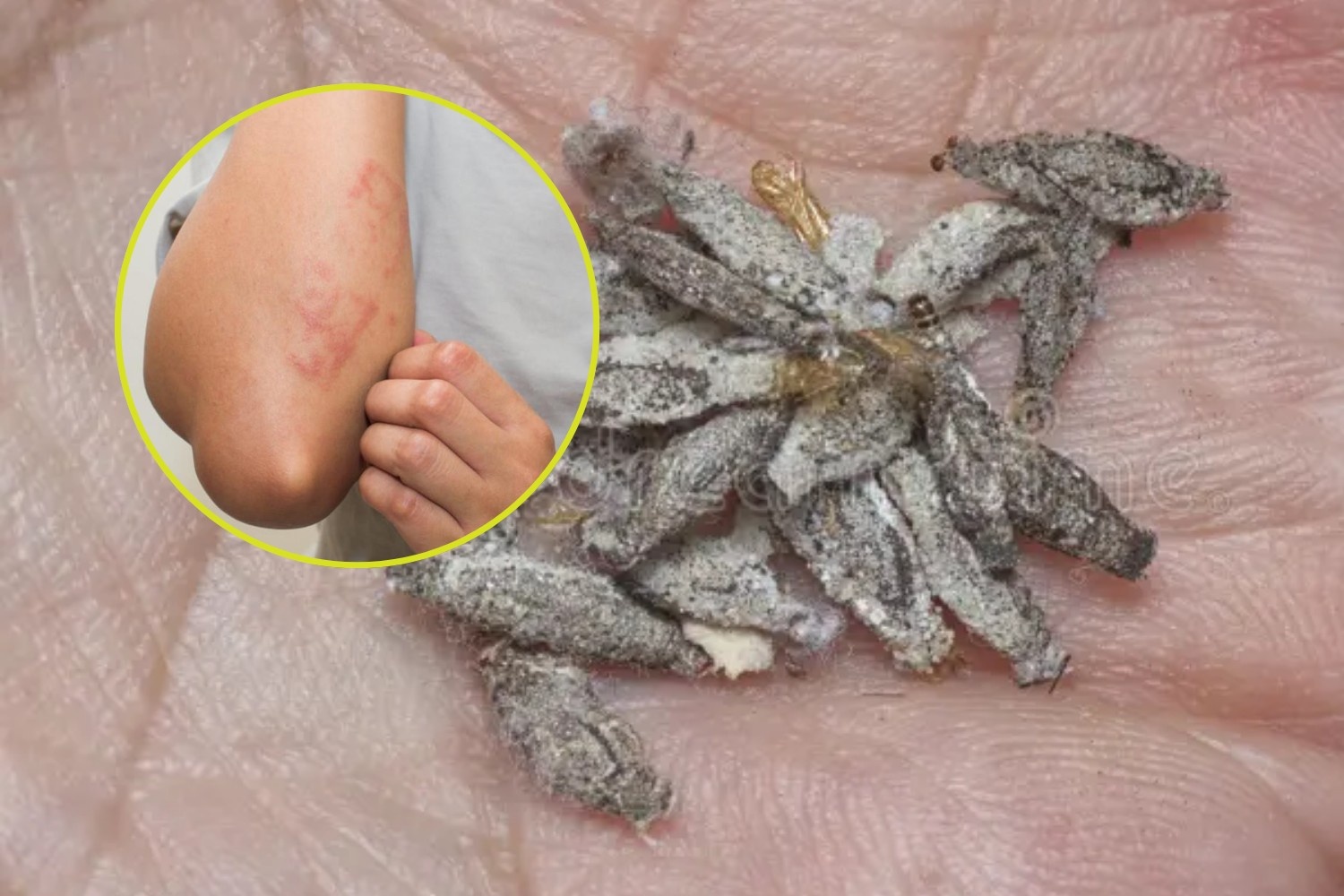
This tiny insect is disguised as dirt crawling on your wall.
When the itching starts, most people blame mosquitoes, bed bugs, or ants. Few suspect the tiny gray object slowly crawling across their bedroom wall.
At first glance, it looks like a piece of lint, a grain husk, or even dried lizard droppings. But look closely and you might catch it moving. Meet the plaster bagworm, a peculiar household pest known in Indonesia as kamitetep and commonly found in humid tropical countries, including the Philippines.
Many Filipinos know it simply as the mysterious “uod sa pader.”
The insect that wears its house
Unlike ordinary caterpillars, plaster bagworms spend most of their lives hidden inside portable cases they build from silk, dust, hair, sand, dead insects, and even spider webs.
The result is a small spindle-shaped cocoon that sticks to walls, ceilings, closets, and dark corners of the house. As the larva grows, it drags this tiny home everywhere it goes.
Because of their appearance, they are often mistaken for dirt, debris, or insect droppings. Many homeowners only realize they are alive when they suddenly start crawling.
The “bite” that isn’t really a bite
One reason these creatures have developed an almost mythical reputation is the painful rash often blamed on them.
Technically, plaster bagworms do not bite. They cannot pierce human skin and do not feed on blood.
However, contact with the larva or its casing can trigger an allergic skin reaction known as caterpillar dermatitis. Tiny hairs shed by the insect may contain irritating proteins that can cause intense itching, redness, swelling, and clusters of small bumps that resemble insect bites.
For some people, the rash can last for days and become severe enough to require anti-itch creams or antihistamines.
This explains why many victims swear they were “bitten” even though no actual bite occurred.
Why they love your home
Plaster bagworms thrive in humid, dusty, and undisturbed environments.
They feed on organic debris such as hair, cobwebs, dead insects, lint, and natural fibers. Homes with poor ventilation, cluttered storage spaces, and accumulated dust provide an ideal breeding ground.
Common hiding spots include closets, under beds, behind furniture, bathroom walls, and seldom-cleaned corners.
Ironically, a bagworm infestation can sometimes be a sign that your home has plenty of dust and spider webs available for them to eat.
How to get rid of them
The good news is that eliminating plaster bagworms usually does not require expensive pest control treatments.
The first step is a thorough cleaning. Vacuum walls, ceilings, closets, and hidden spaces where the insects commonly hide. Remove cobwebs regularly and dispose of vacuum contents immediately.
Reducing humidity is equally important. Open windows, improve airflow, and use exhaust fans or dehumidifiers whenever possible.
Clothes, fabrics, and stored items should also be kept clean and dry since the insects can feed on natural fibers and accumulated dust.
Many homeowners also place mothballs or camphor blocks inside closets to discourage adult moths from laying eggs.
Small pest, big annoyance
The plaster bagworm may not be dangerous in the traditional sense. It does not sting, bite, or spread disease. Yet its ability to trigger itchy skin reactions and silently multiply inside homes has earned it an outsized reputation among those who have encountered it.
So the next time you spot what looks like a tiny piece of dirt inching its way across your wall, don’t ignore it. That mysterious little cocoon might be one of the strangest—and most irritating—house guests you’ll ever have.
READ:
Not what you think: The phallic plant that eats insects
radar Lifestyle
March 3, 2026
A bug’s kiss could be a grim reaper’s kiss
Kate Nuesca
April 16, 2026
Don’t kill the butiki!
radar Lifestyle
April 10, 2026