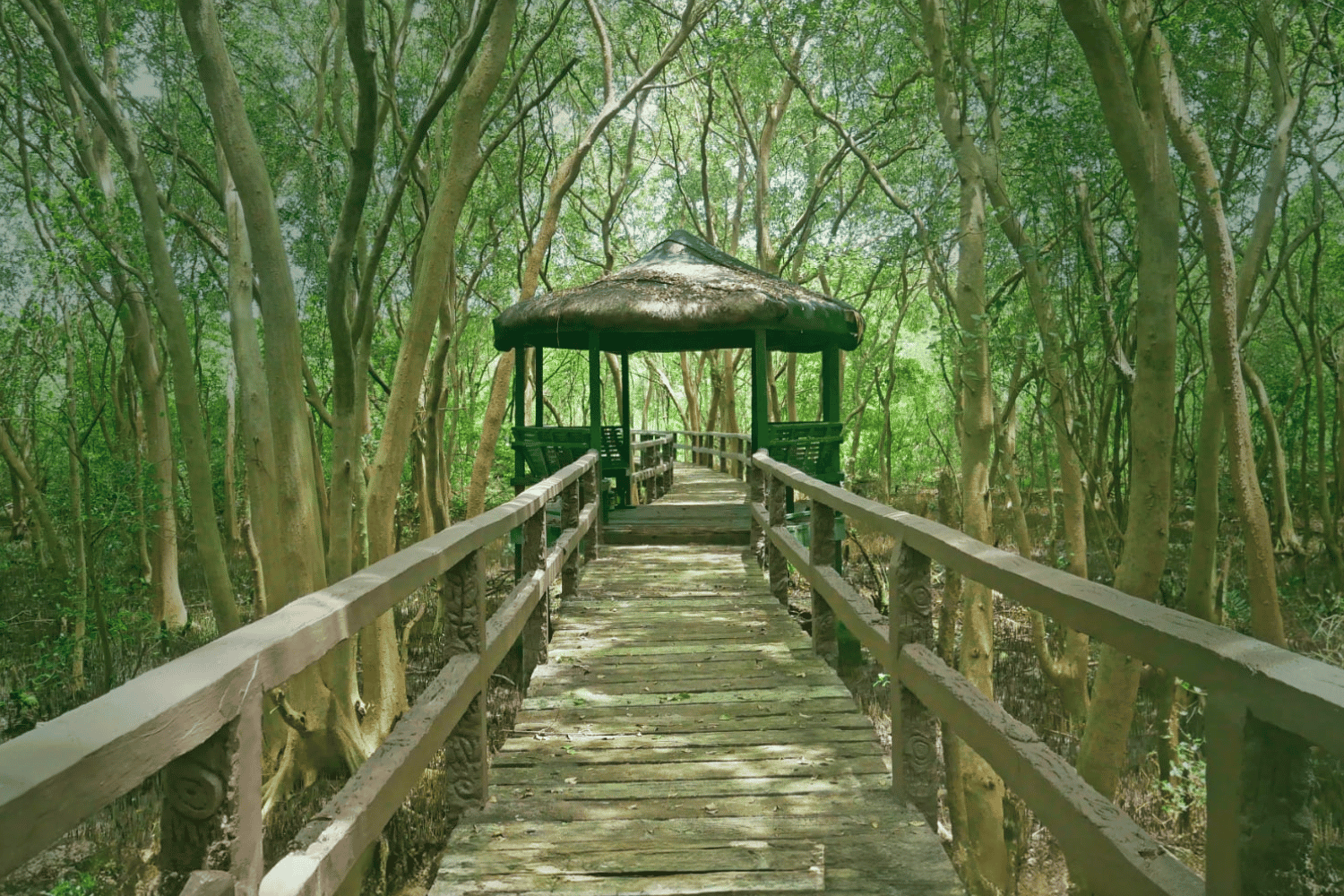
While admissions are free, visits are regulated since The Las Piñas–Parañaque Wetland Park is a protected habitat.
Imagine leaving behind Metro Manila’s traffic and concrete and, minutes later, walking through mangroves while thousands of migratory birds feed along the shores of Manila Bay.
This place actually exists.
The Las Piñas–Parañaque Wetland Park, formerly known as the Las Piñas–Parañaque Critical Habitat and Ecotourism Area or LPPCHEA, is a roughly 175-hectare protected wetland composed primarily of Freedom Island and Long Island.
Even more remarkable: it is a Wetland of International Importance under the Ramsar Convention, making this patch of wilderness beside one of Metro Manila’s busiest transportation corridors globally significant.
And admission is free.
But don’t just show up at the gate.
Because this is first and foremost a protected habitat—not an ordinary public park—visits are regulated. According to park visitor guidelines, guests need prior approval, with requests generally submitted several working days before the intended visit.
The restrictions make sense once you realize who the real VIPs are here: the birds.
Located along the East Asian-Australasian Flyway, the wetland provides an important feeding and resting ground for migratory waterbirds traveling enormous distances across the region. Visitors may encounter species such as the Chinese Egret, Black-winged Stilt and Philippine Duck.
Then there are the mangroves.
The wetland contains one of the remaining significant mangrove areas in Metro Manila. Beyond creating habitat for wildlife, mangroves help stabilize shorelines, store carbon and provide a natural defense against waves and coastal flooding.
Visitors can explore nature trails and observe mudflats, salt marshes, beaches and other coastal habitats—a landscape that feels startlingly removed from the urban sprawl just outside.
Another attraction is the Wetland Centre Complex, which includes a museum devoted to explaining wetlands, biodiversity and conservation. The facility has been promoted as the country’s first wetland museum.
Don’t expect amusement-park behavior, though.
Visitors are expected to minimize noise, avoid disturbing wildlife and follow strict leave-no-trace practices. Birdwatchers would also be wise to dress in subdued colors and bring binoculars rather than trying to approach animals for photographs.
The park is accessible from the Coastal Road-CAVITEX area near the Las Piñas-Parañaque boundary, although access can be less straightforward than visiting a conventional city park.
That inconvenience may actually be part of what has kept the place extraordinary.
In a metropolis where almost every available patch of land seems destined to become another building, subdivision or commercial development, the Las Piñas–Parañaque Wetland Park offers something increasingly rare: space deliberately left for mangroves, mudflats and wildlife.
Metro Manila’s most surprising escape may not require a long road trip after all.
You just need permission to enter—and enough silence to let the birds take over.
READ: