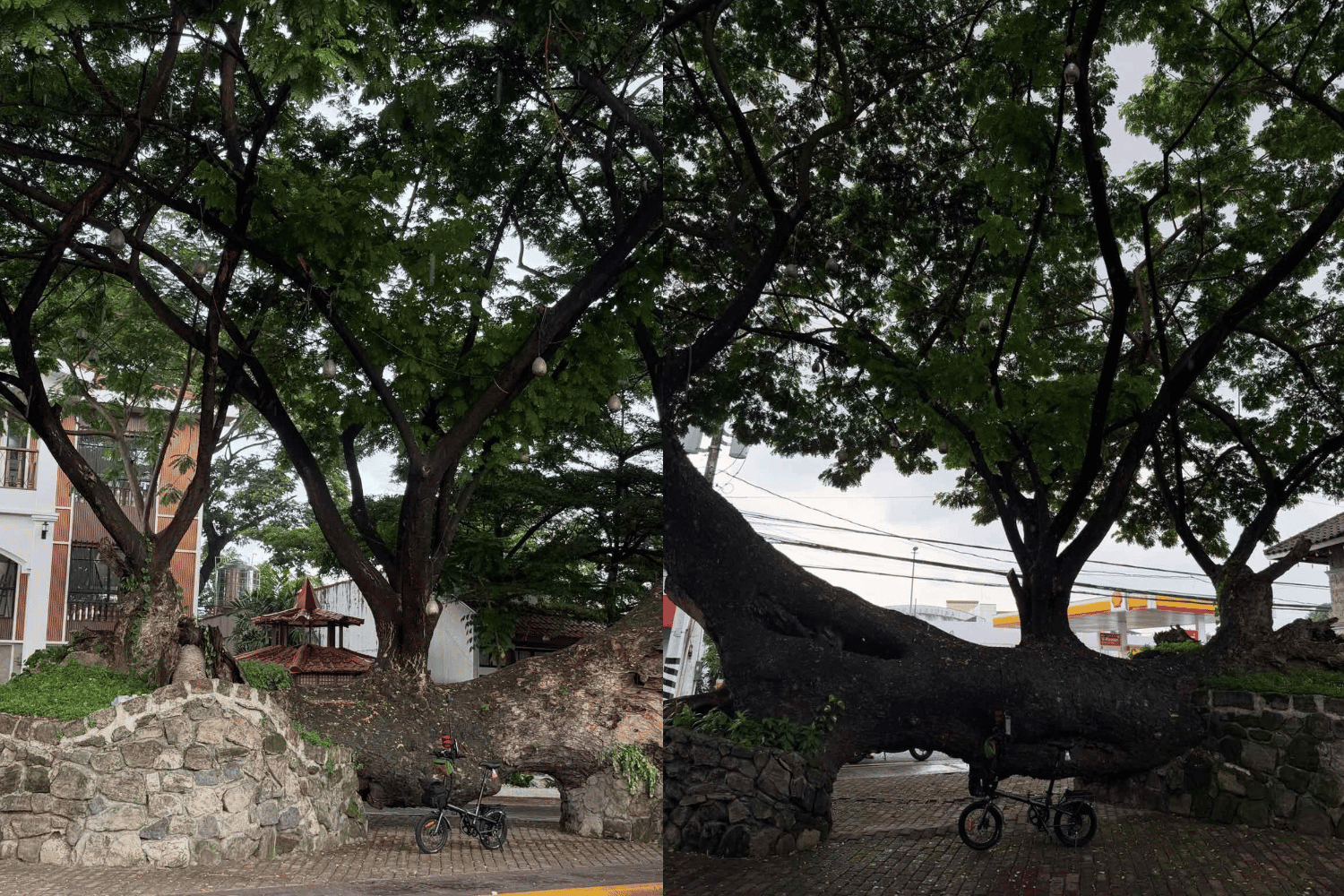
The surviving Marikina tree is evidence that preserving mature trees is possible with enough political will and thoughtful planning. Photo by Manila Bike Commuter / Facebook
So why were hundreds along Quirino Avenue cut down for SALEX?
A century-old tree in Marikina City is becoming a powerful symbol in the debate over Metro Manila’s controversial tree-cutting operations, with environmental advocates arguing that its survival proves development and preservation can coexist.
In a widely shared Facebook post, cycling advocacy page Manila Bike Commuter showcased the massive tree, which was uprooted by a typhoon in 2018 but was saved after residents chose to preserve and support it instead of cutting it down. Years later, the tree continues to thrive, providing shade and standing as a landmark that the page described as proof that “preserving a tree is real development.”
Using the Marikina tree as an example, the page criticized the Department of Environment and Natural Resources (DENR), rejecting the agency’s position that tree-cutting is necessary to make way for infrastructure projects.
“We need to reject the ridiculous statement… that we need to cut trees for ‘development,’” the post said, arguing that genuine progress should prioritize preserving mature trees whenever possible.
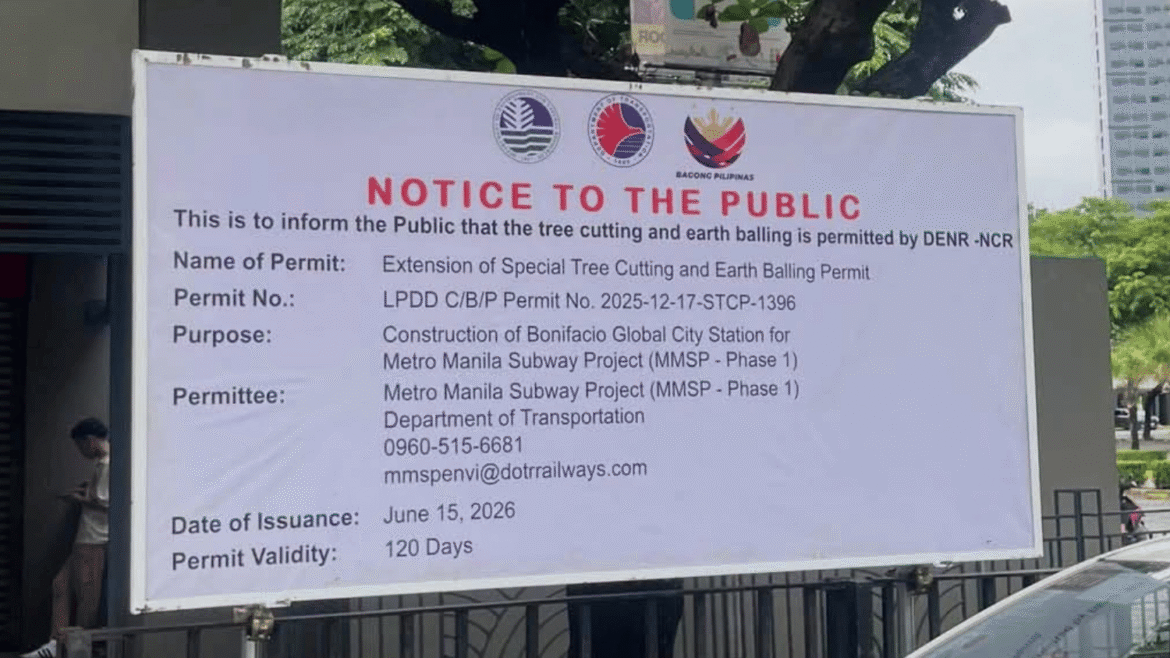
The post comes amid the ongoing controversy surrounding the Southern Access Link Expressway (SALEX), where the DENR authorized the cutting or earthballing of around 600 mature trees along Quirino Avenue and Roxas Boulevard for San Miguel Corporation’s expressway project. More than 200 trees were reportedly cut or processed within days before mounting public opposition prompted the company to voluntarily suspend operations while authorities studied whether portions of the project could be redesigned to preserve more trees.
The DENR maintained that the operations were legal, having been covered by a tree-cutting permit issued under existing forestry laws governing public infrastructure. As mitigation, San Miguel Corporation is required to plant more than 50,000 replacement seedlings in Manila. However, environmental groups, landscape architects and scientists have argued that newly planted saplings cannot immediately replace the cooling effect, flood mitigation and ecological value of mature trees that have stood for decades.
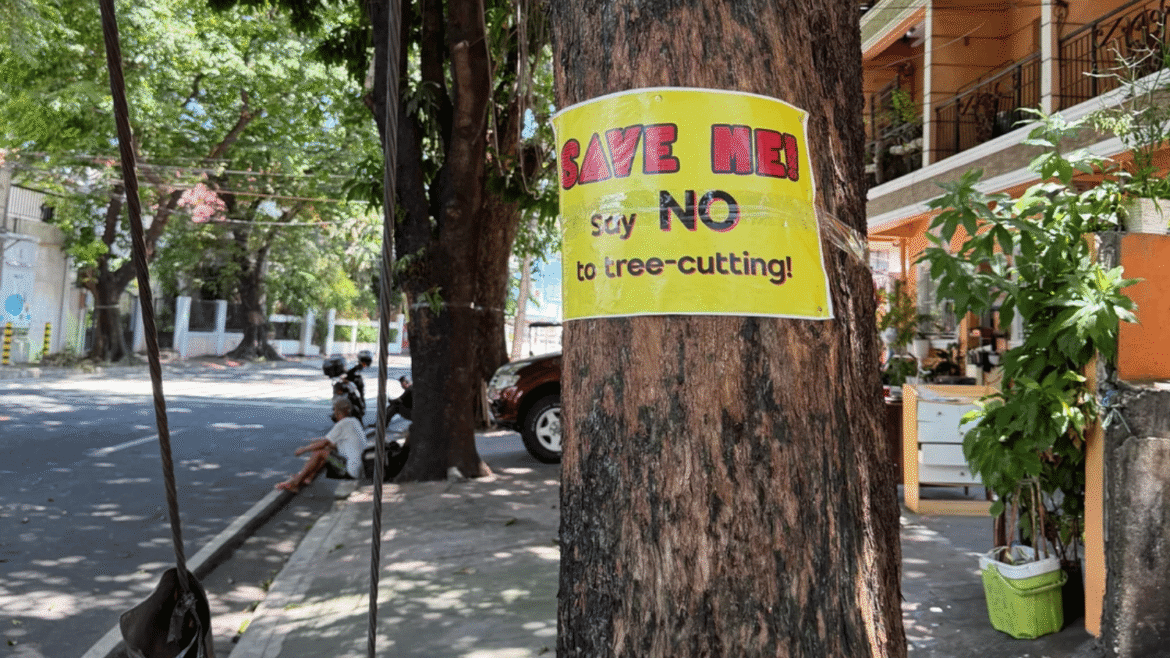
The controversy has also drawn condemnation from Caritas Philippines, which described the large-scale tree-cutting as an “act of ecological violence,” while citizen groups and environmental advocates continue to question whether alternative engineering designs could have spared more of the trees.
For critics, the surviving Marikina tree has become more than just a local landmark—it has become evidence that preserving mature trees is possible when there is enough political will and thoughtful planning. Their message is simple: development should adapt to nature whenever it can, not erase it.