Netizens remain skeptical because of DENR’s track record.
A permit allowing the cutting and earth-balling of trees for the construction of the Bonifacio Global City (BGC) Station of the Metro Manila Subway Project has sparked online debate, with many expressing support for the landmark transport project while questioning whether the Department of Environment and Natural Resources (DENR) can successfully relocate the affected trees.
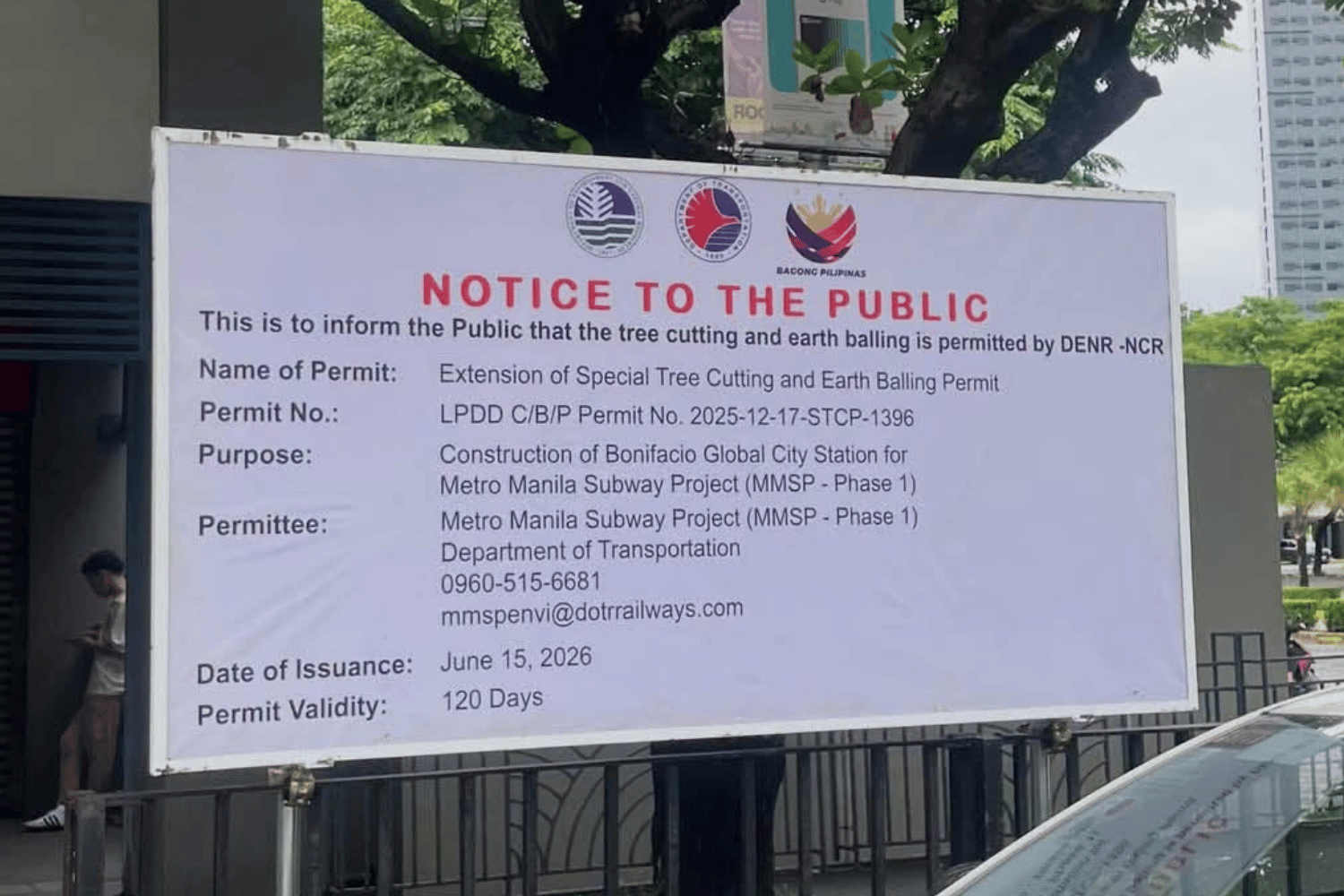
The discussion was triggered by a Threads post from user Marrion Bared, who shared a photo of the public notice announcing the DENR-NCR permit for the “Extension of Special Tree Cutting and Earth Balling Permit.” The permit, issued on June 15, 2026, is valid for 120 days and covers work for the Department of Transportation’s Metro Manila Subway Project Phase 1.
“DENR’s next ‘earthballing’ victim are the BGC trees. Nakakagalit honestly,” Bared wrote.
As the post gained traction, Bared clarified that the criticism was not directed at the subway itself.
“P.S. this post isn’t against the subway project. It’s about raising concerns over DENR’s ability to ACTUALLY carry out an earthballing project,” the user added.
The clarification came amid mixed reactions online. Several commenters argued that the subway’s long-term environmental and transportation benefits outweigh the temporary loss or relocation of trees.
Content creator Mickey Eva said every infrastructure project comes with trade-offs, noting that the subway is expected to remove more cars from the road than the affected trees could offset through carbon absorption. He also pointed out that properly conducted earth-balling allows an estimated 80 to 90 percent of transplanted trees to survive and continue serving as carbon sinks.
Another commenter wrote, “Well this one has a great purpose. It’s for a subway which we badly need. Skyway? We can stop all of it. We need public transport.”
Others echoed the view, saying they trust that BGC’s developers have experience relocating mature trees and are likely to replant them elsewhere within the estate.
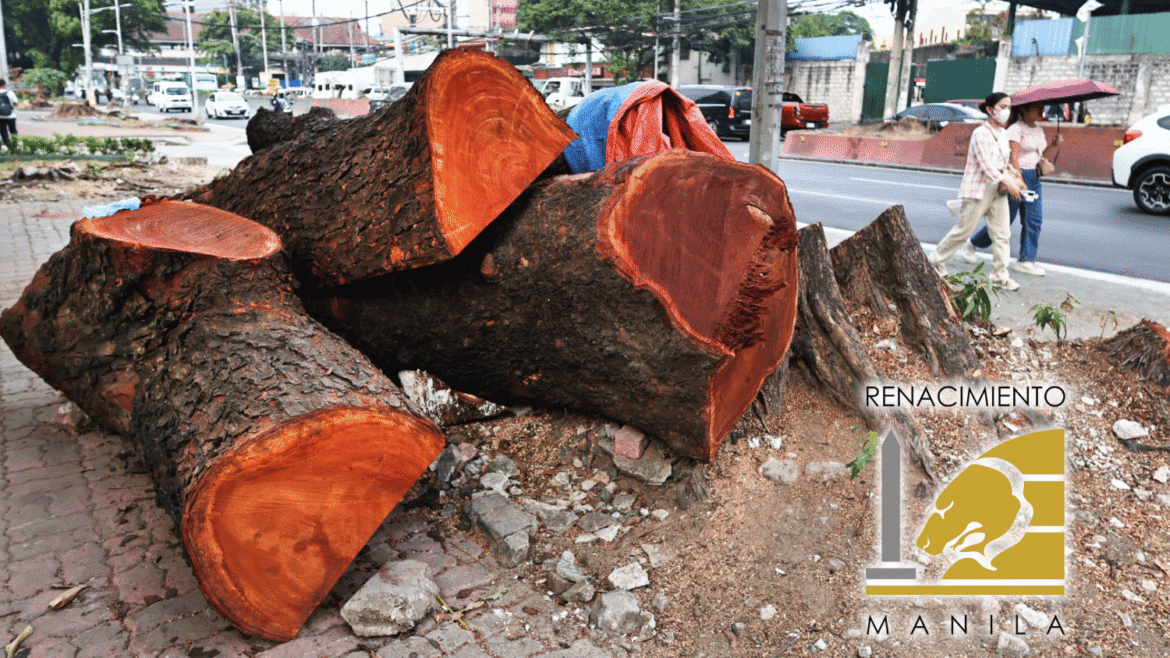
Still, many users remained skeptical—not because of the subway project, but because of DENR’s track record. Several referenced previous tree relocation efforts along Roxas Boulevard and Quirino Avenue, where critics claimed transplanted sites appeared to contain only branches rather than fully relocated mature trees.
“Talaga lang ha, earthballing ang gagawin nila? Let’s see,” one commenter wrote, while another questioned whether DENR had ever rejected requests to cut trees.
The Metro Manila Subway Project is the country’s first underground railway system and one of its largest infrastructure undertakings. Spanning approximately 33 kilometers with 17 stations, the ₱488.5-billion project is expected to serve more than 519,000 passengers daily once fully operational. Travel time from Valenzuela to Bonifacio Global City is projected to be reduced from around 90 minutes to just 29 minutes, while an end-to-end trip from Valenzuela to Bicutan is expected to take only 46 minutes.
Construction is currently underway, with the BGC station forming part of the line that will eventually connect northern Metro Manila to NAIA Terminal 3 and other major business districts.
READ: