Public or private, the priority must be delivering a railway system that truly serves the people.
While several of our Southeast Asian neighbors are expanding their railway networks or preparing new services, the Philippines is looking at turning over the operations and maintenance of MRT-3 to the private sector.
The proposed concession may offer a way to improve the line’s reliability, but the contrast is striking. While other countries pursue bigger railway ambitions, the Philippines is still working out how to make its existing trains more dependable for commuters.
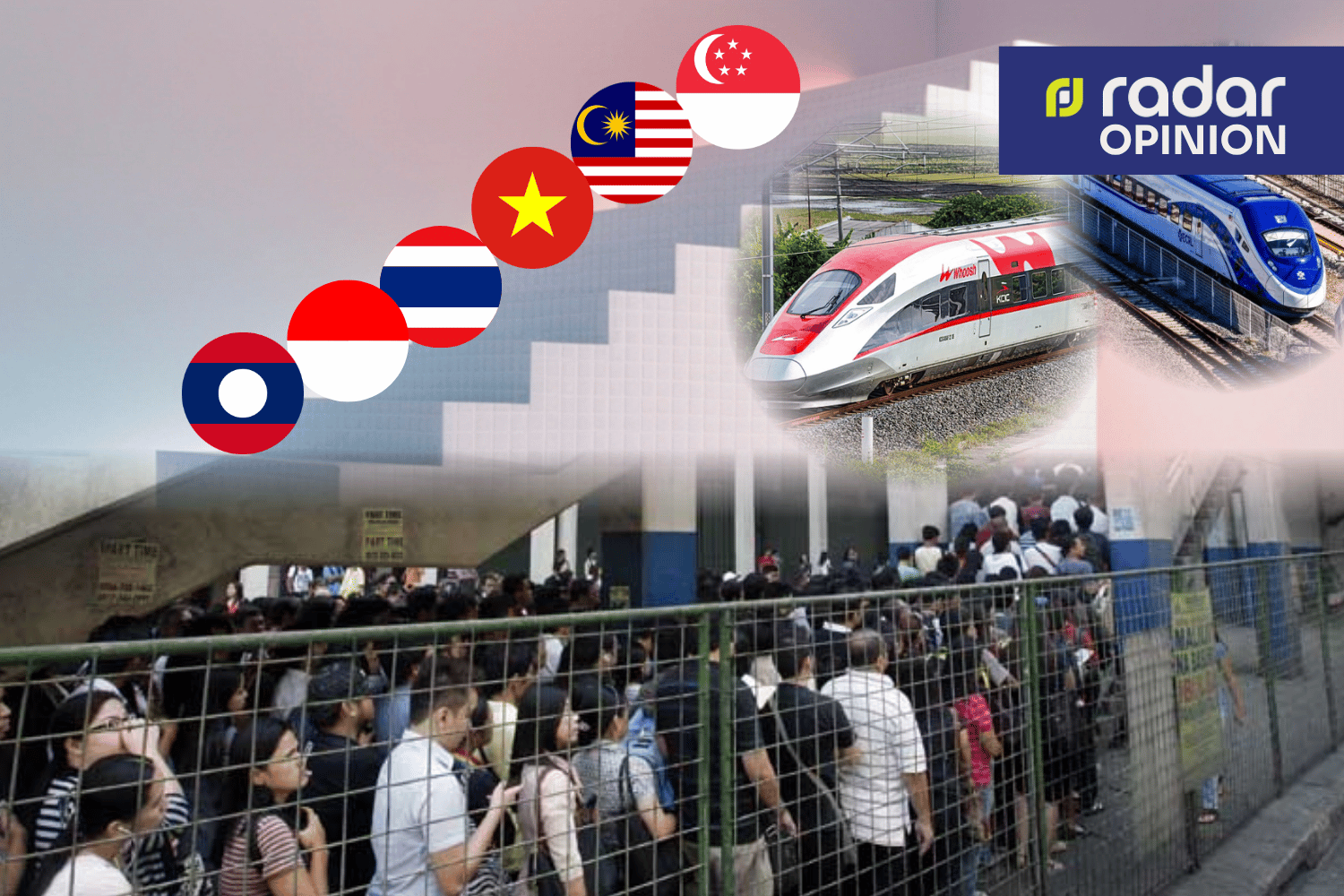
Look at what our neighbors are doing. Malaysia is targeting the opening of its East Coast Rail Link by December 2026, Thailand is working toward launching the eastern section of its Orange Line in early 2028, and Vietnam is preparing to begin construction of a high-speed railway connecting Hanoi and Ho Chi Minh City in December 2027. Laos has introduced a new intercity train service on its existing railway, while Indonesia has been operating Southeast Asia’s first high-speed railway, connecting Jakarta and Bandung, since 2023.
The contrast has caught the attention of Filipinos on social media, where a post comparing these railway developments with the Philippines’ plans for MRT-3 has drawn frustrated reactions. Some worry that private-sector management could mean higher fares. Others question why a country with a substantial national budget still struggles to provide dependable public transportation. The comments are not proof of what privatization will bring, but they reveal how quickly the proposal has touched a nerve among commuters already weary of the daily grind.
To be fair, the proposed MRT-3 concession is not necessarily a bad idea. The government is looking to tap private-sector capital and expertise to improve the line’s operations, reduce waiting times, and make trains more dependable. If the arrangement delivers those improvements, commuters stand to benefit.
But why does reliable public transportation remain such a persistent challenge in the first place?
A railway’s value lies in how reliably it gets people where they need to go. When trains run efficiently, commuters spend less time traveling and can devote more of their day to work and family instead of waiting on platforms or sitting in traffic. When the system fails, the lost time and added transport costs become part of the daily burden, with consequences that extend beyond individual passengers to the wider economy.
Major investments needed today and for tomorrow
The Philippines is not standing still. Major railway projects, including the North-South Commuter Railway, promise better connections for commuters in the years ahead. But infrastructure that is still being built cannot solve every problem facing passengers today.
We need both. We need new railway lines that connect more communities and existing systems that people can count on. We need investments that look decades ahead, alongside the resources and management needed to keep today’s trains running properly.
Private companies can play a role in delivering that future. But transferring operations to a private operator should never mean transferring the government’s responsibility to the riding public.
The concerns about fares deserve particular attention. Commuters have every reason to ask whether better service will remain affordable, who will be held accountable if promised improvements fail to materialize, and what safeguards will protect passengers under a private operator. These are questions the government should answer clearly, not leave commuters to settle through speculation online.
The Department of Transportation has said the government will retain ownership of MRT-3 and the authority to set fares, service quality requirements, and performance standards under the proposed arrangement. That should help address some concerns, but commuters will ultimately judge the deal by the service they receive, not the assurances made before a contract is signed.
Filipinos should not have to choose between a railway that works today and the promise of a better one tomorrow. Nor should dependable public transportation feel like an ambitious luxury when it is part of what allows a modern economy to function.
Our neighbors are investing in ways to move their people faster and more efficiently. We should be asking ourselves how quickly we can give Filipinos the same opportunity.
Because the goal should never be simply to find someone who can run our trains. It should be to build a railway system that serves the people who need it, whether it is publicly operated or privately managed.
That’s the point.
READ: