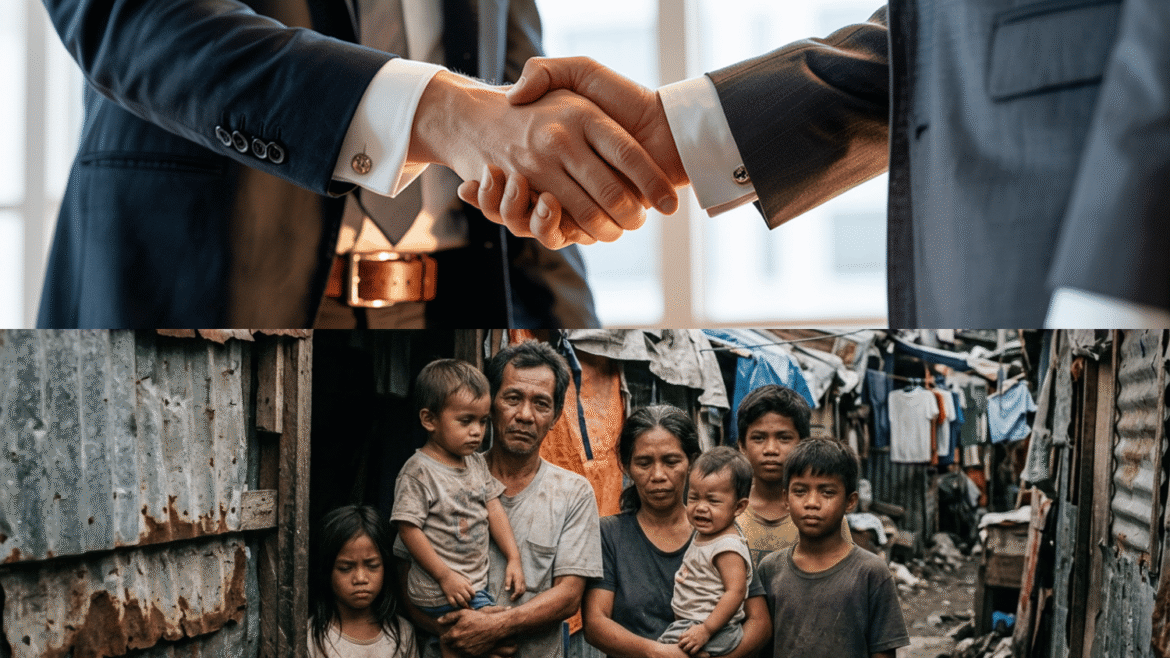
The nation’s total fertility rate is at a record low of 1.7 children per woman — well below the 2.1 replacement level.
The Philippines is now having fewer children than at any point in modern history, prompting concerns that the country may soon face the same population crisis confronting Japan, South Korea and other rapidly aging societies.
But demographers say there is no need to expect an immediate population decline.
Despite the country’s total fertility rate plunging to a record-low 1.7 children per woman—well below the replacement level of 2.1—the Philippines is still expected to keep growing for several more decades. The reason is simple: the country remains overwhelmingly young.
Why the population is still growing
According to the Philippine Statistics Authority’s (PSA) 2025 National Demographic and Health Survey, Filipino women now have an average of just 1.7 children during their lifetime, down dramatically from 4.1 in 1993. The decline is even sharper in highly urbanized areas, with Calabarzon recording a fertility rate of 1.3 and Metro Manila at 1.4.
A falling birth rate does not automatically mean a shrinking population.
Demographers point to what is known as demographic momentum—the effect of having a very large generation of young people who are only now entering their childbearing years.
Even if most Filipino couples choose to have only one or two children, there are still so many young adults that births continue to outnumber deaths nationwide.
In other words, the country is still benefiting from decades of high fertility in the past.
The long wait before population decline
The PSA’s 2020 Census-Based Population Projections estimate that the Philippine population will continue increasing for decades, although at a much slower pace.
Under the agency’s recommended Scenario 2, the country’s population is projected to reach about 138.67 million by 2055, adding nearly 30 million people from its 2020 population before growth begins to level off.
Only after that period—when today’s large working-age generation begins reaching old age and deaths eventually outnumber births—is an actual decline in the total population expected.
That means the Philippines still has several decades before it experiences the type of sustained population shrinkage now seen in some of its Asian neighbors.
A window of opportunity
Rather than viewing declining fertility purely as a crisis, population experts say it presents a rare opportunity.
With fewer children being born, government resources can potentially be concentrated on improving education, healthcare and skills development, creating a more productive workforce while the country still enjoys a relatively large working-age population.
The Commission on Population and Development has urged policymakers to maximize this demographic window by investing in human capital before the country’s population eventually begins to age.
The bigger challenge
The real question, experts say, is not whether the Philippines is running out of people.
It is whether the country can use the next three decades wisely.
If jobs, education and healthcare improve while the workforce remains large, today’s demographic transition could become an economic advantage. But if those opportunities are missed, the country may find itself confronting an aging population before it has fully achieved broad-based prosperity.
For now, Filipinos may be having fewer babies—but the Philippines itself is still decades away from becoming a shrinking nation.
READ: