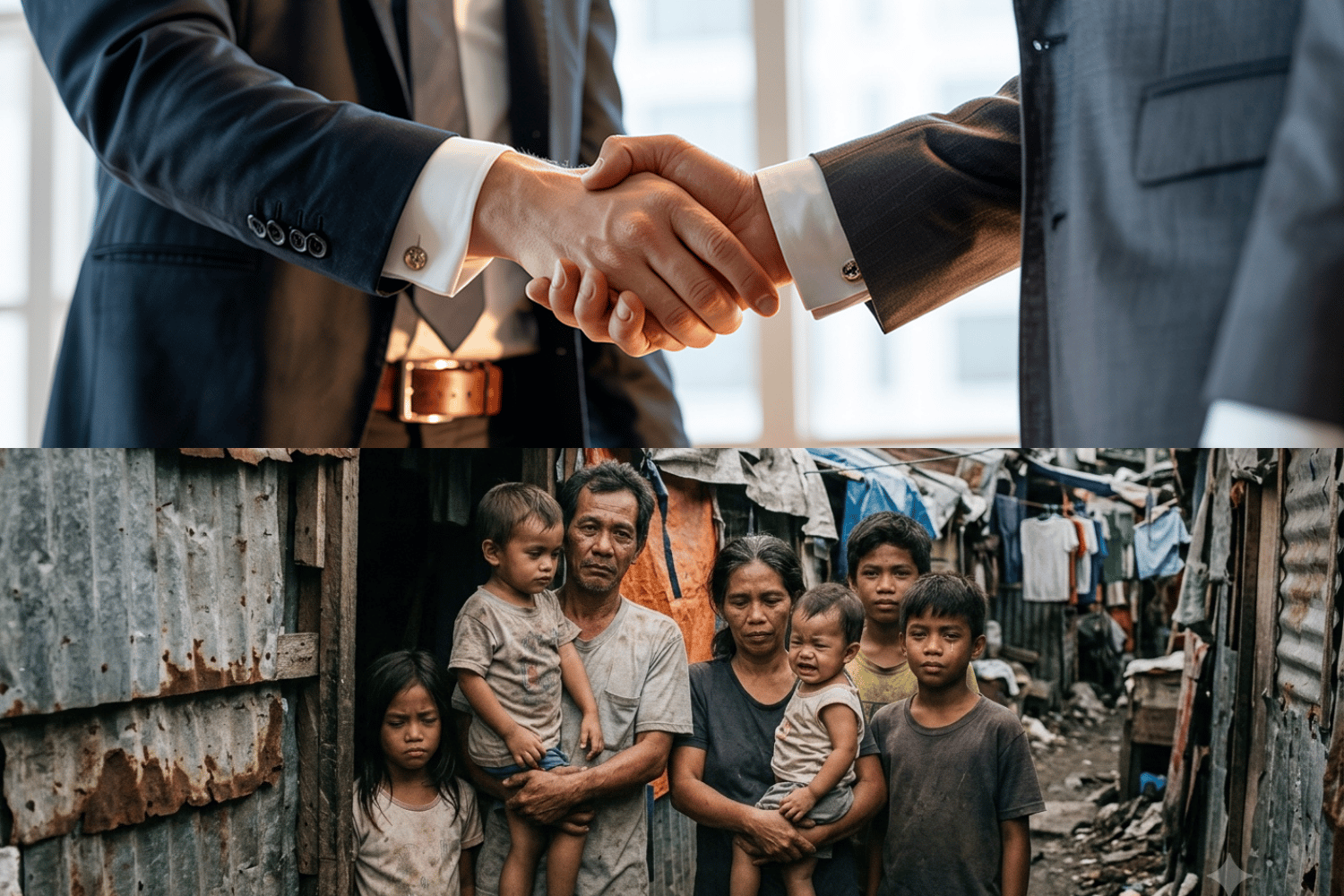
Yet 52% of Filipino families still say they are poor.
A worker scrolling through the morning news on his phone reads a headline announcing that the Philippines is now an upper-middle-income country. It sounds like a reason to celebrate. But as he puts the phone away, he still worries about the price of rice, the next electric bill, and whether his salary will last until the next payday.
That contrast captures the significance—and the limitation—of one of the country’s biggest economic milestones this year.
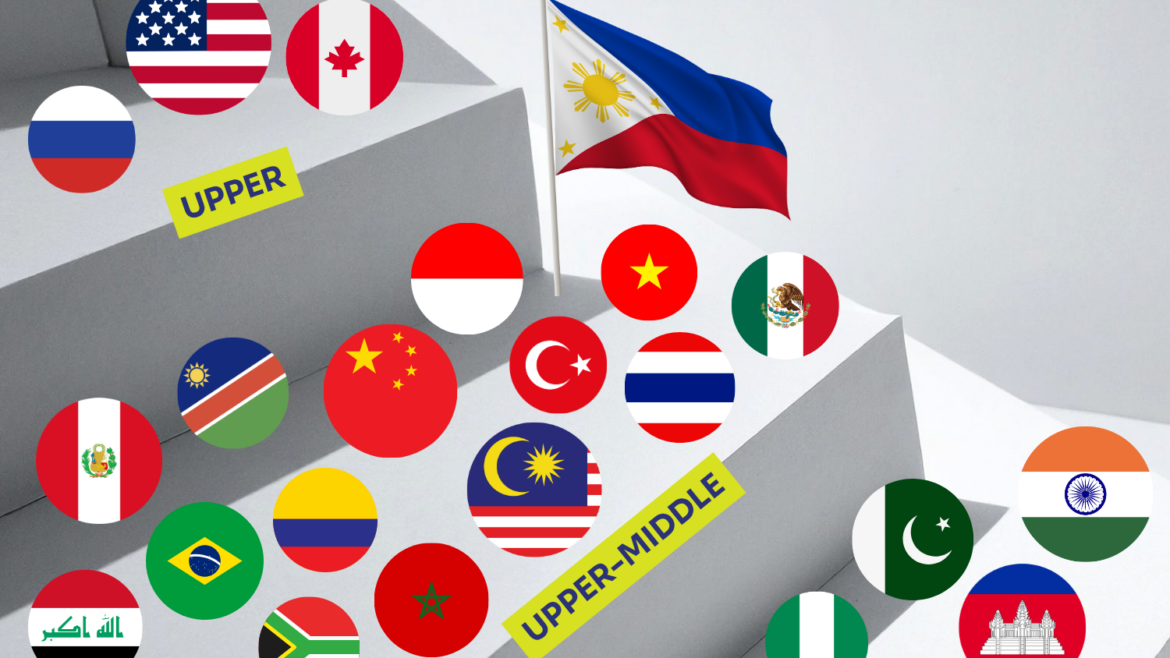
On July 1, 2026, the World Bank officially reclassified the Philippines from a lower-middle-income economy to an upper-middle-income economy after the country’s Gross National Income (GNI) per capita reached US$4,850, surpassing the new qualifying threshold of US$4,636. The milestone, announced by the Department of Economy, Planning, and Development, fulfilled a goal that successive administrations had pursued for years.
The new classification is a recognition that the Philippine economy has grown. It is expected to strengthen investor confidence, improve the country’s credit standing, and make it more attractive for business expansion. It also signals that the country is becoming less dependent on development assistance, meaning concessional loans, grants, and other forms of foreign aid available to poorer economies will gradually be reduced.
However, the designation does not mean individual Filipinos have automatically become middle class.
The World Bank’s classification is based on the country’s average national income per person. It measures the economy as a whole rather than the financial condition of each household. A higher GNI per capita does not immediately translate to higher salaries, lower prices, or improved purchasing power.
That distinction becomes clearer when viewed alongside the latest figures from Social Weather Stations.
In its March 15 to 20, 2026 national survey, 52% of Filipino families described themselves as poor. The figure is slightly higher than the 51% annual average recorded in 2025 and remains significantly above the 44% annual average in 2016, the lowest level in more than a decade.
The trend has moved upward in recent years. Self-rated poverty averaged 48% in both 2022 and 2023, before climbing sharply to 57% in 2024 as food inflation and rice prices surged. During the fourth quarter of 2024, the indicator reached 63%, among the highest levels ever recorded by SWS. Although inflation has eased since then, a majority of Filipino families still consider themselves poor.
The contrast reflects two different ways of measuring progress.
The World Bank looks at macroeconomic performance using national income statistics. SWS measures how families perceive their own financial condition by asking a simple question: Do you consider your family poor?
Both indicators are valid, but they tell different stories.
One says the Philippine economy has become large enough to join the world’s upper-middle-income economies, a group with GNI per capita ranging from US$4,636 to US$14,375. The other suggests that for many households, economic gains have yet to be fully reflected in their daily lives.
The Philippines has reached an important international milestone. The challenge now is ensuring that future economic progress is not only reflected in global classifications, but also in the answers ordinary Filipinos give when asked whether they still consider themselves poor.
READ: