Beyond its visual and auditory appeal, the vine has medicinal and agricultural uses.
There’s been a lot of kantutan (plant) in recent local news. Now, the spotlight turns to the eye-widening—and typically “mamink-mink”—pukingan.
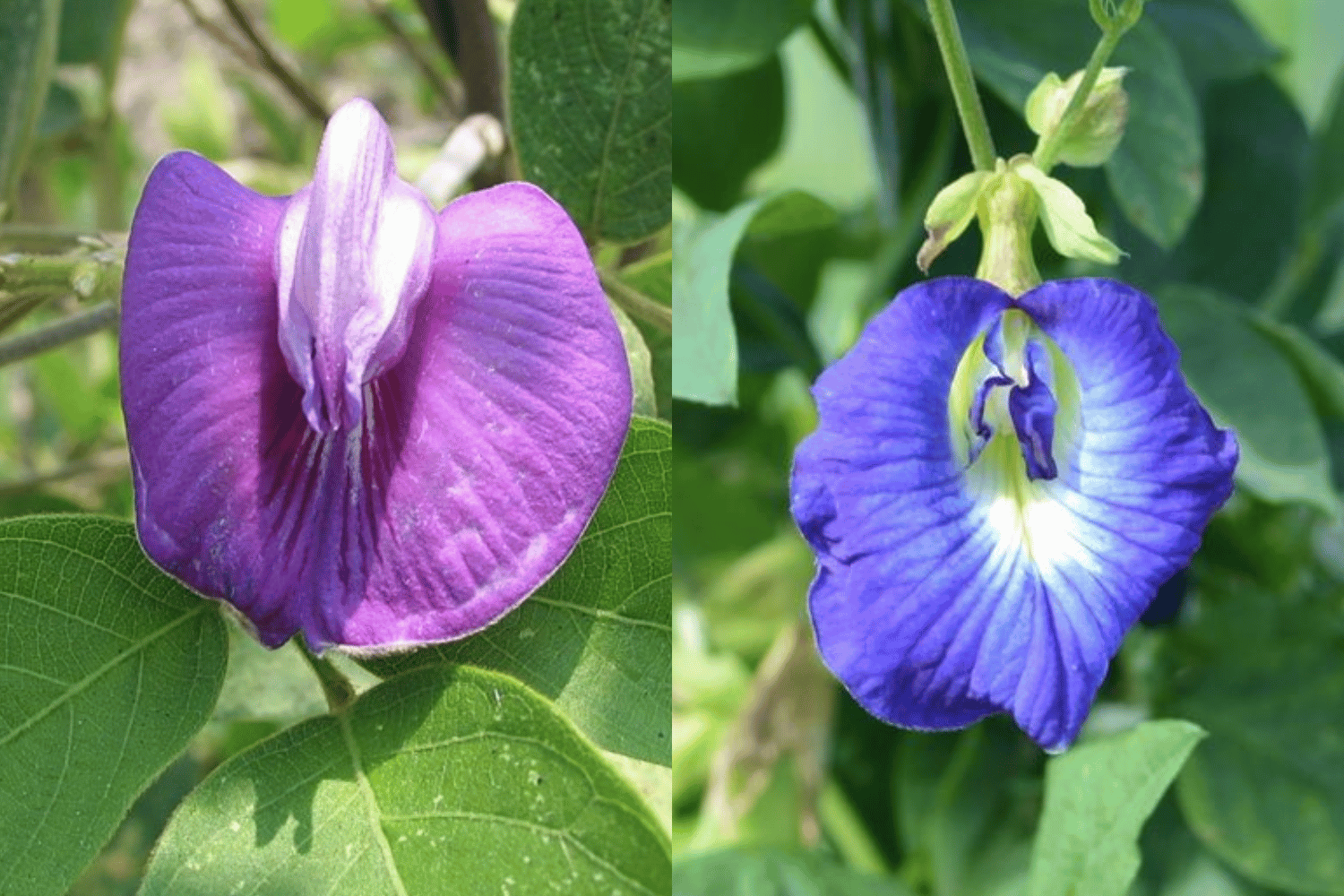
As suggestive as it sounds—and especially looks—pukingan refers to two vines: Centrosema molle and Clitoria ternatea, both found across tropical regions.
The easiest way to tell them apart? Color. The former blooms lilac, the latter a deep blue, as forester and content creator Ethan Hernandez explained in a 2025 video.
Their leaves differ, too. Centrosema’s is trifoliate (three leaflets in one cluster), dark green, and slightly hairy. Clitoria’s is odd-pinnate (a row of five to nine leaves along a stem), vibrant green, and smooth on top but fuzzy underneath.
Still, to Filipinos, they’re both pukingan—and both come with benefits.
Centrosema has medicinal and agricultural uses. According to UP Los Baños Makiling Botanic Gardens—which named pukingan the Plant of the Month for March 2026—its crushed seeds are applied to treat snake and scorpion bites, its leaves are used to treat skin diseases, and its pods are used in peppered soup for postnatal care. It also serves as livestock feed and ground cover, as well as act as a nitrogen fixer for nearby plants.
Clitoria, meanwhile, leans into wellness and cosmetics. Healthline notes that it’s rich in antioxidants, often brewed into teas and drink mixes. Studies suggest it helps reduce inflammation, prevent cancer cell growth, promote weight loss, and stabilize blood sugar. Its extract is also used in skincare and hair products, as well as applied as a natural dye for food and textiles.
Pukingan, in any color or kind, is hard to ignore. It’s easy on the eyes, good for the body—and especially meant for the tongue.