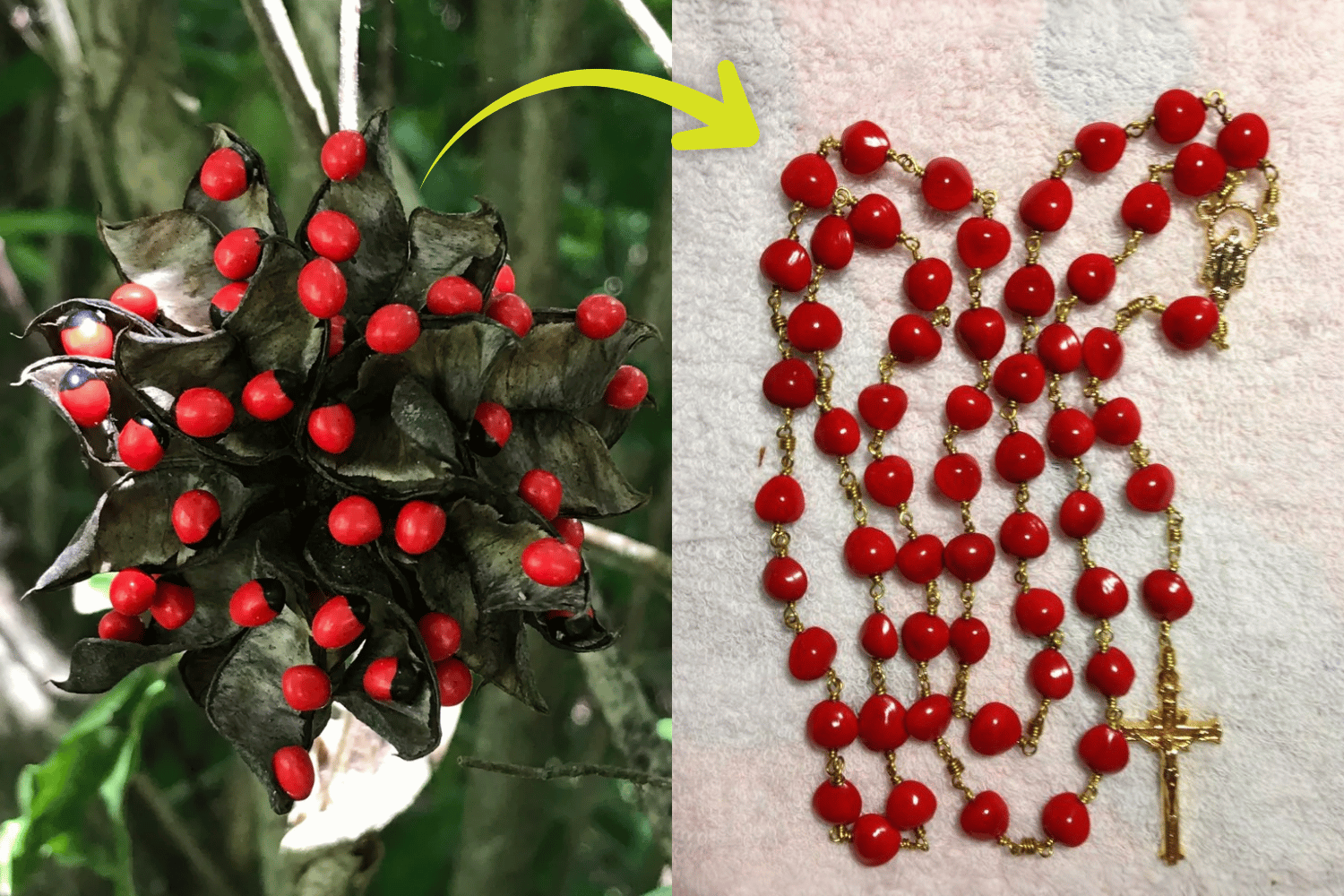
These seeds contain abrin, an extremely toxic protein that damages cells.
They look almost made for prayer.
Glossy, bright red and marked with a striking black tip, saga-saga seeds look like tiny manufactured beads. Their beauty made them attractive for jewelry and, historically, even rosaries and prayer beads.
But beneath that polished shell is a dangerous secret: saga-saga contains one of nature’s potent poisons.
Known scientifically as Abrus precatorius, the slender climbing vine is also called bangati in parts of Western Visayas and bugbugayong in Ilocano. In English, it is widely known as the “rosary pea,” a name closely associated with the traditional use of its seeds as prayer beads.
Beautiful enough for a rosary
When saga-saga pods mature and split open, they reveal rows of brilliant scarlet seeds, usually with a distinctive jet-black marking at one end.
Their hard shells, durability and naturally decorative appearance made them suitable for ornaments. The connection to prayer even appears in the plant’s scientific name: precatorius comes from a Latin root associated with praying.
The seeds also had another historical use. Because of their remarkably uniform mass, Abrus seeds were once used as weights for measuring precious materials such as gold and gemstones in parts of Asia.
But turning these seeds into beads came with a serious danger.
The poison inside
Saga-saga seeds contain abrin, an extremely toxic protein that damages cells by preventing them from making essential proteins.
Much of the danger is hidden behind the seed’s tough outer coat. An intact seed may sometimes pass through the digestive tract without releasing significant amounts of toxin. But once the shell is chewed, crushed, cracked or otherwise damaged, the poisonous material inside can be exposed.
That makes the traditional practice of drilling saga-saga seeds for rosaries particularly concerning. Piercing the shell removes the very barrier that keeps the toxic interior contained.
Abrin poisoning can cause severe vomiting and diarrhea and may progress to dehydration, organ damage and death. There is no specific antidote, so suspected poisoning requires immediate medical attention.
A beautiful seed with a deadly secret
Saga-saga is a striking example of how appearances in nature can be dangerously deceptive.
For generations, its scarlet-and-black seeds have been admired as ornaments, used as traditional weights and threaded into prayer beads. Their beauty is undeniable—but so is the danger hidden beneath their glossy shells.
Today, saga-saga seeds should never be treated as harmless craft materials, particularly around children and pets. They should not be chewed, crushed, drilled or deliberately opened.
They may look like beads made for a rosary.
But inside each beautiful saga-saga seed is a poison that demands respect.
READ: