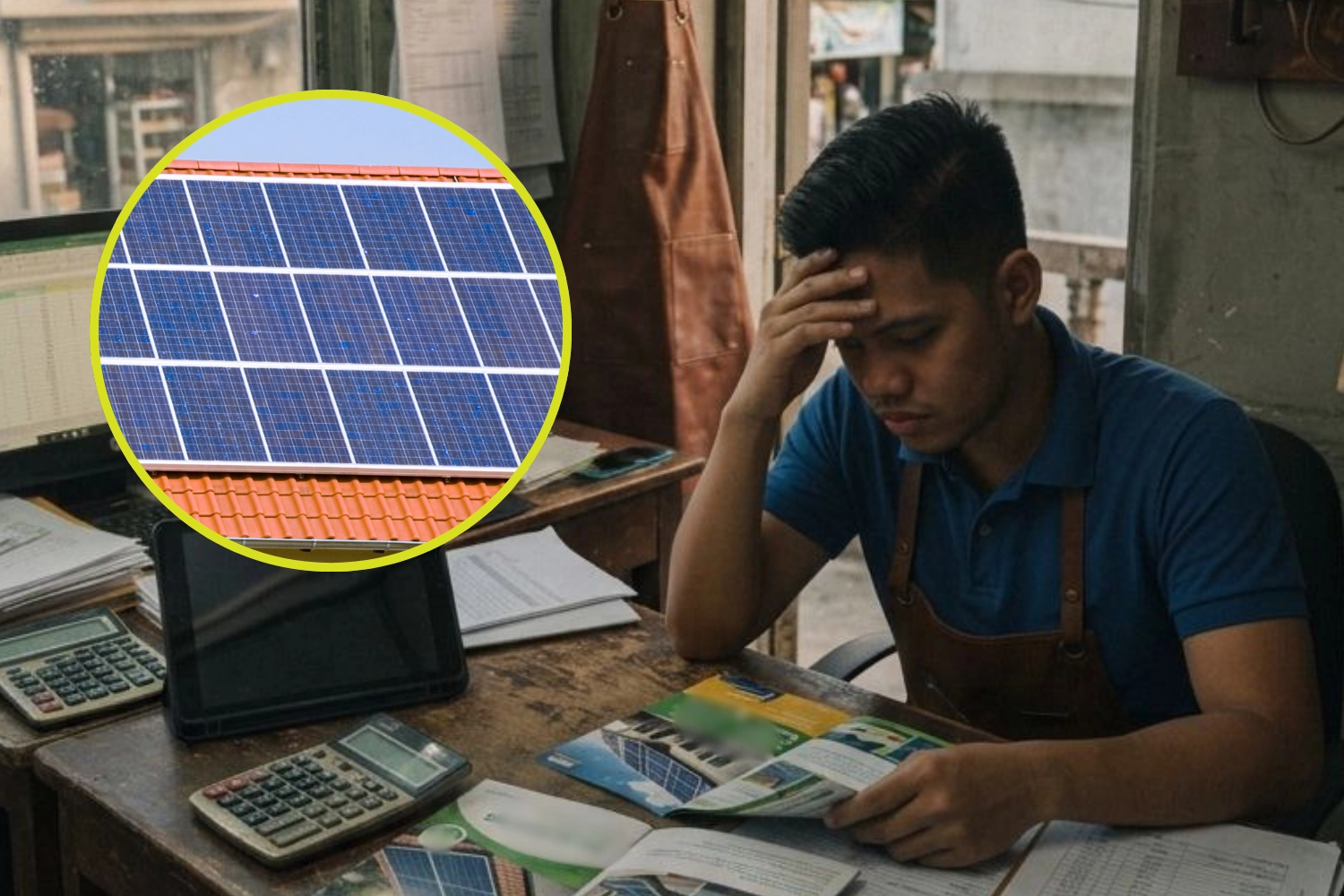
Small businesses in the Philippines could save money by switching to solar power and other energy-saving technologies, but many cannot afford the upfront investment or obtain loans to finance the transition, according to the Organization for Economic Cooperation and Development (OECD), an international organization that advises governments on economic and public policy.
Micro, small, and medium enterprises (MSMEs) face an estimated financing gap of $9 billion to $21.5 billion, limiting their ability to invest in cleaner and more reliable energy sources, the Paris-based organization said in a report published on November 20.
Despite accounting for 99.6% of businesses in the country, MSMEs have received less than 5% of total bank credit over the past decade.
Access to financing is also concentrated in Metro Manila, where 83.8% of MSME bank loans were booked in 2024, even though more than four-fifths of these businesses operate outside the capital, based on Asian Development Bank data cited in the report.
The funding gap prevents smaller businesses from investing in solar panels, energy-efficient equipment, and other improvements that could reduce electricity bills, improve productivity, and shield their operations from power disruptions.
Energy audits of 10 MSMEs in Palawan and Mindanao, conducted through a project involving the Department of Trade and Industry (DTI) and the Global Green Growth Institute, found that energy efficiency investments could generate annual savings equivalent to about 38% of their initial costs.
These investments could pay for themselves within two to three years, while wider adoption of energy-saving measures in the two areas could generate ₱1.9 billion in potential savings and prevent 2.2 million tons of carbon dioxide emissions.
However, businesses often struggle to obtain loans even when proposed energy projects are expected to generate savings.
According to the OECD, small businesses cited high interest rates, collateral requirements, and short repayment periods as their biggest financing obstacles.
Many also lack the technical assistance needed to prepare investment proposals, while financial institutions face high transaction costs when processing relatively small loans and struggle to identify projects that meet their lending criteria.
Interest in clean energy investments remains evident, with nearly half of surveyed MSMEs having already invested in at least one clean energy solution and many others planning to do so.
Yet only a small share had applied for energy-related financing over the previous three years, suggesting that businesses interested in making the switch still face considerable obstacles in securing funding.
Leasing solar could help with the switch
The challenge is particularly evident in the Philippines, where businesses contend with high electricity prices and heavy dependence on imported fossil fuels, which accounted for about three-fourths of power generation in 2025.
MSMEs employed 6.25 million workers, or about two-thirds of total enterprise employment, in 2024 and contributed an estimated 36% to 45% of gross domestic product.
To address the financing gap, the OECD recommended longer and more flexible loan repayment periods, credit guarantees to ease collateral requirements, and financing arrangements that account for the savings generated by energy projects.
It also proposed leasing options to reduce upfront costs and pooling similar projects through cooperatives, franchises, and business networks to make investments more affordable.
The report called on agencies including the DTI, Department of Energy, Department of Finance, Bangko Sentral ng Pilipinas, and public financial institutions to make existing financing and support programs more accessible to smaller businesses.