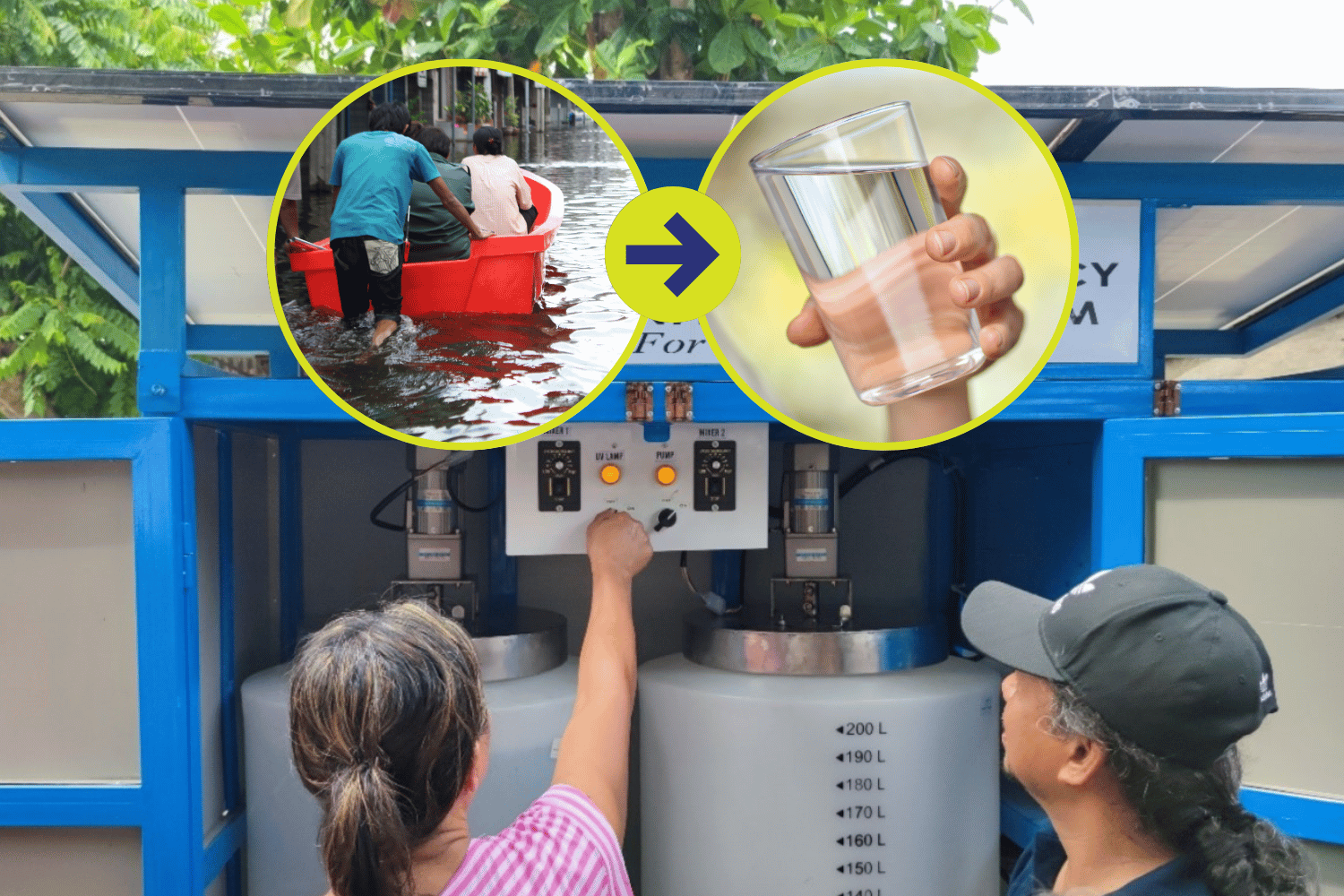
It was developed to address shortages of safe drinking water during typhoons, floods, earthquakes and other emergencies.
A Filipino-developed, solar-powered water treatment system can produce up to 2,000 liters of safe drinking water in just nine hours, offering a potentially lifesaving technology for communities hit by disasters or without reliable access to potable water.
Developed by the Department of Science and Technology-Industrial Technology Development Institute (DOST-ITDI), SAFEWATRS is a compact and mobile water treatment system designed to operate even when electricity and conventional water systems are unavailable.
According to DOST, the solar-powered system was developed to address shortages of safe drinking water during typhoons, floods, earthquakes and other emergencies, as well as in remote communities where water supply is limited.
DOST said SAFEWATRS can treat water from sources such as rainwater, springs and turbid lake water. Performance testing using water from Laguna Lake produced treated water that met mandatory parameters under the Philippine National Standards for Drinking Water of 2017.
The technology is also energy-independent through its solar power system, making it particularly useful in disaster areas where electrical lines may be down.
SAFEWATRS is already being deployed in communities across the country.
In June 2026, the Philippine Information Agency reported that DOST turned over a SAFEWATRS unit to Barangay Budiong in Odiongan, Romblon, after local operators underwent training on its proper operation and maintenance.
DOST Western Visayas also reported in May that the technology was providing clean and safe drinking water to at least 50 households in an Akeanon-Bukidnon indigenous community in Barangay Medina, Madalag, Aklan.
In Masbate, DOST said four units were installed in the municipalities of San Pascual and Claveria on Burias Island to strengthen access to potable water and help communities respond to water shortages during disasters.
Earlier units have also been deployed in communities in Quezon City, Batangas, Ilocos Sur, Pangasinan and Tarlac.
What began as an emergency water technology is now also being used in communities that struggle with access to potable water even without a disaster—turning sunlight and unsafe water sources into something essential for survival: clean water to drink.
READ: