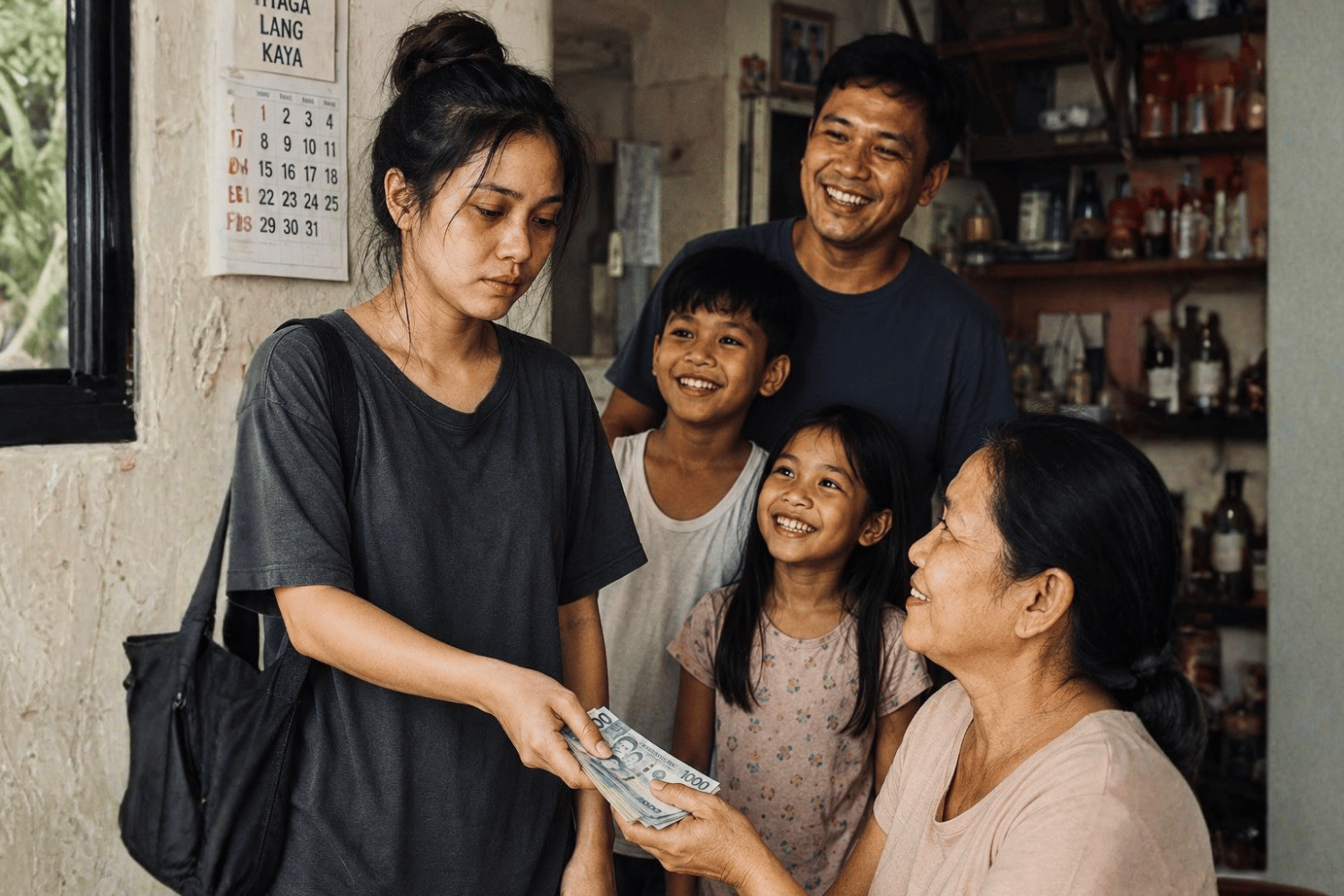
First-born children are often viewed as the breadwinners of the family.
In the Philippines, the eldest child has long been culturally anointed as the default secondary pillar of the household. On subreddits like r/PanganaySupportGroup and r/CasualPH, Gen Z earners aged 22 to 26 have seen the traditional familial honor transformed into an inescapable financial trap for the modern family.
These anonymous vents paint a terrifying picture of the modern panganay crisis. Gen Z breadwinners report that a stable corporate or BPO salary is no longer enough to insulate a family from poverty.
The illusion of regularization
One viral post on r/CasualPH reads: “Akala ko nakakaweight-lift na ako kasi naging regular ako… Then my dad suffered a stroke. PhilHealth barely covered the ICU. In less than 48 hours, my entire 3-year savings wiped out, and I had to resort to digital loan apps just to clear the hospital billing.”
On r/phinvest, users candidly share how the desperate pressure to amplify their income to sustain aging parents and younger siblings makes them prime targets for financial scams.
Squeezed by utility debts, many admit to sinking their remaining capital—or worse, borrowed funds—into fraudulent online task-based Telegram schemes promising quick returns, resulting in catastrophic multi-layered debt.
Why is this happening?
Sociologists point to a toxic convergence of three factors.
First, forced parentification pushes 23-year-olds to act as financial human shields. Bound by utang na loob (cultural gratitude), they must manage rent, tuition, and parental retirement simultaneously on entry-level wages completely decoupled from high inflation.
Second, a stress-induced health tax creates a dangerous loop. Juggling day jobs and night gigs causes chronic exhaustion and mental burnout. Because public healthcare lacks a comprehensive baseline, a single family medical emergency acts as a financial nuclear option, instantly vaporizing micro-savings.
Finally, scammers engage in the weaponization of hope. Since building a traditional emergency fund is statistically impossible, desperate youth seeking an extra ₱10,000 for bills view predatory online task scams as lifelines rather than red flags.
It is time to stop romanticizing the self-sacrificing child and start addressing the systemic structural failures that are breaking our youth befor
READ: