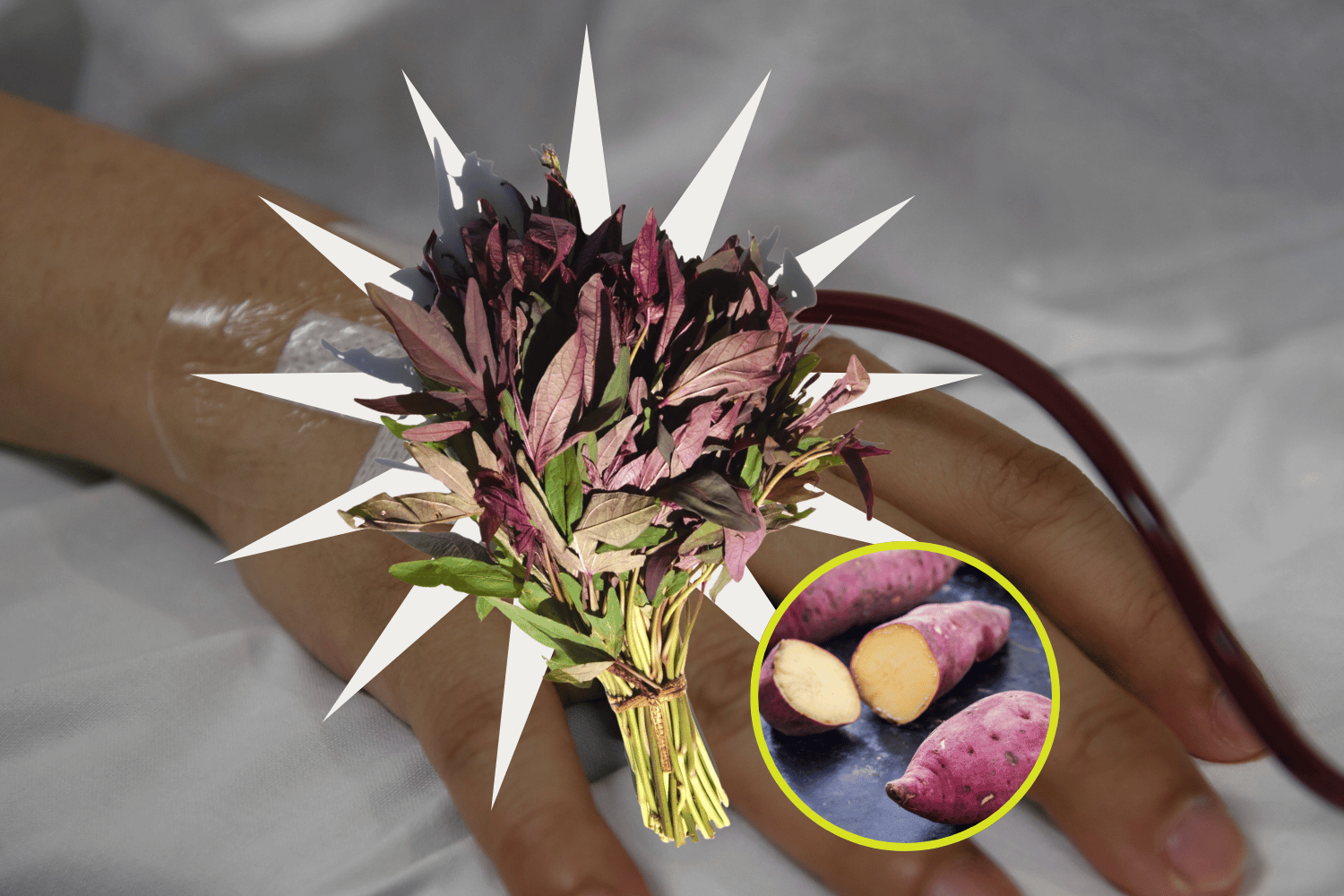
Science is giving another reason to appreciate talbos ng kamote.
It grows almost anywhere—along backyard fences, in vacant lots and even in improvised garden plots. A few kamote cuttings can quickly produce vines whose tender young leaves have long been served as ensalada, added to soups or simply blanched and dipped in bagoong.
But talbos ng kamote deserves more attention than its reputation as a cheap and ordinary vegetable.
Sweet potato leaves (Ipomoea batatas) are packed with vitamins, minerals, fiber and antioxidants. A 2021 scientific review published in Nutrients described the leaves as a potential source of micronutrients and functional compounds, with iron content varying considerably among varieties.
A green ally against anemia
Iron is essential for producing hemoglobin, the protein in red blood cells that carries oxygen throughout the body. When the body does not get enough iron, iron-deficiency anemia can develop, potentially causing fatigue and weakness.
This is where talbos ng kamote becomes particularly interesting.
A 2026 review published in Discover Food examined the potential of sweet potato leaves against anemia of chronic disease. Researchers noted that the leaves contain iron as well as antioxidant and anti-inflammatory compounds and concluded that their iron-rich nature suggests they “could be used to improve anemia.” The researchers, however, stressed that more studies are needed, particularly for anemia associated with chronic disease.
There is also Philippine-focused research supporting its potential. A systematic review published in Tropical Medicine and Health identified Ipomoea batatas among plants traditionally used against anemia in the Philippines. It cited animal research showing improvements in several blood parameters and an Indonesian study involving pregnant women in which sweet potato leaf decoction was associated with increased hemoglobin levels. The authors emphasized that more human research is needed to establish its safety and effectiveness.
Talbos ng kamote also contains vitamin C. This is particularly useful when eating plant sources of iron because vitamin C can help the body absorb non-heme iron more efficiently.
More than just iron
Talbos ng kamote brings much more to the table.
A study examining 40 sweet potato cultivars published in the Journal of Food Composition and Analysis found the leaves to be good sources of protein, fiber and minerals, including potassium, calcium, magnesium and iron.
The leaves are also rich in polyphenols and other antioxidant compounds. A scientific review in Nutrition Reviews described sweet potato leaves as a source of “vitamins, minerals, antioxidants, dietary fiber, and essential fatty acids.”
The review also found evidence suggesting that compounds in sweet potato leaves may help support immune function, reduce oxidative stress and potentially contribute to cardiovascular health.
Cheap, local and easy to grow
Perhaps the greatest advantage of talbos ng kamote is accessibility.
Unlike imported ingredients marketed as superfoods, kamote grows well in tropical conditions and can produce an abundant supply of edible shoots. Scientific reviews have highlighted the crop’s high yield, drought tolerance and ability to grow under different climates and farming conditions.
There is an important caveat, however. The iron in vegetables is not absorbed as efficiently as iron from many animal sources. Sweet potato leaves also contain compounds such as phytates and polyphenols that may reduce iron absorption.
The 2026 Discover Food review cautioned that simply eating more sweet potato leaves does not necessarily guarantee higher iron or hemoglobin levels.
Talbos ng kamote should therefore not be treated as a cure for anemia or a substitute for medical diagnosis, iron supplements or prescribed treatment. But as part of a varied diet, it can contribute iron and other nutrients needed for healthy blood production.
For generations, Filipinos have eaten talbos ng kamote because it was cheap, available and easy to grow. Science is giving us another reason to appreciate it.
When it comes to putting more iron and nutrients on the Filipino table, one of our most accessible superfoods may already be crawling along the backyard fence.
READ:
The beautiful flowers in your garden could be the secret ingredients in your next meal
radar Lifestyle
June 14, 2026
Six reasons why the smelly durian is actually good for your health
Top Dagohoy
August 5, 2026
Kamansi: A local superfood hiding in plain sight
radar Lifestyle
May 2, 2026