From draft power to dairy production, food processing, organic agriculture and tourism.
For generations, the carabao had a job: pull the plow.
But across the Philippine countryside, hand tractors, harvesters and other machines are increasingly doing the heavy work once assigned to the farmer’s trusted beast of burden.
That doesn’t necessarily mean the carabao has become economically obsolete. Its job is changing.
Instead of providing muscle, the carabao is increasingly being developed to produce something farmers can sell: milk, cheese, meat, fertilizer and other products.
Fewer carabaos, different purpose
Philippine Statistics Authority figures show the national carabao inventory declining from about 2.92 million heads in early 2021 to around 2.54 million by June 2026.
Mechanization is part of the long-term shift. Unlike an animal, a tractor doesn’t require daily feeding, grazing land and year-round care.
But while demand for draft animals has declined, the dairy industry offers carabaos another economic purpose.
The Philippine Carabao Center has promoted genetic improvement and crossbreeding with dairy buffalo breeds such as the Murrah to produce animals capable of yielding more milk.
That changes the economics for farmers.
A carabao traditionally earned its keep by working. A dairy carabao can generate a regular product for sale.
Milk is the new muscle
Carabao milk’s richness makes it ideal for higher-value products such as kesong puti, pastillas, yogurt and ice cream.
Instead of selling only raw milk, farmers and cooperatives can turn it into products with longer shelf lives and potentially higher margins.
Then there is carabeef. Carabao meat is sold fresh or processed into tapa, longganisa and other products.
Even manure has value. It can be converted into organic fertilizer or used in biogas systems. Hides and horns can become leather goods and handicrafts.
The economic proposition has therefore changed dramatically: don’t keep the carabao merely because you need something to pull a plow. Raise it because it can produce multiple sources of value.
A cultural asset, too
Carabaos have also become attractions themselves.
The famous kneeling carabaos of Pulilan, Bulacan remain central to celebrations honoring San Isidro Labrador, while elsewhere the animals appear in agricultural fairs, races and rural tourism experiences.
Even Philippine cinema continues to recognize the carabao’s deep connection with farmers.
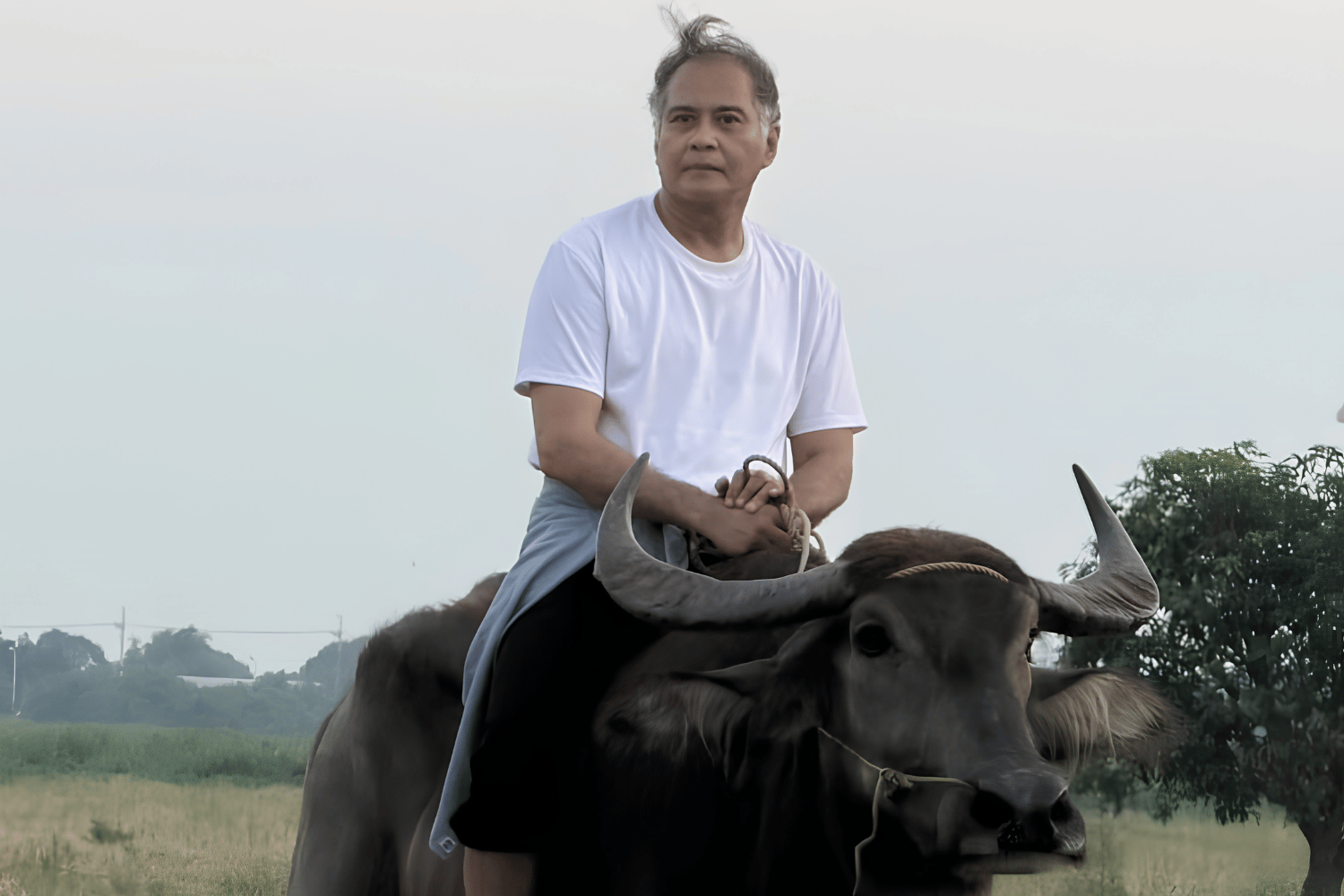
In Law Fajardo’s “Beast,” one of the full-length entries in the Puregold CinePanalo Film Festival 2026, John Arcilla plays Lolo Omeng, an aging farmer who sets out on an unusual journey to Manila with his loyal carabao.
The film, screening during the festival from September 23 to October 4, turns that centuries-old relationship between farmer and animal into a story of family, loss and survival.
The carabao’s second act
The Philippine countryside may never again need as many carabaos simply to pull plows.
But perhaps survival does not require returning the animal to its old job.
The future may be in giving it better ones.
From draft power to dairy production, food processing, organic agriculture and tourism, the carabao is being transformed from a beast of burden into an income-producing asset.
The tractor may have taken its place in the field.
But the carabao is finding another way to earn its keep.
READ: