This heritage sweet treat changes from place to place
If you grew up eating molido, you might confidently describe what goes into it—until someone from another province tells you their molido is completely different.
For some Filipinos, molido means a dense, crumbly candy made from kamote. Elsewhere, coconut, pili nuts and other ingredients can take a bigger role.
That variation is actually part of molido’s story.
What exactly is molido?
The word comes from the Spanish “molido,” meaning ground or milled—a clue that the name can describe the preparation rather than one particular ingredient.
This helps explain why different versions developed across the country using ingredients readily available in each area.
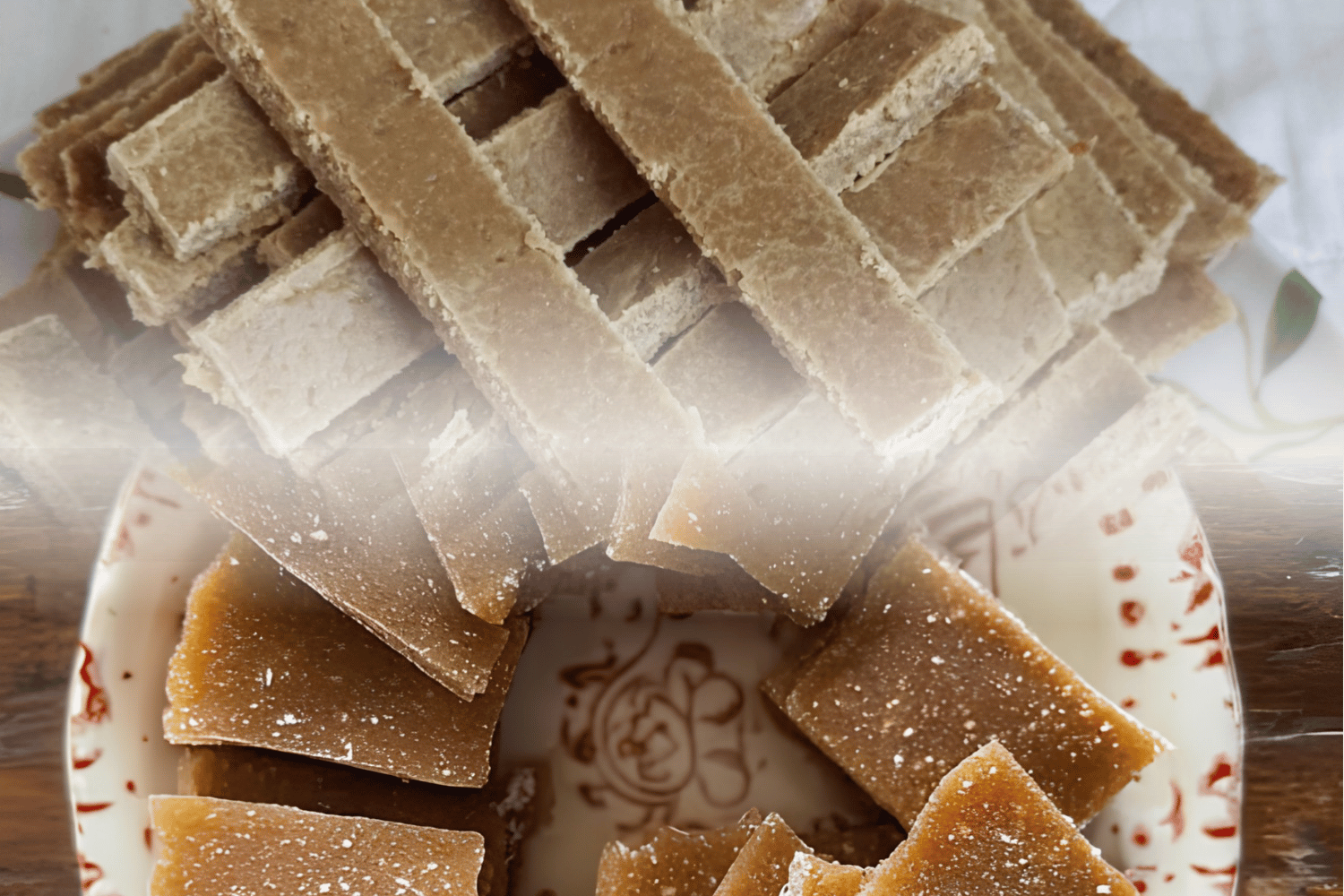
One of the best-known is molidong kamote. Sweet potato is boiled and mashed, then traditionally cooked with sugar and often coconut until the mixture becomes thick and relatively dry.
It is flattened, cooled, cut into bars or bite-sized pieces and sometimes wrapped individually in colorful paper or cellophane.
The result can be dense and slightly chewy or dry and crumbly, depending on the recipe.
Different place, different molido
In parts of Samar, particularly Northern Samar, molido is remembered as a traditional homemade delicacy, with kamote-based recipes among the versions passed down through families and communities.
Masbate is also strongly associated with molido, where the confection is commonly sold as a local delicacy and pasalubong.
In parts of the Bicol Region, variations may incorporate ingredients associated with the area, including pili nuts and coconut.
Even within the same province, recipes can differ from household to household. Some use brown or muscovado sugar. Others use refined sugar. Some are rich in coconut; others let the root crop dominate. Modern versions may add pandan or vanilla.
So asking for the single “authentic” molido recipe can be tricky.
There may be several.
A sweet built from what was available
Molido belongs to a larger Filipino tradition of transforming humble agricultural produce into something sweet, portable and longer-lasting.
Kamote, coconut and sugar were practical ingredients. Cooking the mixture down reduces moisture, concentrates the sweetness and produces a treat that can be packed and carried.
That practicality also made molido ideal pasalubong food.
For generations, versions have appeared in local markets, fiestas, bus terminals and ports—often simply wrapped and sold alongside other native delicacies.
More than just kamote candy
Today, imported chocolates and mass-produced sweets fill supermarket shelves, but molido survives because communities continue making their own versions.
And perhaps its lack of a single recipe is precisely what makes it interesting.
Molido is not necessarily one candy that spread everywhere unchanged.
It is a heritage treat that different Filipino communities made their own—using their crops, techniques and family recipes.
Same name. Different ingredients.
And every version tells something about the place it came from.
READ: